Starmer pledges NHS overhaul amid funding debate
Labour government outlines reform plans for health service
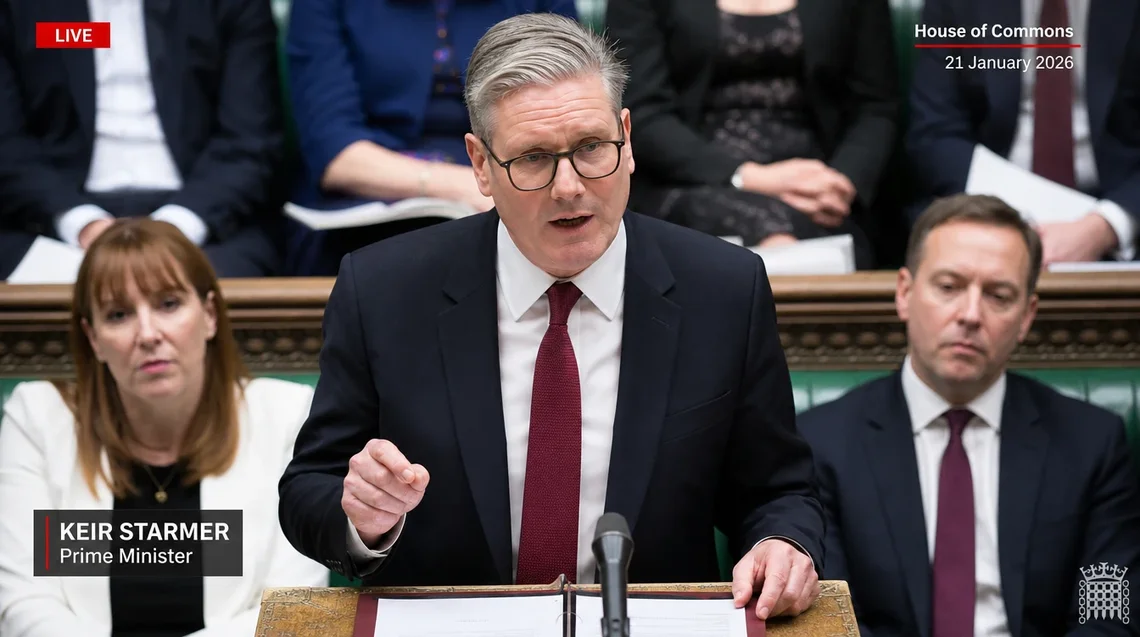
Prime Minister Keir Starmer has set out the most sweeping plans to reform the National Health Service in a generation, promising structural changes to reduce waiting times, shift care out of hospitals and harness technology — even as a bitter dispute over whether the reforms are adequately funded threatens to overshadow the entire programme. The announcement, made before the House of Commons, drew immediate fire from opposition benches and prompted a fresh round of warnings from NHS leaders who say the government's ambitions outstrip the money committed.
The plans, framed by Downing Street as a "decade of renewal" for the health service, build on the independent review led by former NHS England chief executive Lord Ara Darzi, which found the health service had suffered "a decade of neglect" and required fundamental structural change rather than incremental adjustment. Officials said the reform package covers five broad areas: cutting the backlog, reforming primary care, investing in mental health, expanding community services, and driving a shift toward prevention. Whether the funding envelope attached to those ambitions is sufficient remains the central contested question.
Party Positions: Labour has pledged to cut NHS waiting lists by delivering an additional two million appointments and shifting care from hospitals to community settings, arguing the reforms are funded through efficiency savings and new investment. Conservatives have accused the government of recycling existing funding commitments under new branding and warned that structural reorganisation risks repeating the costly upheaval of the Health and Social Care Act. Lib Dems have broadly welcomed investment in mental health and primary care but called for a dedicated ring-fenced mental health budget and stronger guarantees for rural GP services.
What the Reform Plan Contains
At its core, the government's plan proposes a fundamental rebalancing of the NHS away from acute hospital care toward community health services and primary care. Officials said the intention is to treat patients closer to home, reduce pressure on accident and emergency departments, and cut the time people spend waiting for both routine and specialist care.
Related Articles
The Ten-Year Plan Framework
The reform blueprint, presented to parliament and published in full by the Department of Health and Social Care, commits to a series of structural changes over the next decade. Among the headline commitments are: creating a new Neighbourhood Health Service with teams of GPs, nurses, and social workers co-located in communities; expanding same-day GP access through reformed appointment systems; and accelerating the use of artificial intelligence tools for diagnostics. Officials said the government has already signed agreements with several NHS trusts to pilot AI-assisted cancer screening tools, with early results described as "promising" by health department sources.
The plan also commits to building new surgical hubs dedicated solely to elective procedures, ring-fenced from emergency demand, in an effort to sustain the government's pledge to cut waiting list backlogs. According to the Office for National Statistics, the NHS waiting list for elective treatment currently stands at more than seven million people — a figure that has become the central political battleground for health policy across all parties.
Mental Health Commitments
Mental health funding forms a significant portion of the announced measures, with the government pledging additional funding for talking therapies, early intervention services and a new network of mental health crisis centres. Officials said the aim is to ensure that anyone experiencing a mental health emergency has access to specialist support without defaulting to police involvement or accident and emergency departments, a situation described in the plan as "a failure of the system."
Separate reporting by the BBC and the Guardian has noted that mental health services have faced significant staffing pressures, with vacancy rates among mental health nurses remaining persistently high despite previous recruitment pledges.
The Funding Dispute
The reform plan's credibility has been immediately challenged on financial grounds. Senior NHS leaders, speaking on the condition of background briefing, have told journalists that the level of funding committed does not match the ambition of the structural changes outlined. The tension mirrors longstanding debates within health policy circles about whether NHS reform is primarily a question of organisation or resource.
Government's Financial Argument
The Treasury and the Department of Health have defended the financial envelope, citing the significant funding increase committed to the NHS in the most recent spending round. Officials said the government's position is that efficiency savings — estimated to be realised through reduced duplication, better procurement, and digital transformation — will supplement new money. The government has also pointed to commitments made in the autumn Budget, which included a multi-billion pound uplift to the NHS baseline, as evidence that the health service is being prioritised.
According to data published by the Health Foundation, NHS spending as a share of GDP has fluctuated significantly in recent years, and the current government's commitment represents a real-terms increase, though analysts note it falls below what several independent bodies have said is required to clear the backlog within the stated timeframe. (Source: Health Foundation)
Opposition and Independent Criticism
The Conservatives, now in opposition, have argued that the plan lacks credibility precisely because its financial underpinning is contested. Shadow Health Secretary Wes Streeting's former brief is now occupied from the government side, and opposition frontbenchers have drawn on analysis from the Institute for Fiscal Studies, which has cautioned that productivity improvements on the scale the government assumes would be historically unprecedented within the NHS. (Source: Institute for Fiscal Studies)
Polling data underscores the political stakes. According to YouGov, public satisfaction with the NHS has fallen sharply in recent years, with a majority of respondents in recent surveys expressing dissatisfaction with waiting times. A separate Ipsos poll found that healthcare consistently ranks as one of the top two issues for voters when choosing between the parties, placing enormous political pressure on the Labour government to deliver visible results before the next electoral cycle. (Source: YouGov; Source: Ipsos)
| Indicator | Figure | Source |
|---|---|---|
| NHS elective waiting list (current) | Over 7 million patients | Office for National Statistics |
| Public satisfaction with NHS (recent survey) | 24% satisfied — record low | British Social Attitudes / King's Fund |
| Voters ranking NHS as top issue | 62% | Ipsos |
| Voters satisfied with government's NHS handling | 31% | YouGov |
| Government's additional appointment pledge | 2 million extra appointments | Department of Health and Social Care |
| Mental health nursing vacancy rate | Approximately 25% | NHS England |
Political Reaction in Westminster
The Commons debate following the announcement was characterised by sharp exchanges between the government and opposition benches. Labour MPs largely rallied behind the Prime Minister, with backbenchers citing constituency casework on waiting lists as evidence that the reforms are both necessary and urgent. Several Labour MPs representing Northern and Midlands constituencies pressed ministers for clarity on whether the new surgical hubs and neighbourhood health teams would be distributed equitably across regions, rather than concentrated in urban centres.
Conservative Challenge
Conservative MPs used the debate to challenge the Prime Minister directly on the question of structural reorganisation costs. Pointing to the upheaval and expense associated with previous NHS reorganisations — including the controversial Health and Social Care Act of the previous decade — opposition frontbenchers argued that top-down restructuring historically consumes management bandwidth and financial resources that would be better directed at frontline services.
The Prime Minister, according to pool reporters in the chamber, rejected the comparison, arguing that the current plans build on existing NHS structures rather than dismantling them and that the Darzi review had provided an independent mandate for change.
NHS Leadership Response
NHS England's response to the reform plan has been notably cautious. While welcoming the strategic direction, NHS England's leadership has publicly noted the scale of the challenge and the importance of multi-year funding certainty to enable long-term workforce planning. Officials have emphasised that the workforce crisis — with tens of thousands of vacancies across nursing, medical, and allied health professions — remains the single largest operational constraint, and that reform plans depend on having sufficient staff to deliver them.
Workforce and Staffing
According to Office for National Statistics labour market data, the NHS and social care sector continues to face structural staffing pressures, with international recruitment having partially offset domestic shortfalls but without resolving the underlying pipeline problem. (Source: Office for National Statistics) The government's plan includes a commitment to a new NHS Workforce Plan implementation review, but critics have noted that a previous workforce plan — published before the general election — already identified the problem in detail without producing rapid results.
For further background on the evolving policy debate around NHS funding and structural change, readers can consult our earlier coverage, including reporting on how Starmer pledges major NHS overhaul amid funding row, our analysis of Starmer pledges NHS overhaul amid funding crisis, and the detailed examination of how Starmer pledges NHS funding boost amid reform debate.
The Prevention Agenda
One of the more ambitious — and, according to health economists, more genuinely transformative — elements of the reform plan is its emphasis on prevention. The government has committed to expanding public health measures including expanded cancer screening programmes, new anti-obesity interventions, and incentives within the GP contract to reward preventive rather than reactive care.
Long-Term Cost Implications
Health economists have broadly welcomed the preventive focus in principle, noting that international evidence consistently shows prevention delivers better long-term value for public money than treating established disease. However, the same economists caution that preventive investment typically takes years or decades to translate into reduced acute care demand — meaning the government faces a political timing problem. The waiting list crisis requires short-term action, while the prevention agenda pays dividends on a timeline that extends well beyond any single parliamentary term.
The Guardian has reported that several public health groups are pressing the government to go further, including restrictions on junk food advertising and stricter regulation of ultra-processed food labelling — measures that remain under consultation rather than formal commitment. (Source: Guardian)
What Happens Next
The government has committed to publishing a detailed implementation roadmap within the coming months, with NHS England tasked with translating the strategic commitments into operational plans at regional and integrated care system level. Parliamentary scrutiny will be substantial: the Health and Social Care Select Committee has already announced it intends to hold the government to account against specific, measurable milestones rather than allowing the plan to be judged only at the end of the decade.
Related reporting on the political and financial dimensions of this debate continues across our Westminster coverage. Earlier analyses — including our reporting on Starmer pledges NHS overhaul amid growing funding row and the longer-run perspective offered in our piece on Starmer pledges major NHS overhaul amid funding crisis — trace how this policy argument has developed over successive months and spending rounds.
The NHS reform plan represents the most significant policy bet of Starmer's premiership to date. Whether it is remembered as the programme that finally modernised a health service struggling under the weight of demand, demography and decades of underinvestment — or as another in a long line of reorganisations that promised transformation and delivered disruption — will depend on execution, sustained political will, and above all, the resolution of a funding argument that shows no sign of abating.