Starmer's NHS Plan Faces Commons Revolt Over Funding Gap
Labour backbenchers challenge spending blueprint ahead of vote
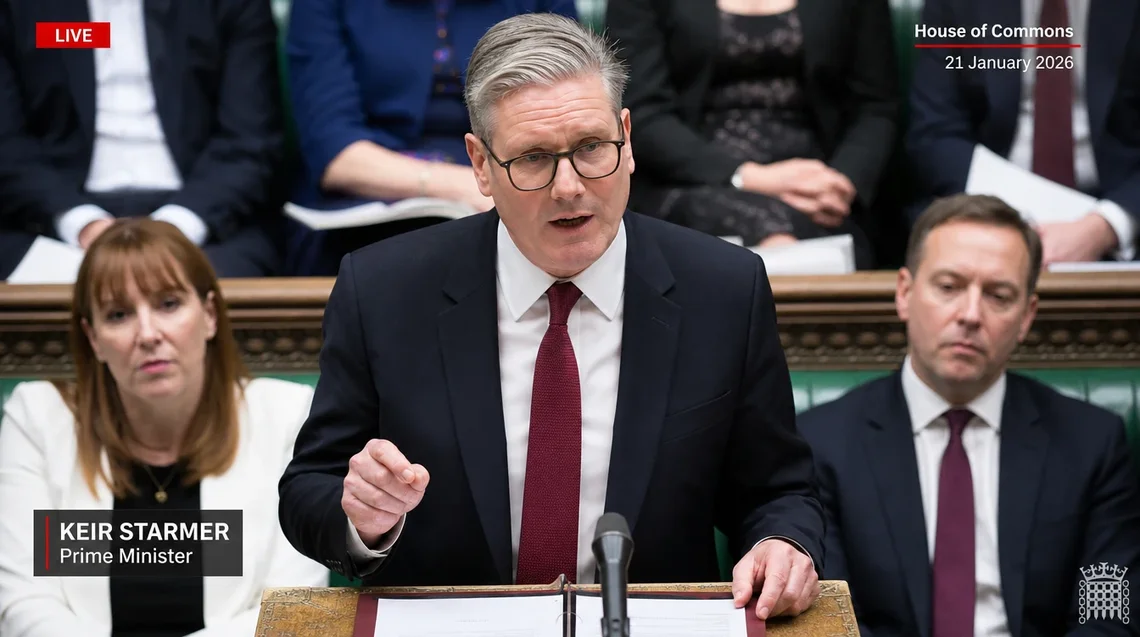
More than thirty Labour MPs have signalled they will withhold support for the government's NHS spending blueprint unless ministers provide urgent clarity on a reported funding gap of several billion pounds, throwing Sir Keir Starmer's flagship health reform programme into doubt ahead of a crunch Commons vote. The rebellion, one of the most significant backbench challenges since the general election, centres on concerns that the plan's ambitions outstrip the Treasury's willingness to commit resources over the long term.
Senior figures on the Labour benches have demanded written assurances from the Health Secretary that the proposed expansion of community diagnostic centres, reduction in waiting lists, and shift toward neighbourhood health hubs will be fully costed and funded through successive spending reviews. Without those guarantees, a coordinated group of MPs is prepared to either abstain or vote against the motion in its current form, according to individuals familiar with the internal discussions.
Party Positions: Labour — government maintains the plan is fully costed within existing fiscal frameworks and that investment will deliver record reductions in waiting times; Conservatives — shadow health team argues the blueprint is a political document masquerading as a spending plan and that no credible funding mechanism has been identified; Lib Dems — broadly supportive of NHS investment but calling for an independent fiscal audit of all projections before any vote proceeds.
The Scale of the Backbench Challenge
The revolt has been building for several weeks, with dissatisfaction crystallising around a briefing note circulated within the parliamentary Labour Party that questioned whether allocations earmarked for primary care transformation were realistic given the constraints imposed by the current fiscal settlement. Whips have been working intensively to bring wavering members back into line, but the scale of organised dissent is causing concern at a senior level within government, the BBC has reported.
Related Articles
Who Is Leading the Rebellion
While no single frontbencher has publicly broken ranks, a loose coalition of MPs drawn from red-wall constituencies, former industrial seats, and several urban areas with high NHS dependency have been coordinating their response. Many represent constituencies where NHS waiting lists remain among the longest in England, making the issue particularly sensitive with local electorates. The group is understood to include members of the health select committee as well as a number of first-term MPs elected on explicit pledges to improve local health services.
The Role of Parliamentary Arithmetic
The government commands a substantial Commons majority, meaning the rebellion would need to reach considerably larger numbers to actually defeat the motion outright. However, even a symbolic revolt of thirty to fifty MPs would represent a significant political blow to a prime minister who has prioritised party discipline and presented NHS reform as the centrepiece of his domestic agenda. Analysts note that governments with large majorities have historically been more, not less, vulnerable to internal dissent precisely because backbenchers calculate their individual defection is unlikely to bring down the government.
The Funding Gap at the Centre of the Dispute
At the heart of the rebellion lies a dispute over numbers. Independent health economists, cited by the Guardian, have estimated that delivering the full package of reforms outlined in the government's plan — including the promised reduction of waiting lists to eighteen weeks, the expansion of mental health provision, and the build-out of integrated neighbourhood teams — could require sustained additional annual investment running into the low tens of billions of pounds beyond what has already been committed. The Treasury has not publicly confirmed any figure in that range.
Treasury Caution and Departmental Tensions
Officials familiar with inter-departmental negotiations said the Treasury has been resistant to writing open-ended spending commitments into formal documents at this stage of the political cycle. That caution is consistent with longstanding Whitehall practice but has created an awkward gap between the political narrative being advanced by ministers and the fiscal reality that backbenchers, many of whom have professional backgrounds in public services, are pressing them to address. Data compiled by the Office for National Statistics show that NHS England's share of public expenditure has risen steadily over recent decades, meaning further large increases must either be offset by reductions elsewhere or funded through additional borrowing or taxation (Source: Office for National Statistics).
Public Opinion and the Political Stakes
The NHS remains the single most salient policy issue for British voters. Polling published recently by YouGov found that a majority of respondents identify health service performance as the issue most likely to determine their vote at the next general election, ahead of the cost of living and economic management (Source: YouGov). A separate survey conducted by Ipsos found that public confidence in the government's ability to improve NHS waiting times has fallen measurably since the start of the parliamentary term, with fewer than four in ten respondents expressing faith that the targets set out in the plan will be met within the stated timeframe (Source: Ipsos).
| Metric | Figure | Source |
|---|---|---|
| Voters citing NHS as top electoral issue | 54% | YouGov |
| Public confidence government will meet waiting time targets | 38% | Ipsos |
| Labour MPs signalling potential dissent | 30+ | Parliamentary reports |
| Estimated additional annual funding required (independent analysis) | £bn low-to-mid teens | Guardian / health economists |
| Current NHS England share of total public expenditure | Approx. 40% | Office for National Statistics |
Opposition Parties Exploit the Division
The Conservatives have moved swiftly to capitalise on the emerging rift, with the shadow health secretary accusing the government of producing what amounts to a wish list rather than a deliverable programme. Speaking in the Commons chamber earlier this week, the shadow health secretary argued that the absence of a line-by-line funding commitment demonstrated that the plan was designed to manage political expectations rather than transform patient outcomes. The intervention was widely covered, with the BBC's political team noting it represented one of the more effective opposition attacks in recent months.
Liberal Democrat Positioning
The Liberal Democrats, who hold a number of seats in areas with significant NHS pressures, have adopted a more constructive but equally demanding posture. The party's health spokesperson has called for the Office for Budget Responsibility to conduct an independent assessment of the plan's costings before the Commons vote proceeds, a position that has found some sympathy among the Labour rebels themselves. That alignment between a third party and disaffected government MPs is a dynamic that Downing Street will be keen to disrupt before the vote date approaches.
Context: A Pattern of Funding Scrutiny
The current rebellion does not emerge in isolation. Concerns about whether the government's NHS ambitions are adequately funded have been a recurring theme since the plan was first published. Earlier analysis, which examined Starmer's NHS plan faces funding scrutiny in its initial phase, identified structural questions about the relationship between headline commitments and actual Treasury sign-off. Those concerns were amplified in subsequent reporting that explored Starmer's NHS plan faces funding shortfall criticism from health economists and NHS trust leaders who warned that underfunding reforms mid-implementation would be more damaging than not beginning them at all.
More recently, detailed policy analysis covering Starmer's NHS Plan Faces Funding Reality Check set out the specific mechanisms through which costs might exceed projections, particularly in relation to workforce expansion and capital investment in new facilities. That body of critical scrutiny has provided intellectual ammunition to the backbench rebels now threatening the government's timetable.
The parliamentary dimension of this dispute has itself been building, as earlier coverage of Starmer's NHS overhaul faces growing backbench revolt documented the gradual hardening of opinion among MPs who initially gave the plan the benefit of the doubt but have grown impatient with what they describe as ministerial evasion on the core financial questions.
Government Response and the Path Forward
Ministers have publicly maintained confidence that the plan will pass and that the funding concerns being raised are based on overstated cost projections. The Health Secretary has argued in media appearances, including interviews with the BBC, that the government's approach represents the most ambitious investment in the NHS since its founding and that critics are applying an unreasonably static model to what is a dynamic reform programme that will generate efficiency savings over time.
Officials said private reassurances have been offered to some of the most concerned backbenchers, though the content of those discussions has not been confirmed publicly. The whips' office is understood to be working on a series of parliamentary questions and ministerial letters designed to provide enough procedural cover for wavering MPs to return to the fold without requiring a full public revision of the plan's financial architecture.
Whether those manoeuvres will prove sufficient remains uncertain. As the vote date approaches, the government faces a test that is as much about its capacity to manage internal party dynamics as it is about the substantive merits of its NHS programme. A significantly reduced majority on the motion — even if it passes — would weaken ministerial authority at precisely the moment when difficult negotiations over health budgets with the Treasury are reaching a critical juncture. The coming days will determine whether Starmer's most politically exposed domestic commitment survives its first serious parliamentary challenge intact.