Starmer's NHS Funding Plan Faces Scrutiny
Labour defends investment strategy amid waiting list concerns

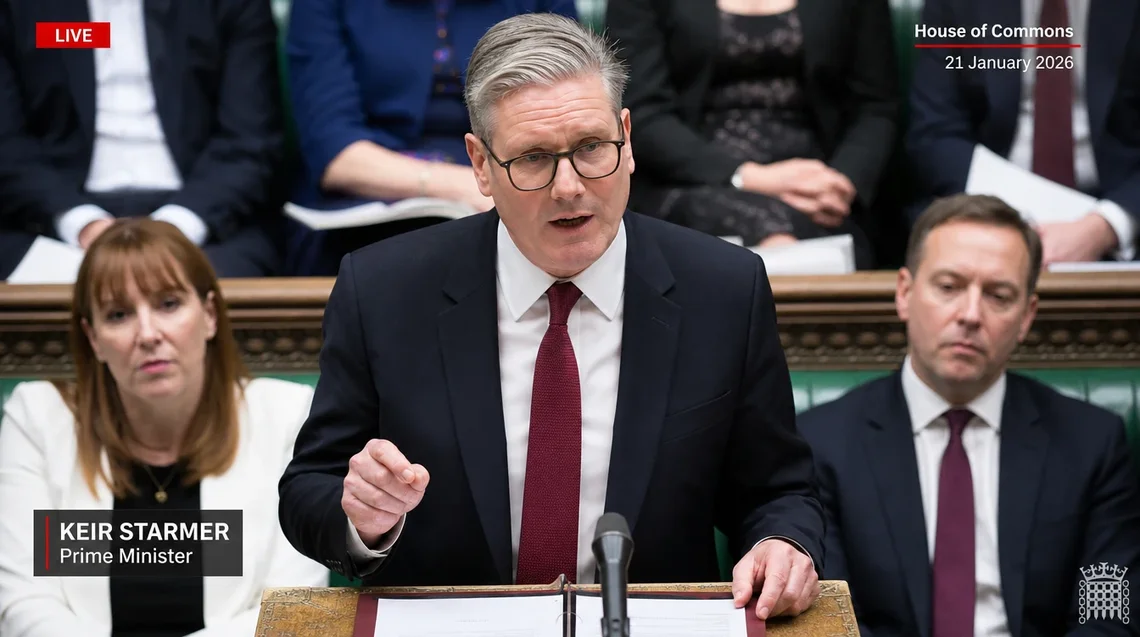
The government's plan to inject billions into the National Health Service is facing mounting pressure from opposition parties and independent analysts, with NHS waiting lists remaining stubbornly high despite commitments made in Labour's general election manifesto. Prime Minister Sir Keir Starmer insists the investment strategy is on track, but questions over the pace of reform and the gap between spending pledges and measurable outcomes have intensified scrutiny at Westminster this week.
Party Positions: Labour argues its multi-year NHS funding settlement represents the largest sustained investment in the health service in a generation, and that structural reform alongside capital spending will reduce waiting times within this parliament. Conservatives contend that Labour inherited a credible recovery plan and has since introduced budget measures — including National Insurance contribution increases for employers — that are actively damaging NHS recruitment and GP capacity. Lib Dems are calling for a fully independent review of NHS finances, warning that without transparent accountability mechanisms, additional funding will be absorbed without producing the productivity gains patients need.
The Scale of the Challenge
NHS England waiting lists have remained one of the most politically charged metrics in British public life for several years. While the raw number of people awaiting elective treatment has shown modest movement in recent months, independent health economists warn the figures mask deep structural problems in workforce capacity, estate maintenance, and community care provision.
What the Data Show
According to data published by NHS England and analysed alongside Office for National Statistics workforce statistics, the health service is currently operating with significant vacancy rates across nursing, allied health professions, and secondary care specialisms. The government has pointed to a trajectory of improvement, but analysts cited by the BBC and the Guardian have cautioned against reading short-term movements as evidence of a sustainable trend. The government's own projections, set out in spending review documents, acknowledge that the full impact of current investment will not be visible in waiting list data for at least two further years. (Source: Office for National Statistics)
Related Articles
For a detailed breakdown of how the funding shortfall argument has developed since Labour took office, see Starmer's NHS plan faces funding shortfall criticism, which traces the trajectory of commitments against outturn spending figures.
Labour's Investment Strategy Explained
Health Secretary Wes Streeting has positioned the government's approach around three pillars: shifting care out of hospitals and into the community, expanding diagnostic capacity through new community health hubs, and a ten-year workforce plan intended to align training places with projected demand. Ministers argue that previous governments repeatedly funded headline activity increases without the underlying structural reform necessary to deliver lasting change.
Capital vs Revenue Spending Tensions
One persistent line of criticism from health economists and NHS trust leaders concerns the balance between capital and revenue spending. Treasury allocations have prioritised day-to-day operational funding — covering staff costs, medicines, and routine services — while capital investment in buildings, equipment, and digital infrastructure has been subject to tighter controls. NHS Confederation officials have publicly noted that the backlog of maintenance work across the estate represents a significant drag on productivity, with some facilities operating equipment that is decades past its recommended replacement cycle.
Ministers dispute the framing, arguing that the overall quantum of investment is sufficient if deployed efficiently, and that the productivity agenda — requiring NHS trusts to demonstrate measurable improvements in output per pound spent — will unlock latent capacity across the system. (Source: BBC)
Opposition Pressure and Parliamentary Scrutiny
The Conservatives have used Prime Minister's Questions and Health Questions in recent weeks to press the government on the timeline for waiting list reductions, arguing that employer National Insurance increases introduced in the autumn budget have created a perverse incentive structure, making it more expensive for GP practices and social care providers to take on staff at precisely the moment the system needs to expand its workforce.
The NI Contributions Argument
Shadow Health Secretary Edward Argar has repeatedly challenged ministers to publish a specific assessment of the impact of NI changes on independent and voluntary sector health providers, who are not shielded by the public sector compensation arrangements covering NHS trusts directly. The government has acknowledged the pressure but maintains the overall fiscal package available to the NHS more than offsets the additional employment costs for organisations working under NHS contracts. Independent analysis cited by the Guardian suggests the picture is uneven, with some community and mental health providers reporting material budget pressures as a direct result of the policy. (Source: Guardian)
The Liberal Democrats, meanwhile, have focused their scrutiny on transparency and accountability. Health spokesperson Helen Morgan has called for an independent Office for Health Budget Responsibility — modelled on the existing OBR — to provide non-partisan assessment of NHS spending plans and outcomes. The proposal has not received government support but has attracted cross-party interest among backbenchers concerned about the credibility of self-reported performance data.
| Metric | Current Position | Government Target | Source |
|---|---|---|---|
| Elective waiting list (approx.) | 7.5 million pathways | Reduce to pre-pandemic levels within parliament | NHS England |
| NHS capital budget increase | £3.1bn additional over settlement period | Address maintenance backlog and expand diagnostics | HM Treasury |
| Public satisfaction with NHS | 24% satisfied (record low) | Majority satisfaction by end of parliament | Ipsos / British Social Attitudes |
| NHS vacancy rate | Approx. 8% across all staff groups | Reduce through workforce plan expansion | Office for National Statistics |
| Public confidence in Starmer's NHS plan | 38% confident, 47% not confident | N/A (polling metric) | YouGov |
Public Opinion and Political Risk
Polling conducted by YouGov and Ipsos consistently places the NHS at or near the top of voter concerns, and Labour's handling of health policy is regarded internally as one of the defining tests of the government's first term. A YouGov survey published recently found that fewer than four in ten respondents were confident the government's investment plan would produce a noticeable improvement in NHS services within the lifetime of this parliament, while a plurality expressed scepticism about whether additional funding would translate into faster treatment times. (Source: YouGov)
Backbench Labour Concerns
Within the Parliamentary Labour Party, a number of backbenchers representing constituencies with acute waiting list pressures have raised concerns in private meetings with whips about the pace of visible improvement. While no formal rebellion has materialised, senior backbenchers have sought assurances from Health Ministers that progress reports will be published on a more granular, constituency-level basis to allow MPs to communicate concrete outcomes to local voters. The whips' office is understood to be monitoring the situation carefully ahead of any further budget decisions that could affect NHS allocations. For broader context on the internal pressures Labour faces on this issue, see Starmer's NHS Plan Faces Commons Revolt Over Funding Gap.
Reform Agenda and Structural Questions
Beyond the immediate question of waiting lists, the government's NHS reform programme raises longer-term structural questions about the role of the independent sector, the integration of health and social care, and the governance arrangements for NHS England following a significant internal reorganisation announced by Streeting earlier this year.
Independent Sector and Capacity
The government has expanded the use of independent sector treatment centres to process elective activity, a continuation and acceleration of an approach used by previous administrations. Critics from within the Labour movement have raised concerns about the long-term implications for NHS capacity if independent providers capture an increasing share of lower-complexity work, leaving NHS trusts with a more expensive and complex patient mix. Ministers have defended the approach as pragmatic, arguing that the priority is reducing patient waiting times and that ideological objections to independent sector involvement must not stand in the way of practical outcomes. (Source: BBC)
The ten-year workforce plan, which sets out projections for training places across medicine, nursing, and allied health professions, has been broadly welcomed by professional bodies, though the Royal College of Nursing and the British Medical Association have both noted that projections are contingent on pay settlements and working conditions remaining competitive relative to other sectors and international comparators.
What Happens Next
The government is expected to publish an updated NHS performance framework in the coming weeks, setting out refreshed milestones against which ministers say progress should be judged. The publication will be closely scrutinised by the Health and Social Care Select Committee, which is currently conducting its own inquiry into NHS productivity and the effectiveness of the government's investment strategy.
Opposition parties have signalled they will use the publication of any new framework to renew pressure on ministers if the underlying data do not show a clear and measurable improvement trajectory. With the next general election still several years away, the government retains time to demonstrate results, but political advisers across Westminster acknowledge that NHS performance will remain a defining issue at every set of local elections and by-elections in the interim. For further analysis of how the funding debate has evolved and the structural arguments at its core, readers can follow coverage at Starmer's NHS Plan Faces Funding Scrutiny and Starmer's NHS overhaul faces funding scrutiny, both of which provide detailed examination of the policy architecture underlying the government's approach.
For Starmer personally, the NHS represents both the clearest opportunity to demonstrate that Labour in government can deliver tangible public service improvements and, if the waiting list trajectory does not improve materially, the most significant vulnerability heading into the middle years of the parliament. Officials close to the Prime Minister insist the investment and reform programme is coherent and properly funded; the question, as one senior health economist noted to colleagues this week, is whether the political timetable and the operational timetable for a system as complex as the NHS can ever truly be aligned. For a full assessment of the financial projections underpinning the strategy, see Starmer's NHS Plan Faces Funding Reality Check. (Source: Office for National Statistics; Ipsos)