Labour Announces Major NHS Funding Plan Amid Service Pressures
Starmer government seeks to address healthcare waiting lists

The Starmer government has announced a multibillion-pound funding commitment for the National Health Service, pledging to reduce waiting lists that currently stand at record levels and represent one of the most politically charged domestic challenges facing the administration. The plan, unveiled amid sustained pressure from health unions, opposition parties, and patient advocacy groups, is being described by ministers as the most significant injection of NHS resources in a generation.
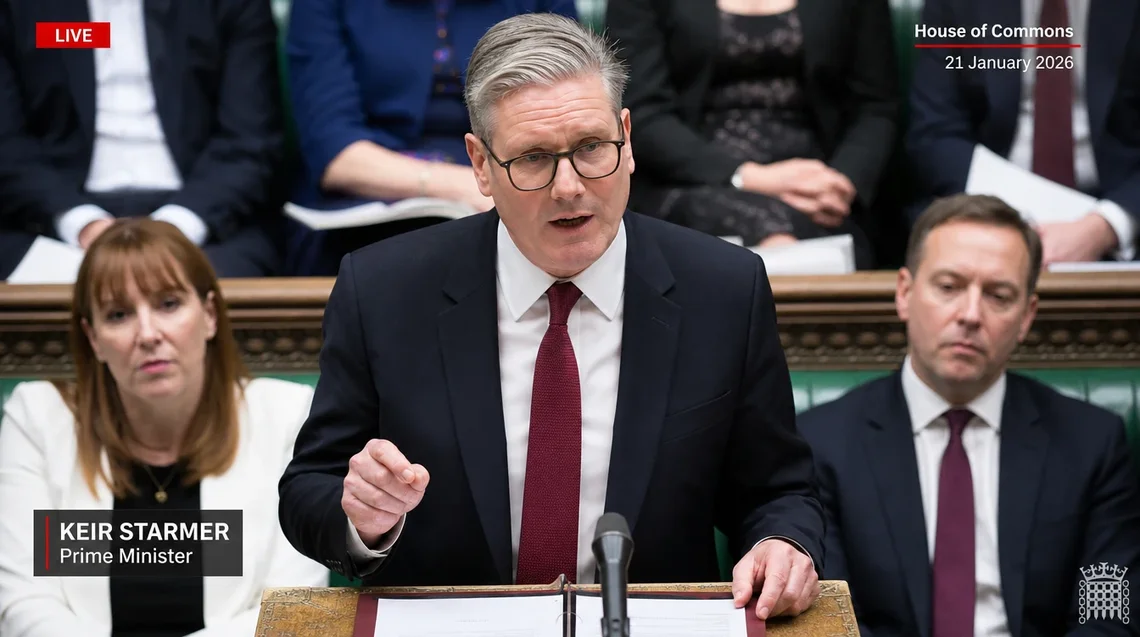
Health Secretary Wes Streeting confirmed the broad parameters of the funding package to the House of Commons, framing the announcement as a direct response to what officials described as a systemic underfunding of frontline services accumulated over more than a decade. According to Department of Health and Social Care figures, approximately 7.6 million people are currently waiting for NHS treatment in England, a figure that has become a central metric by which the public judges government competence on healthcare delivery. (Source: NHS England)
Party Positions: Labour has committed to reducing NHS waiting lists through a combination of new capital investment, expanded community diagnostic centres, and increased weekend and evening surgical capacity, arguing that structural reform must accompany any funding uplift. Conservatives have criticised the plan as financially irresponsible and insufficiently detailed, arguing that the government has failed to account for productivity deficits within existing NHS structures and that additional spending without reform will not deliver results. Lib Dems have broadly welcomed the scale of the funding announcement but called on the government to go further on mental health provision and social care integration, arguing that the plan addresses acute hospital waiting lists while leaving longer-term care system pressures unresolved.
The Scale of the Funding Commitment
Ministers confirmed that the package represents a real-terms increase in NHS operational spending, with resources directed primarily at surgical hubs, diagnostic capacity, and workforce expansion. Officials said the funding would be distributed across integrated care boards in England, with devolved administrations in Scotland, Wales, and Northern Ireland receiving corresponding Barnett consequentials to deploy according to their own healthcare priorities.
Related Articles
Waiting List Reduction Targets
The government has set an explicit target of reducing the number of patients waiting more than 18 weeks for treatment — the standard NHS constitutional guarantee — as a headline measure of the policy's success. According to NHS England data, compliance with the 18-week referral-to-treatment standard has deteriorated significantly in recent years, with millions of patients currently waiting beyond the legally mandated threshold. Officials acknowledged the ambition of the targets but said the funding envelope had been specifically calibrated to deliver measurable improvement within a defined parliamentary timeframe.
For a detailed breakdown of the government's stated ambitions and the broader reform context, see the Starmer Government Unveils Major NHS Funding Plan, which tracks the evolution of the policy from initial consultation through to formal parliamentary announcement.
Capital Investment in Diagnostic Infrastructure
A significant portion of the announced funding is earmarked for community diagnostic centres — standalone facilities designed to deliver MRI scans, blood tests, and other diagnostic procedures outside of major acute hospital settings. Officials said the expansion of this infrastructure is intended to prevent diagnostic bottlenecks from feeding into longer treatment delays further down the patient pathway. The programme builds on a network of centres already established in previous years, with the new funding accelerating rollout to underserved regions including parts of the North East, South West, and Midlands. (Source: Department of Health and Social Care)
Political Context and Opposition Response
The announcement arrives at a moment of acute political sensitivity for the Starmer administration. Public satisfaction with the NHS has fallen to historically low levels, according to polling conducted by Ipsos, with a majority of respondents now expressing dissatisfaction with NHS services — a significant shift from the broadly positive public attitudes recorded in previous decades. (Source: Ipsos)
Conservative Critique
Shadow Health Secretary Edward Argar argued from the despatch box that the announcement represented "smoke and mirrors," contending that the real-terms value of the funding commitment was substantially lower than the headline figures suggested once inflation and pre-committed baseline spending were factored in. Conservative MPs pointed to what they described as the government's failure to address NHS productivity, noting that output per staff member remains below pre-pandemic levels despite sustained workforce growth. The Conservatives also argued that the absence of a detailed social care reform package alongside the NHS announcement represented a critical structural gap in the government's health strategy.
The ongoing tensions between reform rhetoric and resource allocation are examined in depth in Starmer Unveils Major NHS Reform Plan Amid Funding Row, which covers the internal debates within government about the sequencing of structural change relative to financial investment.
Public Opinion and Polling Landscape
Survey data present a complicated picture for the government. While NHS funding consistently ranks among the top issues cited by voters as influencing their political preferences, polling by YouGov indicates that public confidence in Labour's ability to deliver on health service improvements has softened since the general election, with a growing proportion of respondents expressing scepticism that additional investment will translate into faster waiting times or improved patient experience in the near term. (Source: YouGov)
| Metric | Current Figure | Previous Benchmark | Source |
|---|---|---|---|
| NHS England waiting list (total) | Approx. 7.6 million | 4.4 million (pre-pandemic) | NHS England |
| Patients waiting 18+ weeks | Over 3 million | Under 500,000 (2012) | NHS England / ONS |
| Public satisfaction with NHS | 24% satisfied | 70% satisfied (2010) | Ipsos / King's Fund |
| Labour approval on NHS handling | 38% approve | 49% at general election | YouGov |
| GP appointment wait (same day) | 42% of appointments | 54% (pre-pandemic) | NHS Digital |
The Office for National Statistics has separately documented the broader economic burden of NHS waiting lists, including productivity losses associated with working-age adults awaiting elective procedures and the knock-on effects on employment and economic output. Officials in the Treasury are understood to have factored this data into the economic case presented for the funding commitment, arguing that investment in reducing waiting times carries a fiscal return through reduced welfare dependency and increased workforce participation. (Source: Office for National Statistics)
Workforce and Staffing Dimensions
Central to the government's plan is a commitment to workforce expansion, building on the NHS Long Term Workforce Plan. Officials said the funding package includes provision for additional training places across nursing, radiology, and surgical specialties, alongside enhanced retention measures designed to reduce the attrition of experienced clinical staff. The BBC reported that health unions, while broadly welcoming the announcement, cautioned that workforce expansion would take years to deliver measurable increases in clinical capacity, and pressed ministers to move more quickly on pay and working conditions as immediate retention levers. (Source: BBC)
International Recruitment and Ethical Sourcing
The government confirmed that international recruitment would continue to play a role in meeting near-term staffing gaps, while pledging to tighten compliance with the NHS's ethical international recruitment code to prevent the depletion of healthcare workforces in lower-income nations. Critics, including some Labour backbenchers, have argued that continued reliance on overseas recruitment represents a failure to invest sufficiently in domestic training pipelines over successive parliamentary terms, and that the structural dependency on international staff reflects long-standing strategic failures rather than a deliberate policy choice by the current administration.
Funding Mechanisms and Fiscal Debate
The Guardian reported that the Treasury confirmed the funding would be sourced through a combination of mechanisms discussed at the autumn budget, including adjustments to employer national insurance contributions and reprioritisation of existing departmental envelopes, rather than additional borrowing above the government's stated fiscal rules. (Source: Guardian)
Autumn Budget Commitments and Subsequent Pressures
The relationship between this announcement and the fiscal commitments made at the autumn budget is covered comprehensively in Labour pledges major NHS funding boost in autumn budget, which contextualises the health spending commitments within the government's broader fiscal strategy and the constraints imposed by the Chancellor's self-imposed borrowing rules.
The Institute for Fiscal Studies has noted that while the headline funding figures are substantial, delivering real-terms improvements in NHS output will require productivity gains that have proved historically elusive even during periods of significant investment growth. Analysts warned that without accompanying structural reform — particularly in the integration of health and social care — funding increases risk being absorbed by demand growth rather than driving down waiting times. The question of whether resources are genuinely sufficient to meet the government's stated ambitions is examined further in Labour's NHS Plan Faces Fresh Pressure Over Funding Gap. (Source: Institute for Fiscal Studies)
Regional Disparities and Equity Concerns
Patient advocacy groups and health economists have raised concerns about the distribution of funding across England's 42 integrated care systems, warning that without a deliberate equity weighting in the allocation formula, resources will disproportionately flow to systems with greater existing infrastructure capacity rather than to areas with the highest clinical need. The government's allocation methodology has not been published in full, and officials said a detailed breakdown would be shared with Parliament in the coming weeks.
Devolved Administrations
In Scotland, the SNP government responded cautiously to the announcement, noting that Holyrood's NHS faces distinct structural challenges and that Barnett consequentials, while welcome, do not represent a fully tailored solution to the specific waiting list composition in Scotland. In Wales, Welsh Labour ministers indicated they would deploy their share of the consequentials in line with the Welsh Government's existing health transformation programme, which prioritises primary care investment alongside hospital capacity. (Source: BBC)
The full trajectory of the government's NHS reform and funding agenda — from its origins in pre-election policy development through to the legislative and spending commitments now taking shape — is documented across our ongoing coverage, including Labour Pledges Major NHS Funding Boost Amid Reform Push, which analyses how the government has sought to balance the political imperative of visible action with the operational realities of delivering systemic change across England's largest public institution.
The Starmer administration has staked significant political capital on demonstrating progress on NHS waiting lists before the next general election. Whether the funding commitment announced this week — substantial in nominal terms but contested in its real-terms value and delivery mechanisms — will translate into the measurable improvements in patient experience that voters are demanding remains the central question that will define the government's domestic legacy. Officials maintain that the plan is deliverable and properly resourced; critics from across the political spectrum argue the challenge is larger, more complex, and more expensive than any single funding announcement can resolve.