Labour pledges £15bn NHS overhaul as waiting lists hit record
Starmer announces major healthcare reform package

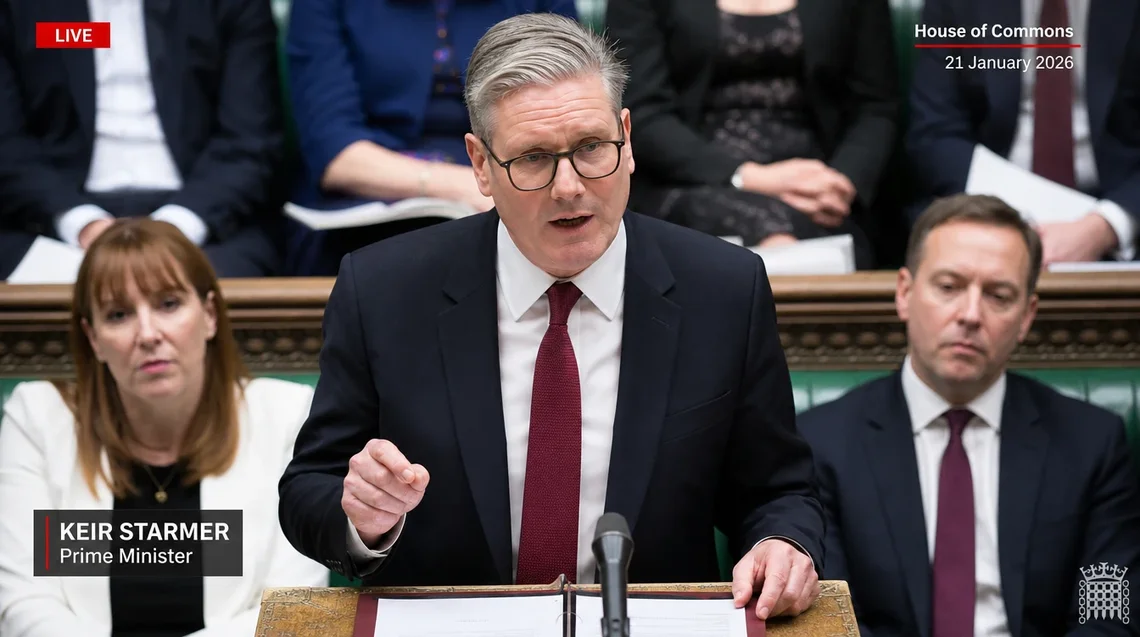
Sir Keir Starmer has announced a £15 billion overhaul of the National Health Service, describing the package as the most significant investment in public healthcare since the NHS's founding era, as official figures show waiting lists have reached a record high of more than 7.6 million patients. The announcement, made from Downing Street, frames health reform as the centrepiece of the government's domestic agenda and sets up a sharp parliamentary confrontation with an opposition still seeking to define its post-election identity.
Party Positions: Labour supports a £15bn NHS overhaul funded through borrowing and efficiency savings, prioritising elective care, mental health services and GP access to reduce waiting lists. Conservatives argue the spending pledge is fiscally reckless and that structural reform, not additional funding alone, is required to fix systemic NHS failures accumulated over decades. Lib Dems welcome increased NHS investment but demand ringfenced mental health funding and a full independent audit of waiting list data before any disbursement of new money.
The Scale of the Crisis
The waiting list figure — compiled by NHS England and cross-referenced against data published by the Office for National Statistics — represents a challenge that has been building across successive administrations. More than 7.6 million people are currently awaiting treatment, with a significant proportion having waited beyond the government's own 18-week referral-to-treatment target. The backlog spans elective surgery, diagnostic procedures, and outpatient appointments, with orthopaedic and ophthalmology services among the most heavily affected specialties.
Mental Health and Primary Care Pressures
Alongside the elective care backlog, NHS mental health services are under acute pressure, according to health analysts and patient advocacy groups. Referrals to community mental health teams have risen sharply, while GP practices report that appointment demand currently outstrips capacity in a majority of clinical commissioning areas. Officials said the £15bn package is specifically designed to address both secondary and primary care simultaneously rather than concentrating resources solely on hospital-based elective recovery.
Related Articles
What the £15 Billion Package Contains
The reform package, as set out by Downing Street, is divided across several streams. Approximately £6bn is allocated to elective care recovery, with the intention of clearing the longest waits within the current parliamentary term. A further £3.5bn is directed at expanding community diagnostic centres — a programme initiated under the previous administration but which the government said is being significantly accelerated. Mental health services receive £2bn under the package, the largest ringfenced mental health allocation in NHS history, officials said. The remaining funds are spread across primary care infrastructure, digital transformation of patient records, and workforce development including the training of additional nurses, physiotherapists, and consultant physicians.
Workforce and Structural Reform
A recurring criticism of previous NHS investment rounds has been that capital spending is not matched by sufficient staffing to absorb additional capacity. Ministers acknowledged this concern directly, stating that the workforce component of the package is structured to run in parallel with infrastructure investment rather than follow it. The Health Secretary confirmed that a new NHS workforce plan, updated from the long-term plan published under the previous government, would be published within weeks to accompany the financial announcement.
Digital Infrastructure Investment
A portion of the announced funding targets NHS digital infrastructure, which independent reviews have consistently identified as fragmented and technologically outdated in many trusts. Officials said investment in integrated patient records systems would improve referral pathways, reduce duplicate diagnostic testing, and free clinical staff from administrative burdens that currently consume a disproportionate share of working hours. The government cited NHS England data indicating that outdated IT systems cost the health service hundreds of millions of pounds annually in inefficiencies.
Political and Parliamentary Reaction
The Conservative opposition moved quickly to challenge the funding assumptions underpinning the announcement. Shadow Health Secretary argued at the despatch box that borrowing to fund recurrent NHS spending sets a dangerous fiscal precedent and that without structural reform — including greater use of independent sector capacity and reformed workforce contracts — additional money will not translate into sustained reductions in waiting times. The party pointed to periods of significant NHS investment in the early 2000s, arguing that productivity gains did not always match the scale of spending.
The Liberal Democrats, whose electoral strategy has increasingly focused on NHS performance in suburban and rural constituencies, offered conditional support. Party health spokespeople called the announcement a step forward but insisted on independent verification of waiting list data and a formal commitment to ringfence mental health allocations, citing concern that mental health budgets have historically been raided to address acute hospital pressures.
Backbench and Cross-Party Dynamics
Within Labour's own parliamentary ranks, several backbench MPs with backgrounds in healthcare welcomed the announcement but used select committee appearances to press ministers on implementation timelines and accountability mechanisms. Health Committee members sought assurances that the announcement represented firm capital commitments rather than aspirational figures subject to future spending review revision. Officials said detailed trust-by-trust allocations would be published following a consultation process with NHS England and integrated care boards.
| Metric | Figure | Source |
|---|---|---|
| Total patients on NHS waiting list | 7.6 million+ | NHS England / ONS |
| Patients waiting beyond 18-week target | Approx. 3.2 million | NHS England |
| Public approval of Labour's NHS handling | 41% approve / 38% disapprove | YouGov polling |
| Voters citing NHS as top priority issue | 67% | Ipsos Issues Index |
| £15bn total package announced | Multi-year capital commitment | HM Government / Downing Street |
| Mental health allocation (ringfenced) | £2 billion | Department of Health and Social Care |
The Electoral and Policy Context
NHS performance has ranked as the single most important issue for British voters in consecutive polling cycles, according to Ipsos Issues Index data, and the government's handling of the health service is widely regarded in Westminster as the primary terrain on which the next general election will be contested. YouGov polling conducted recently shows that while a plurality of voters currently approves of Labour's NHS stewardship, approval ratings remain fragile and are closely correlated with visible changes — or the absence of them — in waiting times in local areas.
The Guardian has reported that internal government modelling suggests the waiting list could be reduced to below five million patients within three years if the investment package is deployed as planned and is accompanied by the projected workforce expansion. However, independent health economists cited by the BBC have urged caution, noting that demand-side pressures — including an ageing population and rising rates of complex multi-morbidity — mean that headline list reduction targets may prove elusive even with significant new investment. (Source: Office for National Statistics demographic projections; BBC health policy analysis)
Comparison with Previous NHS Investment Rounds
The announcement invites comparison with the NHS Plan published in the early 2000s, which directed substantial new funding into the health service and did produce measurable reductions in waiting times over a five-year period. Health economists note, however, that the current challenge is structurally different: the existing backlog is larger in absolute terms, the workforce pipeline is more constrained, and the post-pandemic pattern of demand — including higher rates of mental health referral and more complex post-COVID presentations — adds dimensions not present in earlier investment cycles. Officials said the government is aware of these differences and that the reform package has been designed accordingly, with independent performance metrics to be reported quarterly to Parliament.
Implementation and Accountability
Ministers have committed to a formal accountability framework tied to the £15bn package, with NHS England required to report quarterly waiting list progress to the Health Select Committee. Integrated care boards — the regional bodies responsible for NHS commissioning since recent structural reforms — will be tasked with translating national allocations into local delivery plans, with performance-related conditions attached to a portion of the funding. Officials said an independent review body will assess progress at the midpoint of the investment period, with powers to recommend reallocation of underspent funds to higher-performing trusts.
For further background on the trajectory of this policy debate, readers can consult earlier reporting on how Labour pledges NHS overhaul as waiting lists hit record and the detailed financial breakdown reported when Labour pledges £15bn NHS overhaul as waiting lists persist first emerged as a central government commitment. The political dimension is further examined in coverage of how Starmer pledges NHS overhaul as waiting lists hit record shaped the government's early-term domestic narrative, while the evolution of the policy from announcement to legislation is tracked in the report on Labour pledges £15bn NHS overhaul amid waiting list crisis and the contemporaneous account of Labour pledges NHS overhaul as waiting lists surge.
The announcement represents the most financially substantial domestic policy commitment of Starmer's administration to date and places NHS reform at the explicit centre of the government's political identity. Whether the investment delivers the waiting list reductions that ministers have staked their reputation on will depend heavily on implementation discipline, workforce availability, and the pace at which new diagnostic and treatment capacity can be brought online — variables that officials acknowledge will take time to materialise in figures visible to patients. The political pressure to demonstrate tangible results before the next electoral cycle is, by all accounts at Westminster, already acute.