Labour pledges major NHS reform as waiting lists surge
Starmer government announces funding plan amid healthcare crisis
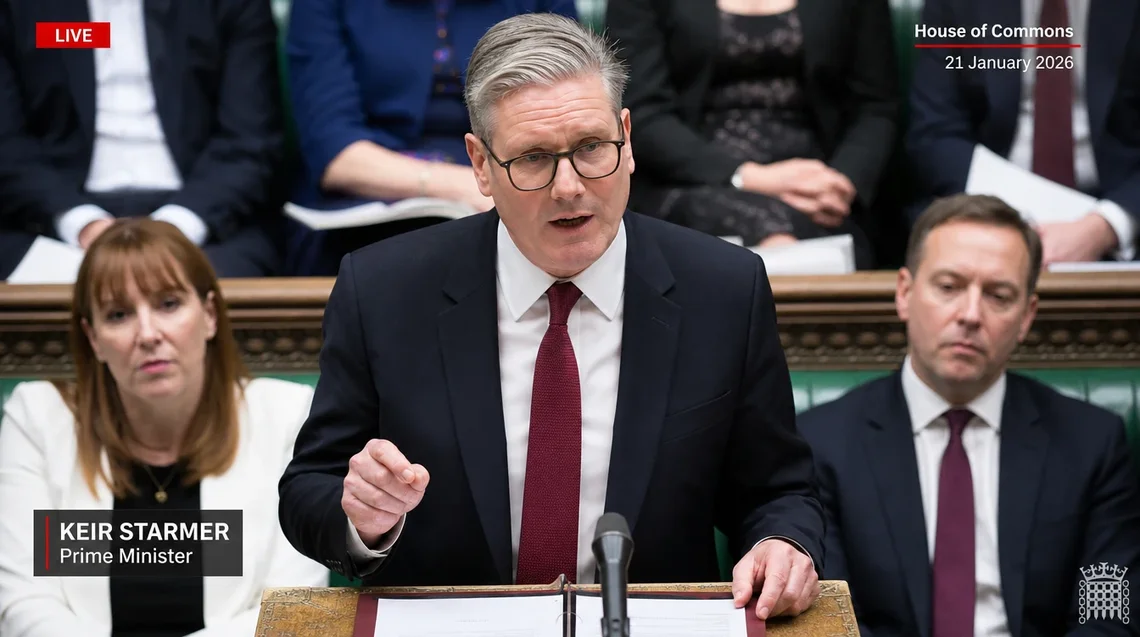
The Starmer government has unveiled sweeping plans to overhaul the National Health Service, committing billions in additional funding as official figures show NHS waiting lists in England remain at historically elevated levels, with more than 7.5 million people currently awaiting treatment. The announcement, framed by Downing Street as the most significant structural reform of the health service in a generation, comes under mounting pressure from patient groups, opposition parties, and a public increasingly frustrated by delays that officials acknowledge have become a systemic crisis.
Party Positions: Labour has pledged a multi-billion-pound NHS investment package alongside structural reforms, including expanded community care and a renewed focus on prevention over acute treatment. Conservatives argue the government's approach prioritises announcements over delivery, pointing to what they describe as insufficient detail on how new spending will be funded without further borrowing. Lib Dems have broadly welcomed investment in primary and mental health care but are pushing for binding targets on waiting list reductions and an independent watchdog with powers to hold NHS trusts to account.
The Scale of the Crisis
The political backdrop to Labour's reform agenda is stark. NHS England data, cited across major outlets including the BBC and the Guardian, confirms that the waiting list, though marginally reduced from its peak, remains at a level that would have been considered unthinkable a decade ago. Patients are waiting months — in some specialties, well over a year — for procedures ranging from hip replacements to cataract surgery and cancer diagnostic assessments.
What the Numbers Show
According to data published by NHS England and analysed by the Office for National Statistics, the proportion of patients waiting more than 18 weeks for consultant-led treatment currently sits far above the NHS constitutional standard, which requires 92 percent of patients to be seen within that timeframe. The government has acknowledged in internal briefings, reported by the Guardian, that meeting that target in the near term will require not only additional funding but a fundamental reorganisation of how care is delivered.
Related Articles
Polling conducted by YouGov shows that the NHS consistently ranks as the single most important issue for British voters, with roughly two-thirds of respondents saying they are dissatisfied with the current state of the health service. A separate Ipsos survey found that public confidence in the government's ability to reduce waiting lists has fallen since the general election, presenting a significant political challenge for ministers who campaigned heavily on an NHS rescue narrative.
| Indicator | Current Figure | Target / Benchmark | Source |
|---|---|---|---|
| Total patients awaiting treatment (England) | 7.5 million+ | Pre-pandemic baseline: ~4.4 million | NHS England / ONS |
| Patients waiting over 18 weeks | ~60% of list | NHS Constitution: max 8% | NHS England |
| Public dissatisfied with NHS (YouGov) | ~67% | Pre-2019 average: ~41% | YouGov |
| Confidence govt. will cut waiting lists (Ipsos) | 34% confident | Post-election high: 49% | Ipsos |
| GP appointments delivered per week | ~1.4 million daily | Government target: increase by 50m/yr | NHS Digital / ONS |
Labour's Reform Package Explained
Health Secretary Wes Streeting, presenting the reform blueprint in the Commons, outlined a programme built around three pillars: shifting care from hospitals into communities, embracing technology and data to improve efficiency, and reforming the NHS workforce to reduce dependency on expensive agency staff. Officials said the package would be accompanied by a multi-year capital spending commitment, with details of specific allocations to be confirmed at the next spending review.
Community Care and Prevention
Central to the government's strategy is an accelerated push toward what ministers describe as a "neighbourhood health model," under which GP surgeries, pharmacists, mental health practitioners, and social care workers would be co-located or formally networked to reduce unnecessary hospital admissions. Officials said pilot schemes currently operating in several NHS integrated care board areas had demonstrated meaningful reductions in accident and emergency attendance, though independent evaluation of those pilots remains ongoing.
For further detail on the specific legislative and financial mechanisms underpinning the waiting list agenda, see our earlier coverage: Labour targets NHS waiting lists in major reform push, which examined the policy architecture in depth ahead of the formal announcement.
Technology and Data Reform
A significant portion of the efficiency case rests on digitisation. The government has committed to accelerating the rollout of the NHS App as a primary patient interface, expanding electronic patient records across all trusts, and using artificial intelligence tools to help radiologists and pathologists process diagnostic results more rapidly. Officials acknowledged, however, that interoperability between legacy NHS IT systems remains a substantial obstacle, and independent analysts cited by the Guardian have warned that returns on digital investment typically take years to materialise in clinical outcomes.
Political Reaction at Westminster
The announcement drew predictable lines of battle across the chamber. Shadow Health Secretary Edward Argar accused the government of offering "eye-catching language dressed up as policy," arguing that repeated pledges to reform the NHS without binding output targets amounted to little more than managed decline dressed in new rhetoric. Conservative MPs pointed to what they characterised as a lack of specificity on workforce numbers, suggesting the government's ambitions for community care expansion could not be realised without a significant uplift in trained clinical staff that current projections do not support.
Liberal Democrat and Crossbench Pressure
Lib Dem health spokesperson Helen Morgan pressed ministers on whether the government would commit to specific, measurable waiting list milestones, warning that without enforceable targets the reform plan risked repeating the pattern of previous administrations — high ambition, modest delivery. The Lib Dems have separately called for an independent NHS commissioner with statutory powers, a proposal the government has not adopted. Crossbench peers in the Lords have also raised concerns about the pace of social care reform, arguing that any meaningful reduction in hospital waiting times depends on freeing up beds currently occupied by patients who cannot be discharged to adequate community support.
For a broader picture of how this announcement fits within Labour's evolving health policy trajectory, readers may find useful context in our analysis piece: Labour Pledges NHS Overhaul as Waiting Lists Surge, as well as the earlier assessment published when the waiting list figures were first confirmed as a second-term priority: Starmer Pledges NHS Overhaul as Waiting Lists Surge.
Funding Questions and Treasury Constraints
Perhaps the most contested dimension of the reform package is its fiscal basis. The government has resisted publishing a fully costed breakdown of the new NHS commitment ahead of the spending review, drawing criticism from independent budget analysts and the Office for Budget Responsibility, whose commentary on health spending sustainability has been widely cited across Westminster briefings. Officials maintain that the spending review will provide the appropriate vehicle for detailed allocation, but opponents argue that announcing structural reform without concurrent funding clarity undermines the credibility of the whole exercise.
Borrowing, Tax, and the Political Arithmetic
Treasury sources, speaking on background to several outlets including the BBC, have indicated that any significant new NHS capital investment will require either reallocation from other departmental budgets or an adjustment to the government's existing fiscal rules — a politically sensitive concession that ministers have been reluctant to make publicly. The Chancellor has maintained that day-to-day spending will remain within established parameters, leaving open the question of whether capital commitments of the scale implied by Streeting's reform ambitions can be achieved within the current envelope. (Source: Office for National Statistics; BBC; Guardian)
NHS Workforce: The Structural Bottleneck
Across the political spectrum, there is broad consensus that the waiting list crisis cannot be resolved by funding alone. The NHS currently faces shortfalls across multiple clinical disciplines — from consultant surgeons to community mental health practitioners to district nurses — and the government's own workforce plan, published by NHS England, projects that full staffing sufficiency in key areas will not be achieved within the current parliament.
Retention, Pay, and Industrial Relations
Industrial relations within the NHS, which deteriorated severely in the preceding parliament through a prolonged period of strike action, have stabilised following pay settlements that the government inherited and concluded. However, trade unions representing nursing and junior medical staff have signalled that workforce reform cannot be separated from continued real-terms pay restoration, and any backsliding on pay commitments risks reigniting the industrial tensions that contributed to waiting list deterioration in recent years, officials acknowledged. (Source: YouGov; Ipsos; Office for National Statistics)
The full scale of Labour's financial commitments, including the specific capital figures attached to hospital infrastructure and elective recovery, are examined in our detailed breakdown: Labour pledges £20bn NHS overhaul as waiting lists surge.
What Comes Next
The government's reform timetable envisages primary legislation on NHS structural changes being introduced in the current parliamentary session, with secondary regulations on workforce and community care models to follow. A ten-year NHS plan, which officials have described as a successor framework to NHS England's previous long-term strategy, is expected to be published for public consultation in the coming months. Patient and clinical groups, including the British Medical Association and NHS Confederation, have broadly welcomed the reform direction while urging the government not to allow the plan to become another document heavy on aspiration and light on implementation infrastructure.
The political stakes for Labour are considerable. The party's electoral mandate rested substantially on a promise to rescue an NHS that voters — according to consistently cited YouGov and Ipsos polling — regard as in crisis. If waiting lists remain at or near current levels as the parliamentary term advances, the government faces the prospect of having adopted both the political ownership and the political liability of a health system whose recovery is proving slower and more complex than campaign rhetoric implied. Whether the reform blueprint announced represents a credible path to change, or another layer of policy architecture over intractable operational problems, will ultimately be judged not in Westminster statements but in the lived experience of patients still waiting for the care they were promised. For continued coverage of where Labour's NHS agenda stands, see also: Labour Pledges NHS Reform as Waiting Lists Remain Critical. (Source: Office for National Statistics; YouGov; Ipsos; BBC; Guardian)