Starmer pledges NHS funding boost amid staffing crisis
Labour government announces new investment plan for health service

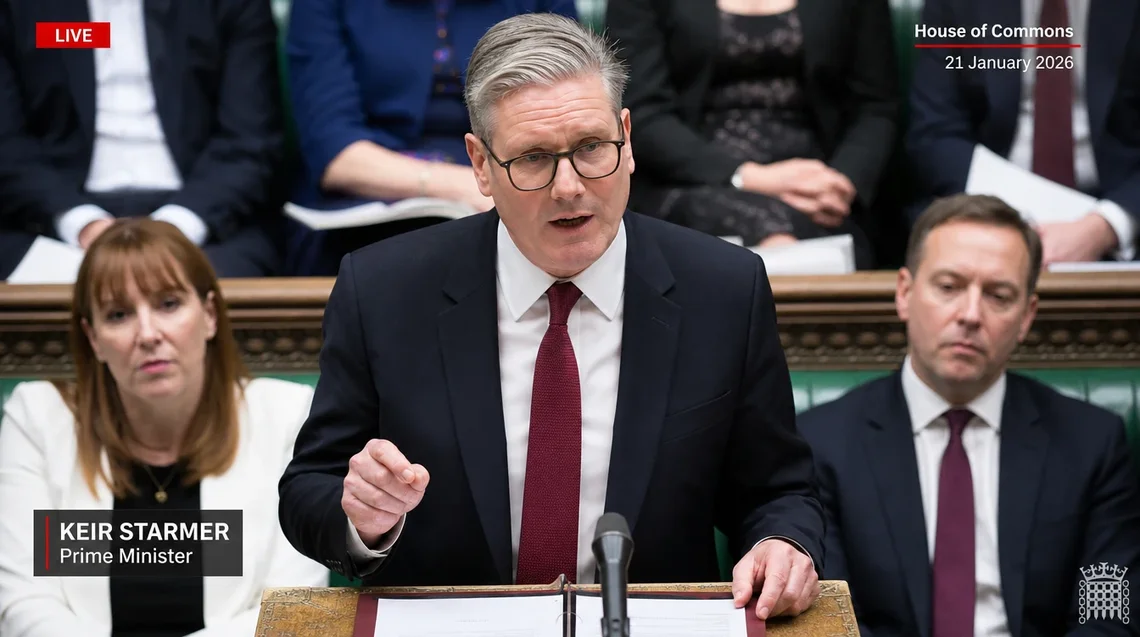
Prime Minister Keir Starmer has announced a significant new investment package for the National Health Service, committing billions in additional funding as the health service grapples with a deepening staffing crisis, record waiting lists, and mounting pressure from opposition parties demanding immediate structural reform. The announcement, made during a Downing Street press conference, positions NHS renewal as the defining domestic mission of Starmer's Labour government.
The pledge comes as the NHS faces what health economists describe as a generational reckoning — a combination of post-pandemic backlogs, chronic workforce shortages, and an ageing population placing unprecedented demand on services already stretched to their limits. According to data published by the Office for National Statistics, the number of people waiting for elective treatment in England recently surpassed seven million, with many patients waiting more than a year for routine procedures.
Party Positions: Labour has committed to a multi-billion pound NHS investment plan centred on recruiting additional GPs, nurses, and consultants, alongside investment in digital infrastructure and community health hubs. Conservatives have criticised the funding announcement as insufficiently detailed, arguing that Labour has failed to explain how the additional spending will be financed without raising taxes on working people. Lib Dems have broadly welcomed new investment but are calling for an independent review of NHS workforce planning and greater transparency over how funds will be allocated across regions.
The Scale of the Crisis
Any honest assessment of the NHS's current condition requires confronting a set of figures that make uncomfortable reading regardless of political persuasion. Vacancy rates across NHS trusts in England remain stubbornly high, with tens of thousands of nursing and medical posts currently unfilled. Staff sickness and burnout continue at elevated rates, according to figures cited by NHS England, while the workforce itself is ageing, with a significant cohort of experienced clinicians expected to reach retirement age within the next decade.
Related Articles
Waiting Times and Patient Impact
The human cost of the staffing deficit is most visible in waiting time statistics. According to NHS England data, patients in some specialisms — including orthopaedics, ophthalmology, and cardiology — are routinely waiting in excess of eighteen months for first appointments. Emergency departments across England have recorded sustained periods where the four-hour target for treatment or discharge has been met for fewer than three quarters of patients, well below the seventy-eight percent standard set by NHS England (Source: NHS England). The BBC has reported extensively on the cascading effect of A&E delays on ambulance response times, with handover delays at hospitals backing up emergency vehicles across the country.
The Workforce Shortage in Numbers
The staffing crisis predates the pandemic but was dramatically accelerated by it. NHS Digital data, cited by the Health Foundation, indicate that registered nurse vacancies in England alone number in the tens of thousands. The situation in general practice is similarly acute, with the Guardian reporting that the number of fully qualified, full-time equivalent GPs per head of population has declined steadily over the past several years, even as overall demand has risen sharply.
| Metric | Current Figure | Target / Benchmark | Source |
|---|---|---|---|
| NHS England elective waiting list | 7.6 million patients | Pre-pandemic: ~4 million | NHS England / ONS |
| Nurse vacancies (England) | ~40,000+ posts | Full establishment | NHS Digital |
| A&E four-hour target (met) | ~68–72% | 78% standard | NHS England |
| Public satisfaction with NHS (YouGov) | 24% satisfied | Historical avg: ~57% | YouGov / King's Fund |
| Public trust in government NHS policy (Ipsos) | 38% trust Labour to improve NHS | Conservatives: 19% | Ipsos |
Labour's Investment Announcement
The Starmer government's investment plan centres on several interconnected commitments. Officials said the package would target recruitment and retention of NHS staff as its primary objective, with funding directed toward training bursaries, improved pay progression, and expanded medical school places. The government has also signalled significant capital investment in NHS estate and digital infrastructure, areas described by Health Secretary Wes Streeting as "decades behind where they should be."
For further context on how this announcement fits within the broader pattern of Labour's health policy commitments, see our earlier reporting on Labour pledges NHS funding boost amid waiting list crisis, which examined the party's initial manifesto commitments before and after the general election.
Training, Recruitment, and Retention
Central to the funding plan is a workforce strategy that officials said would be published in full within weeks. The strategy is expected to set out binding targets for GP numbers, consultant posts, and community nursing capacity over a rolling ten-year period. Health economists at the Nuffield Trust have long argued that workforce planning in the NHS has historically been reactive rather than strategic, leaving the service perpetually short-staffed in high-demand specialisms. Labour's approach, officials indicated, will attempt to address that structural failure by tying training funding directly to long-range demographic and epidemiological projections.
Digital Infrastructure and Prevention
A notable element of the announcement is the emphasis on digital modernisation. NHS trusts in England currently operate across a fragmented patchwork of IT systems, many of them legacy platforms that cannot easily share patient data. According to the Health Foundation, this digital fragmentation costs the NHS both time and money — contributing to duplicated tests, slower clinical decision-making, and administrative inefficiency. The government has signalled investment in a unified patient record system, though officials declined to give a precise timetable for full implementation. The Guardian has reported that plans for a more integrated NHS data infrastructure have been discussed at senior official level for some time, with delivery timelines remaining a key sticking point.
Opposition Response
The Conservative Party's response to the announcement has been sharply critical in tone, though the substance of the critique has focused primarily on fiscal detail rather than the principle of additional NHS funding. Shadow Health Secretary Edward Argar argued that Labour has repeatedly announced headline investment figures without providing credible offsetting measures, describing the latest pledge as "a press release dressed up as a plan." The Conservatives have pointed to the overall state of public finances, arguing that new health spending must be weighed against borrowing levels and the risk of inflationary pressure on NHS pay deals.
Liberal Democrat Position
The Liberal Democrats, who made NHS and social care a centrepiece of their recent general election campaign and performed strongly in constituencies with older demographics, have offered a more qualified welcome. The party's health spokesperson reiterated calls for an independent office of health workforce planning, modelled loosely on the Office for Budget Responsibility, which would remove long-range staffing projections from direct ministerial control. The Lib Dems have also pressed for greater clarity on how investment will be distributed between urban centres — which tend to attract clinical staff — and rural and coastal communities, where recruitment difficulties are most acute.
Public Opinion and Political Context
Polling data underscore both the political opportunity and the risk embedded in Starmer's NHS commitment. According to Ipsos, the NHS consistently ranks as the single most important issue for British voters — ahead of the cost of living, immigration, and the economy — meaning that visible progress on health outcomes carries disproportionate electoral weight (Source: Ipsos). YouGov polling indicates that public satisfaction with the NHS has fallen to its lowest recorded level, a figure that cuts across party lines and has generated pressure on the government to demonstrate rapid, tangible improvement rather than long-term structural reform (Source: YouGov).
The political risk for Labour is equally clear. Having campaigned with an implicit promise to restore NHS performance, the government faces a credibility test that will be judged not by announcements but by waiting list figures, ambulance response times, and the experiences of individual patients. Health analysts at the King's Fund have noted that the gap between investment decisions and measurable patient outcomes typically spans several years — a timeline that sits awkwardly against the electoral cycle.
Our coverage of earlier iterations of this policy debate can be found in the pieces Starmer pledges NHS overhaul amid funding crisis and Starmer pledges major NHS overhaul amid funding row, both of which traced the evolution of the government's position through earlier parliamentary debates on health financing.
Parliamentary and Broader Policy Backdrop
The announcement comes ahead of a Commons debate on NHS reform tabled by the Liberal Democrats, which is expected to attract significant cross-party interest. Several Labour backbenchers representing constituencies with particularly long waiting lists have reportedly pressed ministers privately for faster action, reflecting anxiety within the parliamentary party about the pace of visible change. The government's majority means it is under no formal parliamentary threat, but internal pressure from its own MPs remains a factor shaping the timing and presentation of policy announcements, according to Westminster sources familiar with the discussions.
International Comparisons
Comparative health system analysis from the Commonwealth Fund consistently places the United Kingdom among the higher performers on equity of access and administrative efficiency relative to health spending, but identifies waiting times and workforce capacity as areas of relative weakness (Source: Commonwealth Fund). OECD data indicate that the United Kingdom spends a lower proportion of GDP on health than several comparable European economies, a point Labour has used to argue that underinvestment — rather than inefficiency — is the primary driver of NHS underperformance. Opponents dispute this framing, pointing to productivity metrics within the NHS that they argue indicate structural issues beyond funding alone.
Readers interested in the workforce dimension of the government's health agenda may also find relevant analysis in our earlier piece on Starmer pledges NHS investment amid staff shortage crisis, which examined the specific workforce modelling underpinning Labour's recruitment targets.
What Comes Next
The immediate legislative and policy calendar will test whether the government's investment announcement translates into concrete action. The forthcoming workforce strategy document is expected to be scrutinised closely by the Commons Health and Social Care Select Committee, which has indicated it will call ministers and senior NHS officials to give evidence shortly after publication. NHS England's next quarterly performance data are also due imminently, and the figures will be read — by supporters and critics alike — as an early-stage indicator of whether Labour's approach is beginning to make any measurable difference to patients.
The fundamental challenge facing Starmer's government is one that has defeated successive administrations of both parties: the NHS requires sustained, multi-decade investment and structural reform simultaneously, at a moment when public finances are constrained, public patience is limited, and the political pressure to show immediate results is intense. Whether this latest funding commitment represents a genuine inflection point or an incremental addition to a long line of NHS announcements is a question that only time — and patient outcomes — will answer. For the millions currently on waiting lists, the distinction is not academic.