Labour pledges NHS overhaul amid funding pressure
Starmer government unveils reform plan to tackle waiting lists

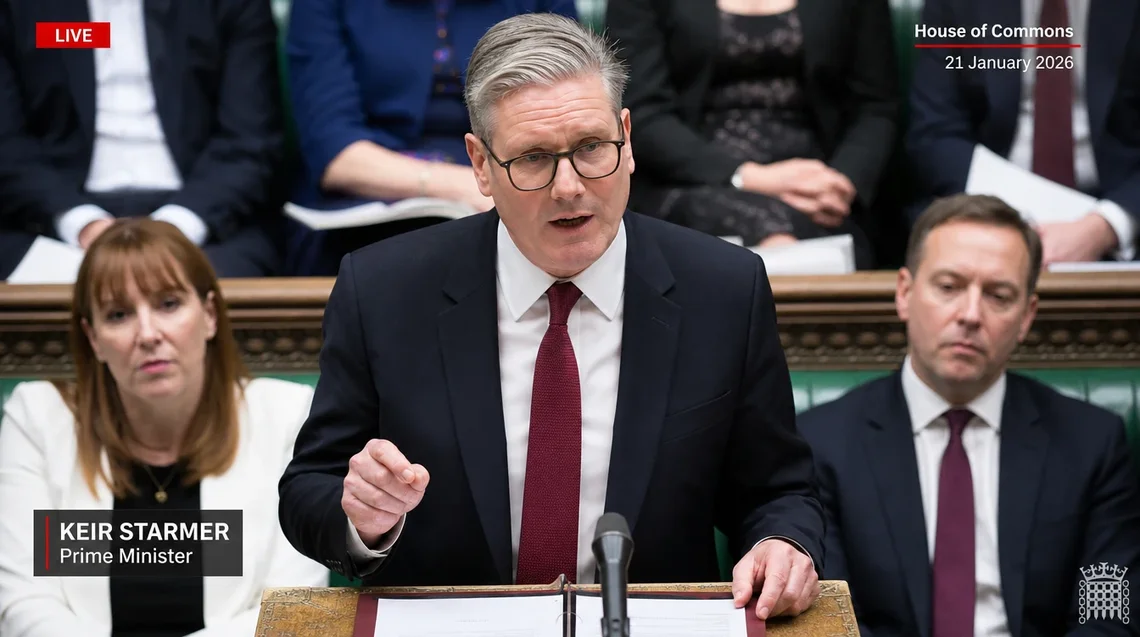
The Starmer government has unveiled a sweeping reform programme for the National Health Service, promising to cut record waiting lists that currently affect more than 7.5 million patients in England, as ministers face mounting pressure over the pace of change and the adequacy of new funding commitments. Health Secretary Wes Streeting confirmed the package of measures in a statement to the House of Commons, framing it as the most significant restructuring of NHS delivery in more than a decade. The announcement has drawn immediate scrutiny from opposition parties and health economists, who question whether the funding envelope attached to the reforms is sufficient to deliver meaningful improvement within this parliament.
The Scale of the Crisis Facing NHS England
Waiting list figures published by NHS England show that the backlog of patients awaiting elective treatment remains at historically elevated levels, having built during successive years of operational pressure compounded by workforce shortages and infrastructure underinvestment. According to data cited by the Office for National Statistics, average waiting times for routine procedures in England remain well above pre-pandemic benchmarks, with a significant proportion of patients waiting beyond the eighteen-week referral-to-treatment standard that the NHS is legally obliged to meet.
Workforce and Capacity Pressures
Officials within the Department of Health and Social Care have acknowledged that staffing constraints represent the single largest structural obstacle to reducing the backlog. Vacancy rates across nursing, clinical support, and diagnostic specialisms remain elevated, officials said, despite recruitment campaigns launched under previous administrations. The government's reform plan includes a commitment to expand training places and accelerate the deployment of internationally recruited clinical staff, though critics have noted that the timescales involved mean visible impact on waiting lists is unlikely in the near term. (Source: NHS England)
Diagnostic Delays and Infrastructure
Separate data from NHS England indicate that diagnostic waiting lists, covering MRI, CT, and endoscopy services, have grown substantially, with hundreds of thousands of patients waiting beyond the six-week standard. The government's plan proposes the acceleration of community diagnostic centres, a model that began under the previous Conservative administration, but ministers insist the rollout will now be significantly expanded in scale and geographic reach. Health economists cited by the Guardian have cautioned that capital funding for such infrastructure must be ring-fenced if the programme is to avoid the fate of earlier commitments that were absorbed into general NHS budgets during periods of fiscal pressure.
Related Articles
Party Positions: Labour says the NHS overhaul is central to its first-term agenda, with Health Secretary Wes Streeting committing to cutting waiting lists by expanding community diagnostic centres, reforming primary care, and shifting resources toward prevention. Conservatives argue that the government's funding settlement falls short of what is required and point to their own record in establishing the community diagnostics infrastructure that Labour is now seeking to expand, warning that structural reorganisation risks repeating the costly mistakes of the Lansley reforms. Lib Dems have broadly welcomed the direction of reform but are calling for more rapid action on mental health waiting lists specifically, and have tabled amendments in the Commons demanding ring-fenced capital funding for rural diagnostic facilities.
What the Reform Package Contains
The government's published reform document sets out several distinct policy pillars, including a shift toward neighbourhood health provision, greater use of technology and artificial intelligence for triage and administrative functions, and an expansion of the independent sector's role in providing NHS-commissioned procedures. The last of these has proved controversial within the Labour parliamentary party, with a number of backbenchers expressing concern that increased private sector involvement risks undermining the principle of a publicly delivered health service, officials said.
Neighbourhood Health Centres and Primary Care
Central to the reform agenda is the proposal to establish a network of neighbourhood health centres intended to shift care out of acute hospital settings and into community environments. Ministers argue this model, drawing on examples from parts of Wales and select English pilot sites, can reduce pressure on accident and emergency departments while improving continuity of care for patients with long-term conditions. According to the BBC, pilot sites operating under similar models have demonstrated reductions in emergency admissions among registered patient populations, though independent evaluators have urged caution in extrapolating those findings nationally given differences in local demographics and service maturity.
Funding: The Central Point of Contention
The financial architecture of the reform programme remains the most contested element of the announcement. The Treasury has confirmed an increase in NHS resource funding, but the precise allocation between capital investment, workforce expansion, and service delivery has not been fully disclosed in the published documents, officials said. Health think-tanks and opposition finance spokespeople have argued that the headline figure is less substantial in real terms than the government's presentation implies, once inflation in NHS-specific costs, including energy, pharmaceuticals, and agency staffing, is accounted for.
Independent Sector Funding and Public Finance
The decision to direct a portion of NHS-commissioned activity toward independent sector providers has raised questions about value for money and accountability. According to analysis cited in the Guardian, previous independent sector treatment centre programmes delivered mixed outcomes on cost-efficiency, with some contracts generating significant cost overruns relative to NHS tariff rates. Ministers have said the current framework includes stronger performance conditions and penalty clauses than earlier models, though the full contract terms have not been published. For readers following the financial dimension of this debate, earlier reporting on Labour pledges new NHS funding as waiting lists persist provides relevant context on the funding commitments made during the election campaign and how they compare to the current settlement.
Parliamentary and Political Reaction
The Commons debate that followed Streeting's statement was notably fractious, with Conservative health spokesperson Edward Argar arguing that the government was repackaging existing initiatives under new branding while failing to produce a credible plan to meet the eighteen-week standard. Liberal Democrat health spokesperson Helen Morgan welcomed the neighbourhood health model but pressed ministers on the specific timeline for mental health waiting list reductions, an area she described as receiving insufficient attention in the published document.
Within the Labour benches, the reception was largely supportive, though several MPs representing seats with significant rural health pressures used the debate to press for guarantees that the neighbourhood health centre rollout would not be concentrated exclusively in urban and suburban areas. Officials said the government intends to publish a geographic distribution plan for the new facilities in the coming weeks.
| Metric | Current Position | Government Target | Source |
|---|---|---|---|
| Elective waiting list (England) | 7.5 million patients | Reduce to pre-pandemic levels within parliament | NHS England |
| 18-week standard compliance | Approximately 58% of patients | Return to 92% compliance | NHS England / DHSC |
| Diagnostic waiting list (6-week standard) | Approx. 1.6 million patients | Halve within 24 months | NHS England |
| Public satisfaction with NHS (net) | 29% satisfied (lowest recorded) | No specific target published | Ipsos / British Social Attitudes |
| Public confidence in Labour NHS reforms | 41% confident, 38% not confident | — | YouGov |
Public Opinion and the Political Stakes
Polling data published by YouGov in recent weeks indicates that public confidence in the government's ability to deliver on NHS reform is evenly divided, with a narrow plurality expressing confidence but a substantial proportion remaining sceptical. (Source: YouGov) The NHS consistently ranks as the most important issue facing the country in monthly tracker surveys conducted by Ipsos, and strategists within Downing Street are acutely aware that perceptions of NHS performance will be a defining factor in the government's electoral prospects. (Source: Ipsos)
For a broader account of how Labour's NHS commitments have evolved since the election, readers can follow the reporting at Labour Pledges Major NHS Overhaul Amid Funding Crisis and the earlier analysis published as Labour Pledges NHS Overhaul as Waiting Lists Surge, both of which document the successive iterations of the government's position as fiscal and operational realities have pressed against original campaign pledges.
International Comparisons and Structural Lessons
Health policy analysts have pointed to comparable reform programmes in Scandinavia and the Netherlands as potential reference points for the government's neighbourhood health model, though officials have been careful to avoid direct comparisons given differences in insurance architecture, workforce regulation, and per-capita health spending. According to the Office for National Statistics, the United Kingdom's health spending as a share of gross domestic product remains below the average for comparable Western European economies, a structural reality that several health economists argue constrains the pace of any reform programme regardless of its design quality. (Source: Office for National Statistics)
Lessons from Previous NHS Reorganisations
Academic commentary cited by the BBC has drawn attention to the risk of reform fatigue within the NHS, noting that clinicians and managers have experienced multiple waves of structural reorganisation since the Health and Social Care Act reorganisation of the early part of the last decade, and that each reorganisation carries transaction costs that temporarily reduce operational efficiency. Ministers have sought to pre-empt this criticism by framing the current programme as an evolution of delivery models rather than a structural reorganisation of commissioning and oversight arrangements, though the distinction has not fully satisfied health sector trade unions, officials said.
What Comes Next
The government has committed to publishing a ten-year NHS plan later this year, which is expected to provide greater specificity on funding trajectories, workforce planning assumptions, and the governance framework for the neighbourhood health network. That document will face close scrutiny from the Health and Social Care Select Committee, whose chair has already written to the Health Secretary requesting pre-publication evidence sessions. The coming months will test whether the reform rhetoric of the current administration can be translated into measurable reductions in waiting times — the metric by which the public, and ultimately the electorate, will judge whether the pledge to fix the NHS amounts to more than a political commitment. Further coverage of how this agenda has developed can be found in the detailed breakdown at Starmer pledges NHS overhaul amid funding crisis, which traces the policy trajectory from the earliest commitments made before and after the general election through to the current announcement.