Labour promises NHS overhaul as waiting lists hit record
Starmer government unveils £15bn reform plan

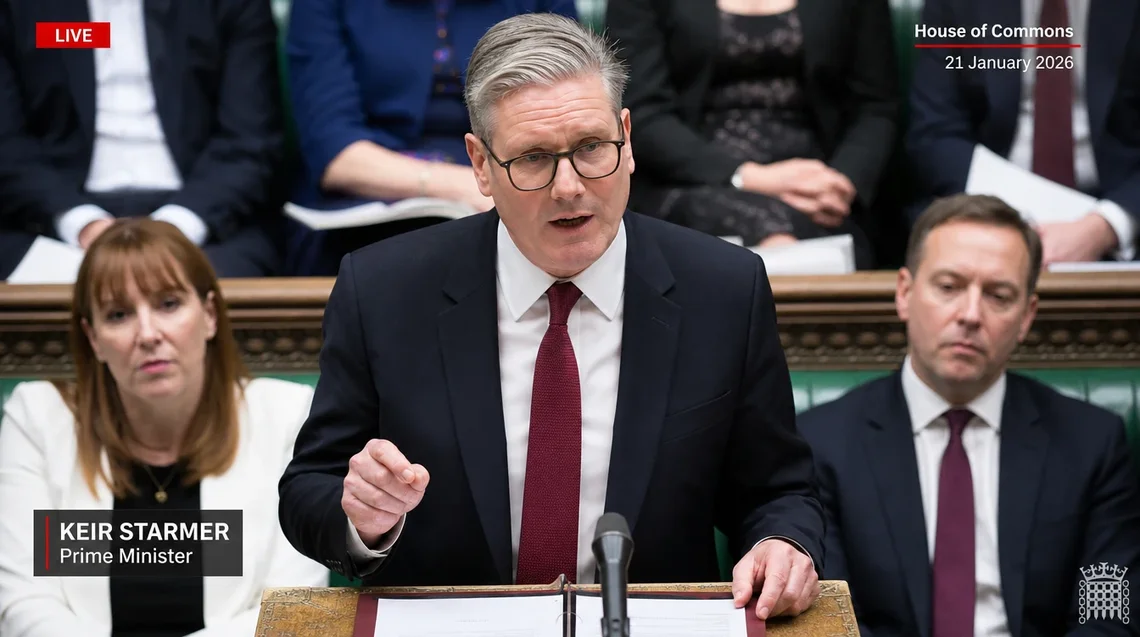
The government has unveiled a £15 billion overhaul of the National Health Service as NHS England waiting lists reached a record high, with more than 7.6 million patients currently on a treatment backlog that ministers have described as a national emergency. Prime Minister Sir Keir Starmer set out the most sweeping reform agenda for the health service in a generation, pledging to reduce waiting times, expand community care, and restructure NHS management structures that Downing Street officials said had become "unfit for purpose."
The announcement represents the centrepiece of the government's domestic agenda and comes as polling consistently shows the NHS remains the single most important issue for voters across England, Scotland, and Wales, according to data from YouGov and Ipsos. The reform blueprint, drawn up over several months in consultation with NHS England, the British Medical Association, and patient advocacy groups, sets out a ten-year structural transformation funded by a combination of new Treasury allocation and redirected existing NHS budgets.
Party Positions: Labour has committed £15bn to NHS reform over a multi-year spending envelope, prioritising waiting list reduction, GP access, and mental health provision, with an emphasis on shifting care from hospitals into the community. Conservatives have challenged the government's funding model, arguing the plan relies on uncosted assumptions and criticising what the official opposition describes as a failure to address workforce shortages through substantive pay reform. Lib Dems have broadly welcomed the ambition of the announcement while calling for a specific and legally binding commitment to reducing mental health waiting times, and have tabled amendments demanding independent oversight of spending allocations.
Scale of the Crisis
Waiting List Figures
The waiting list figure of 7.6 million patients represents the highest total recorded since the NHS was founded, according to data published by NHS England and analysed by the Office for National Statistics. The backlog encompasses patients waiting for routine operations, specialist consultations, diagnostic procedures, and elective surgery. Orthopaedic procedures, ophthalmology, and gynaecology account for the largest share of delayed treatments, officials said.
Related Articles
Average waiting times for non-urgent treatment currently stand at approximately 14.4 weeks, against a statutory 18-week target that has not been met consistently for several years. In some specialisms and in certain NHS trusts in the North West and East Midlands, median waits exceed 30 weeks, according to figures published by NHS England and reported by the BBC.
Impact on Workforce and Capacity
NHS England currently employs approximately 1.4 million full-time equivalent staff, yet vacancy rates remain at historically elevated levels, particularly among nursing, midwifery, and consultant medical staff. The government's reform document acknowledges that capital investment alone cannot resolve structural capacity problems without a parallel workforce strategy, according to officials briefed on the plan's contents.
The Guardian reported that the reform blueprint includes specific commitments to train an additional 10,000 district nurses and expand the number of medical school places, though the full detail of workforce projections is expected to be set out in a separate NHS Workforce Plan update later in the parliamentary term.
The £15 Billion Reform Package
Community and Primary Care Investment
The single largest allocation within the reform package is directed toward primary and community care infrastructure, with ministers committing to build or refurbish more than 200 health centres and GP surgeries across England. Health Secretary Wes Streeting has previously stated publicly that the government intends to shift the model of NHS care decisively away from acute hospital settings toward neighbourhood health teams and integrated community services.
The investment in community care is designed to reduce pressure on accident and emergency departments, which are currently recording some of the longest average waiting times since records began, data show. According to NHS England performance statistics, fewer than 70 per cent of patients at major emergency departments are currently seen within the four-hour target, against a headline standard of 95 per cent.
Technology and Digital Infrastructure
Approximately £3.5 billion of the total package is earmarked for digital infrastructure upgrades, including the replacement of outdated IT systems still operating on legacy software across dozens of NHS trusts. Ministers have cited investment in artificial intelligence-assisted diagnostic tools and electronic patient records integration as priorities, officials confirmed. The government has pointed to evidence from pilot programmes in which AI-supported radiology review reduced diagnostic waiting times by a significant margin, though independent evaluation of those pilots is ongoing.
The digital investment strand has attracted cross-party interest, with both Conservative and Liberal Democrat health spokespeople acknowledging that NHS digital infrastructure has been chronically underinvested, even as they have questioned the delivery timeline and governance arrangements proposed for the new funding.
Political Reaction at Westminster
Opposition Response
The Conservatives, led in this policy debate by shadow health secretary Ed Argar, have challenged the government to publish full spending breakdowns and independent costings for the reform package. Speaking in the House of Commons, Argar argued that previous NHS transformation programmes had consistently overpromised and underdelivered, and pressed ministers to confirm whether the £15bn figure represented genuinely new money or a reclassification of previously announced capital budgets.
The Liberal Democrats, through their health spokesman, have welcomed the scale of the ambition while arguing that the plan as currently structured does not go far enough on mental health parity. Polling published by YouGov indicates that mental health services are among the areas of NHS provision where public dissatisfaction is highest, with significant proportions of respondents rating their experience of accessing mental health support as poor or very poor (Source: YouGov).
Labour Backbench and Internal Pressure
Within the parliamentary Labour Party, a significant number of backbench MPs representing constituencies with above-average deprivation have pressed ministers to ensure that reform funding is distributed according to health need rather than institutional readiness or existing capacity. Several MPs representing former Red Wall constituencies have written to the Health Secretary requesting assurances that community care investment will not be disproportionately directed toward already well-resourced urban health economies.
Downing Street officials have said that the formula for distributing reform funding will be subject to an independent review process and will weight allocations toward areas of greatest health inequality, though the specific methodology has not yet been published.
Public and Expert Opinion
Polling Landscape
| Polling Question | Approve / Yes | Disapprove / No | Don't Know | Source |
|---|---|---|---|---|
| Do you support major new investment in the NHS? | 74% | 12% | 14% | YouGov |
| Is the NHS the most important issue facing Britain? | 61% | 27% | 12% | Ipsos |
| Do you trust Labour to improve NHS waiting times? | 38% | 43% | 19% | YouGov |
| Should NHS reform focus on hospitals or community care? | 52% (community) | 31% (hospitals) | 17% | Ipsos |
The polling data illustrate a political landscape in which public support for NHS investment is broad but trust in the government's ability to deliver measurable improvements remains more contested. Ipsos research has consistently shown that while voters support additional health spending in principle, scepticism about whether money translates into service improvements is widespread across party lines (Source: Ipsos).
Expert and Clinical Response
Senior figures within the medical profession have offered a cautiously positive reception to the reform announcement. The British Medical Association, while not formally endorsing the plan, acknowledged in a published statement that the scale of investment proposed was necessary even if questions remained about delivery mechanisms. Commentators writing in the Guardian have noted that previous transformation programmes — including those initiated under both Conservative and Labour governments — have historically struggled to achieve projected efficiency gains within the timescales originally forecast (Source: Guardian).
The King's Fund, an independent health policy think tank, said in analysis published following the announcement that the emphasis on community care represented a strategically sound direction but cautioned that rebalancing the NHS away from hospital-centric provision would require sustained political commitment over multiple spending review periods, not a single capital injection.
Parliamentary Process and Timeline
Legislation and Scrutiny
The government has indicated that elements of the reform package requiring primary legislation will be introduced through a Health and Care Reform Bill, the outline of which is expected to be published for pre-legislative scrutiny in the coming months. The Health and Social Care Select Committee is expected to launch a formal inquiry into the reform proposals, with committee chair and Labour MP Layla Moran having already indicated her intention to call senior NHS England officials and independent experts to give evidence.
For further detail on the background to the government's health agenda, readers can consult earlier coverage including reporting on how Starmer signals NHS overhaul as waiting lists hit record, as well as analysis of how Labour Pledges NHS Overhaul as Waiting Lists Surge in the months preceding the formal announcement.
Spending Review Implications
Treasury officials have confirmed that the NHS reform package forms part of a multi-year capital settlement and will be subject to the upcoming Spending Review, which will set departmental budgets for the following spending period. Economists and health finance specialists have noted that the real-terms value of the £15bn commitment will depend significantly on inflation assumptions embedded in Treasury modelling, a point that the Office for National Statistics has previously flagged in its analysis of public service capital expenditure (Source: Office for National Statistics).
The Institute for Fiscal Studies has separately noted that NHS productivity, measured as outputs relative to inputs, remains below pre-pandemic levels, and has argued that any credible reform programme must address structural inefficiencies within existing budgets as well as committing new resources.
Regional and Devolved Dimensions
The reform package as announced applies to NHS England only, with health policy remaining a devolved competency in Scotland, Wales, and Northern Ireland. Scottish Government ministers have called for a corresponding uplift in the Barnett consequentials that would flow from English NHS investment, arguing that devolved health services face equivalent pressures and require equivalent resourcing. Welsh Government health officials have made similar representations to the Treasury.
Within England, regional NHS Integrated Care Boards are expected to play a central role in implementing the reform agenda, though critics have questioned whether those bodies have sufficient managerial capacity and strategic capability to translate national policy commitments into operational delivery at local level.
Coverage of the government's evolving position on this issue has developed significantly over recent weeks. Earlier reporting captured how Starmer pledges NHS overhaul as waiting lists hit record became a defining political moment for the administration, while subsequent analysis documented how Labour pledges NHS overhaul as waiting lists remain critical continued to shape the government's legislative priorities heading into the new parliamentary session. The full trajectory of the policy has also been traced in earlier ZenNewsUK reporting on how Labour pledges NHS overhaul as waiting lists hit record in official data releases that precipitated the government's formal response.
The government has staked considerable political capital on the success of this reform programme. With waiting lists at record levels, public expectations high, and opposition parties searching for evidence that the administration's ambitions outstrip its capacity to deliver, the coming months will represent a defining test of whether the most expensive peacetime health reform in the service's history can translate Treasury commitment into tangible improvement for patients currently waiting for treatment.