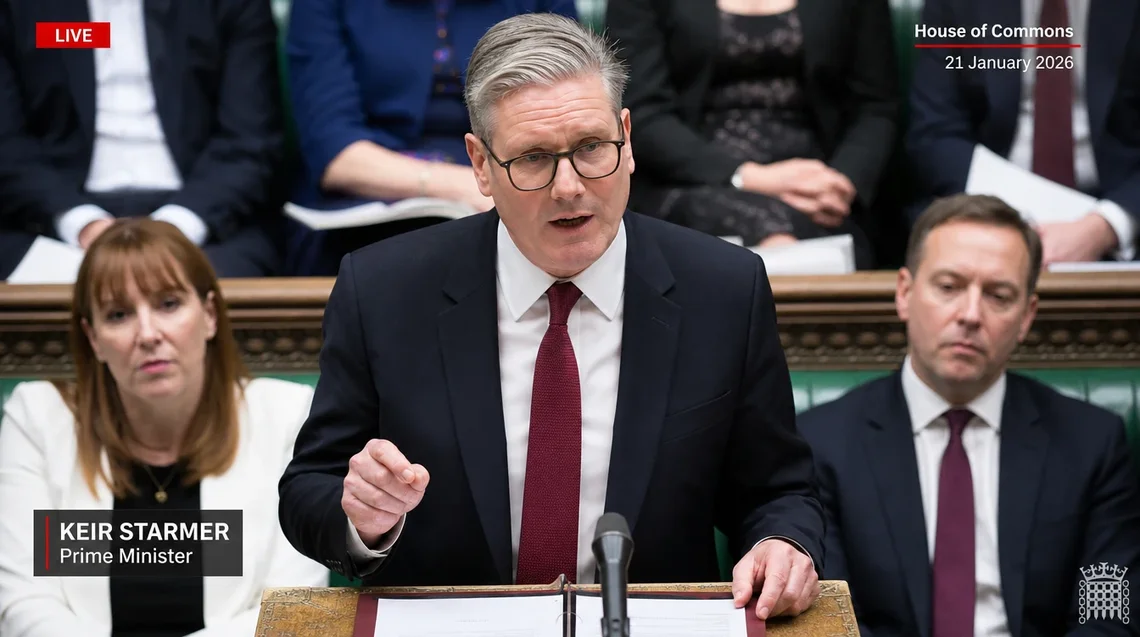
Labour's NHS Plan Faces Fresh Pressure Over Funding Gap
Government pledges reform as waiting lists remain stubbornly high

The government's flagship National Health Service reform agenda is facing mounting pressure from opposition parties, health economists, and frontbench critics alike, as official data show waiting lists for elective treatment in England remain stubbornly above seven million — raising urgent questions about whether Labour's spending commitments are sufficient to deliver the transformation ministers have promised. The funding gap at the heart of the plan, estimated by independent analysts at several billion pounds over the current parliamentary cycle, threatens to undermine the political credibility of a programme that sits at the centre of Sir Keir Starmer's domestic agenda.
The Scale of the Challenge
When Labour entered government, ministers inherited an NHS in a state of prolonged strain. Waiting lists had ballooned following years of pandemic disruption, industrial action, and what health service leaders described as chronic underinvestment in capital infrastructure. The government moved quickly to frame NHS reform as its defining domestic priority, with Health Secretary Wes Streeting committing to a ten-year plan centred on shifting care from hospitals into community settings, expanding diagnostic capacity, and harnessing technology to reduce administrative burdens on clinical staff.
Official Figures Paint a Difficult Picture
According to NHS England data cited by the Office for National Statistics, the number of patients on elective waiting lists remains at historically elevated levels, with millions waiting more than eighteen weeks for treatment — the standard the health service is legally required to meet. Analysts at the Health Foundation have noted that even with the additional funding announced in recent fiscal statements, the trajectory required to meet the government's own waiting list targets would demand a pace of productivity improvement not seen in the health service for more than a decade. (Source: Office for National Statistics)
The government's plan, as outlined in Wes Streeting's published reform prospectus, rests on three structural pillars: moving from analogue to digital, from hospital to community, and from sickness to prevention. Critics acknowledge the strategic logic but argue that the financial envelope attached to the plan is simply not large enough to deliver transformation at the pace and scale required. For more background on how this pressure has developed, see our earlier reporting on Starmer's NHS overhaul faces fresh funding pressure.
Related Articles
Opposition Reaction and Parliamentary Pressure
Conservative shadow health ministers have seized on the funding gap as evidence that Labour entered government without a credible financial plan for the NHS, arguing that the party's pre-election commitments were built on optimistic assumptions about productivity gains and private sector partnership that have not materialised in the short term. In recent Commons exchanges, opposition MPs have repeatedly pressed ministers to provide detailed breakdowns of how the additional money announced at successive fiscal events translates into specific reductions in waiting times.
Lib Dems Push for a Legal Guarantee
The Liberal Democrats, whose parliamentary strength in the current Commons makes them a significant force in holding the government to account, have gone further than the Conservatives in some respects by calling for a legally binding waiting time guarantee to be written into NHS legislation. Health spokesperson Helen Morgan has argued that without a statutory backstop, ministerial pledges on waiting lists amount to little more than aspiration. The party has tabled amendments in committee stages of relevant health bills pressing for measurable, enforceable standards — a position that has attracted some sympathy from a handful of Labour backbenchers in constituencies where NHS performance remains a highly salient issue with local voters.
Party Positions: Labour has pledged to reduce NHS waiting lists through a combination of additional funding, structural reform shifting care into community settings, and a new ten-year plan for the health service — with ministers arguing that reform, not just money, is the answer. Conservatives argue the government has failed to translate spending commitments into measurable improvements and that Labour entered office without a credible delivery plan. Lib Dems are calling for legally binding waiting time guarantees and have tabled legislation requiring enforceable NHS performance standards.
The Funding Gap in Detail
Independent health economists have attempted to quantify what the government would need to spend to meet its own stated objectives on waiting lists within the current parliamentary term. Figures published by the Nuffield Trust and the Health Foundation suggest that even accounting for the additional resource allocated through the most recent fiscal statement, there remains a structural shortfall in the capital budget — covering buildings, equipment, and digital infrastructure — that current plans do not address. Revenue funding, which pays for staff and day-to-day operations, has increased in real terms, but the capital gap is where analysts say the most acute pressure lies. (Source: BBC)
Treasury Constraints and Fiscal Rules
The political difficulty for ministers is that addressing the capital gap would require either borrowing above the fiscal rules Chancellor Rachel Reeves has publicly committed to, or finding offsetting savings elsewhere in departmental budgets. Neither option is straightforward. Departmental spending reviews have already identified efficiency savings across Whitehall, but the scale of what would be required to fund additional NHS capital investment is, according to Treasury sources cited by the Guardian, considerably larger than anything currently identified through the efficiency programme. (Source: Guardian)
This tension sits at the heart of the government's political problem. For a fuller account of how the fiscal dimension has shaped the debate, our analysis of Labour faces NHS funding pressure ahead of budget provides important context. The government's stated preference is to argue that structural reform will itself generate savings that can be reinvested — a proposition that health economists describe as plausible in theory but unproven at the scale and speed required.
| Indicator | Figure | Source |
|---|---|---|
| Patients on elective waiting list (England) | Approx. 7.4 million | NHS England / ONS |
| Patients waiting over 18 weeks | Over 3 million | NHS England |
| Public satisfaction with NHS (latest polling) | 24% satisfied | Ipsos / British Social Attitudes |
| Voters citing NHS as top priority issue | 52% | YouGov |
| Estimated capital funding shortfall | £6–8 billion (current parliament) | Nuffield Trust / Health Foundation |
| Real-terms NHS budget increase announced | Approx. 3.1% per year | HM Treasury / OBR |
Public Opinion and Political Salience
Few policy areas carry the weight of public expectation that the NHS commands in British political life, and polling data make clear that ministers are operating under intense public scrutiny. According to YouGov data, more than half of voters consistently identify the NHS as the single most important issue facing the country — a figure that has remained stable across successive surveys and shows no sign of diminishing. (Source: YouGov)
Satisfaction Levels at Historic Lows
Perhaps more alarming for the government is data from Ipsos and the British Social Attitudes survey showing public satisfaction with the NHS has fallen to its lowest recorded level. Only around a quarter of the public describe themselves as satisfied with the health service — a figure that represents a collapse from the levels recorded even a decade ago, when satisfaction stood at well above half. Ministers argue that they inherited this legacy of declining satisfaction and that the reform programme is specifically designed to reverse the trend, but the political risk is that voters will judge them on outcomes, not intent. (Source: Ipsos)
The Guardian has reported that internal Labour polling conducted ahead of the last fiscal statement showed NHS performance ranked as the single largest driver of government approval ratings in key marginal constituencies — a finding that underscores why Downing Street is acutely sensitive to any perception that the reform agenda is stalling.
Reform Ambition vs. Delivery Reality
Wes Streeting has made clear in multiple public statements that he regards the current model of NHS delivery as unsustainable and that structural reform is non-negotiable. The shift toward primary and community care, he has argued, is not merely a response to financial pressure but a clinically superior model that will ultimately produce better outcomes for patients. The government points to early evidence from pilot schemes expanding community diagnostic centres and expanding the roles of pharmacists and paramedics as proof of concept.
Workforce Remains a Persistent Constraint
However, health service leaders have been consistent in warning that reform at the pace ministers are describing requires a workforce plan commensurate with the ambition. Nursing shortfalls, difficulties retaining experienced consultants, and ongoing concerns about the mental health and working conditions of clinical staff are all cited by NHS trust chief executives as factors that cannot be resolved through structural reorganisation alone. The BBC has reported that some integrated care boards are already warning that the timelines set out in ministerial communications are not deliverable within current staffing projections. (Source: BBC)
The government's workforce plan, published by NHS England, sets out a longer-term trajectory for training and recruitment, but critics note that the benefits of expanded training pipelines will not be felt for several years, meaning the short-term delivery gap remains real and significant. Readers seeking a detailed account of how these pressures intersect with Labour's broader political strategy may wish to read our coverage of Starmer's NHS Plan Faces Funding Scrutiny and the related analysis of Starmer's NHS plan faces funding shortfall criticism.
The Political Stakes for Starmer
For Sir Keir Starmer personally, the NHS represents both the greatest political opportunity and the most significant vulnerability of his premiership to date. Labour's landslide election victory was built in substantial part on a promise to fix public services — and of those services, none features more prominently in the public mind than the health service. The danger, as multiple senior Labour figures have privately acknowledged to journalists including those at the Guardian, is that a perception of failure on NHS delivery could rapidly erode the political capital that the election result appeared to provide.
The government will argue that transformation takes time, that the inheritance from the previous administration was worse than anticipated, and that the direction of travel is correct even if early progress is slower than hoped. That argument may buy some time with voters, but it is not sustainable indefinitely. The Prime Minister's political credibility on domestic policy is now substantially tied to whether waiting lists fall, satisfaction improves, and the reform agenda produces tangible results that people can feel in their own experience of the health service.
With spending decisions, workforce negotiations, and the operational performance of NHS trusts all converging over the coming months, the pressure on ministers to demonstrate concrete progress is only likely to intensify. As our earlier coverage of Starmer faces NHS pressure as Labour weighs tax rise documented, the political and fiscal dimensions of this challenge are increasingly difficult to disentangle — and the government's room for manoeuvre on both fronts is narrowing.