Labour pushes NHS overhaul as waiting lists persist
Starmer government backs major healthcare restructuring plan

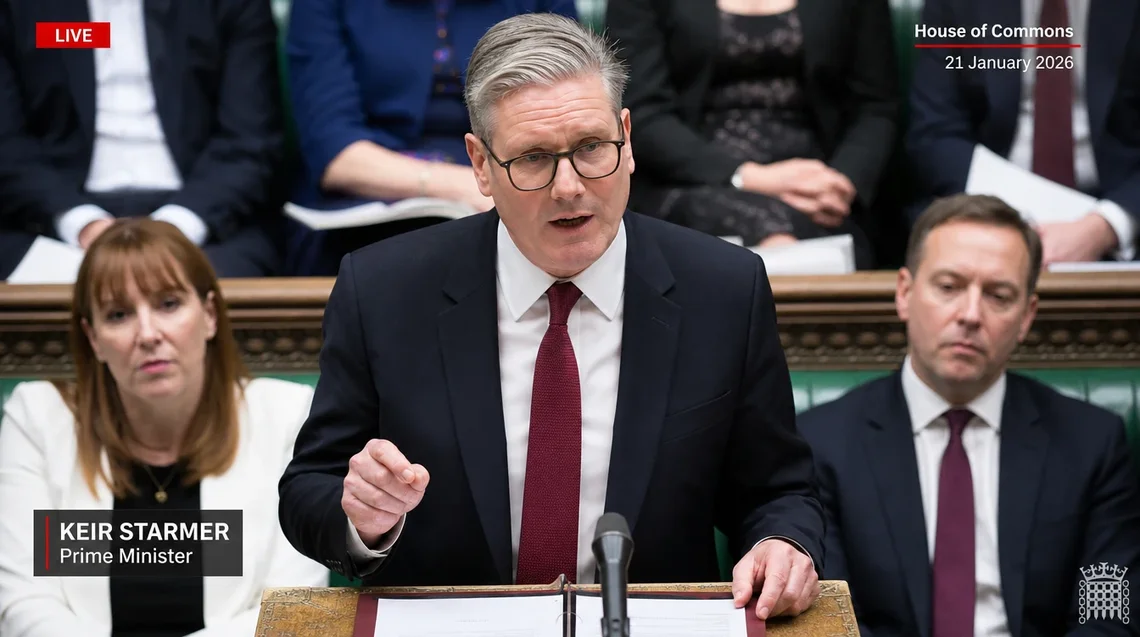
The Labour government has committed to a sweeping restructuring of the National Health Service, backed by a £15 billion spending pledge, as NHS England waiting lists remain among the longest on record — with more than 7.5 million patients currently awaiting treatment. Sir Keir Starmer's administration is pressing ahead with plans that include abolishing NHS England as a standalone quango, shifting decision-making back to the Department of Health, and expanding community-based and digital care pathways.
Party Positions: Labour supports full structural reform of NHS England, including its absorption into the Department of Health and Social Care, alongside record capital investment to reduce waiting times. Conservatives oppose the abolition of NHS England as a governing body, arguing it introduces political interference into clinical decision-making and risks disrupting hospital management mid-crisis. Lib Dems back increased NHS investment but have called for greater transparency on reform timelines and ringfenced mental health spending, warning that structural upheaval without a concrete staffing plan risks worsening patient outcomes.
The Scale of the Crisis
NHS waiting lists in England have become a defining political fault line. Data published by NHS England show that over 7.5 million treatment pathways are currently open, with patients waiting an average of more than 14 weeks for consultant-led care. Referral-to-treatment times have remained significantly above the 18-week statutory standard throughout recent years, placing sustained pressure on both emergency departments and elective care facilities.
What the Figures Actually Show
According to Office for National Statistics analysis of health outcomes data, avoidable mortality linked to delayed treatments has risen in parallel with waiting list growth. Cancer referral backlogs remain particularly acute, with two-week wait targets for urgent suspected cancer missed in a significant proportion of cases. The BBC and the Guardian have both reported extensively on the human cost of these delays, drawing on case studies and freedom of information requests to NHS trusts across England, Wales, and Scotland.
Related Articles
YouGov polling conducted recently found that the NHS remains the single most important issue for British voters, cited ahead of the cost of living and immigration. A separate Ipsos survey placed NHS reform among the top three priorities voters believe the government should focus on during the current parliament, with dissatisfaction levels at their highest recorded point since tracking began. (Source: Ipsos, YouGov)
| Metric | Current Figure | 18-Week Target | Status |
|---|---|---|---|
| Total patients on NHS waiting list (England) | 7.5 million+ | N/A | Near-record high |
| Average referral-to-treatment wait | 14+ weeks | 18 weeks (92% of patients) | Target missed |
| Two-week urgent cancer referral compliance | Below 85% | 93% | Target missed |
| A&E four-hour wait standard (major centres) | ~70% within target | 95% | Significantly below target |
| NHS capital investment pledge (Labour) | £15 billion | N/A | Committed, phased rollout |
| Voter priority ranking (NHS): Ipsos | 1st | N/A | Above cost of living |
Labour's Structural Reform Agenda
The centrepiece of Labour's NHS policy is a structural overhaul that goes well beyond previous incremental reforms. The government has confirmed plans to wind down NHS England as an arm's-length body, reintegrating its functions into the Department of Health and Social Care under direct ministerial oversight. Ministers argue the current dual-management structure creates accountability gaps and slows the implementation of national policy at local trust level.
Abolishing NHS England: The Rationale
Health Secretary Wes Streeting has been the public face of the reform drive, arguing that the existing structure produces duplication and distance between government priorities and frontline delivery. Officials said the move is intended to create cleaner lines of accountability from Westminster to individual NHS trusts, reducing bureaucratic overhead costs by hundreds of millions of pounds annually — funds that the government says can be redirected toward frontline services.
Critics within the health establishment, including some former NHS England board members, have warned that removing the body's independence risks politicising clinical decisions. The British Medical Association has called for detailed consultations before any restructuring is finalised, cautioning that abrupt institutional change during a period of peak operational strain could undermine hospital management capacity. (Source: BBC)
For a detailed breakdown of the financial commitments underpinning this agenda, see our coverage of Labour Pledges £15bn NHS Overhaul as Waiting Lists Persist, which examines capital allocation across primary care, hospital infrastructure, and workforce expansion.
Digital and Community Care Pathways
Alongside the structural reorganisation, the government is accelerating a shift toward community-based and digital care delivery. Plans include the rollout of additional NHS App functionality enabling patients to self-refer for certain services, expanded use of remote monitoring for chronic conditions, and new community diagnostic centres designed to take pressure off acute hospital sites.
Officials said the digital transformation programme has already seen NHS App registrations pass 35 million, with the government targeting a majority of routine outpatient appointments to be managed digitally within the current parliamentary term. Sceptics, however, note that digital infrastructure investment has historically lagged behind ambition, and that rural and elderly populations face persistent barriers to online healthcare access. (Source: Office for National Statistics)
Conservative and Opposition Response
The Conservative opposition has mounted a sustained challenge to Labour's reform agenda, arguing that the government inherited a structurally sound NHS framework and is introducing unnecessary institutional turbulence at a moment of clinical vulnerability. Shadow Health Secretary Edward Argar has repeatedly questioned whether abolishing NHS England will deliver any measurable reduction in waiting times within a politically meaningful timeframe.
Cross-Party Scrutiny at Westminster
The Health and Social Care Select Committee has opened a formal inquiry into the proposed reforms, inviting submissions from NHS trust leaders, patient groups, and clinical professionals. Committee members from across the political spectrum have raised concerns about the pace of implementation, the absence of a published transition timetable, and the potential for internal NHS disruption during the handover period.
Liberal Democrat health spokesperson Helen Morgan has welcomed the additional investment but pressed ministers for binding commitments on mental health parity, warning that structural reform risks consuming political capital that should be directed toward staffing recruitment and retention. The party has tabled written questions in the Commons seeking clarity on workforce planning figures accompanying the broader overhaul. (Source: Guardian)
Those tracking the broader trajectory of NHS policy may also find relevant context in our reporting on Labour pledges NHS overhaul as waiting lists persist, which traces the policy's development from the election manifesto through to the first legislative steps taken in Westminster.
Staffing and Workforce Pressures
Any structural reform of the NHS will ultimately succeed or fail on the question of workforce. England currently faces a shortage of approximately 100,000 full-time equivalent clinical and non-clinical staff, according to NHS England workforce data. The government has committed to training additional GPs, nurses, and allied health professionals, but medical education timelines mean meaningful workforce expansion will not materialise for several years regardless of current investment levels.
International Recruitment and Domestic Training
The NHS has historically supplemented domestic training pipelines with international recruitment, drawing significantly on healthcare workers from South Asia, Africa, and the Caribbean. The government's current migration policy, which has tightened visa conditions for overseas workers in various sectors, has created some tension with NHS workforce strategies — a contradiction that officials have acknowledged but not yet fully resolved.
NHS trusts in areas including the Midlands, the North East, and parts of London have reported difficulties filling specialist posts even at competitive salary levels, according to data cited by the Guardian. The government has pointed to its commitment to restoring NHS pay structures following years of real-terms cuts, arguing that improved remuneration will improve domestic retention rates over the medium term. (Source: Guardian, Office for National Statistics)
Funding Mechanisms and Treasury Tensions
The £15 billion headline figure attached to Labour's NHS overhaul is drawn from a combination of sources: new capital borrowing authorised under the government's revised fiscal rules, efficiency savings projected from the NHS England restructuring, and a reallocation of existing Department of Health budgets. Critics, including the Institute for Fiscal Studies, have questioned the robustness of the efficiency savings projections, noting that previous NHS reorganisations have historically cost more than they saved in their initial years.
Fiscal Headroom and Political Risk
Treasury officials have signalled that the NHS investment envelope will be subject to review as part of the next spending review, meaning the full £15 billion commitment is contingent on fiscal conditions remaining broadly stable. Any deterioration in the public finances — whether from weaker economic growth, higher debt servicing costs, or external shocks — could result in a reassessment of the capital programme's pace and scope.
For the political context surrounding the government's funding approach and the tensions within the Labour parliamentary party over NHS prioritisation, our analysis in Labour pledges new NHS funding as waiting lists persist provides a detailed account of the internal debates that shaped the final spending commitment.
Polling tracked by YouGov and Ipsos consistently shows public support for higher NHS spending, even when voters are informed it may require tax increases. However, the same polling reveals declining public confidence in the government's ability to deliver on NHS promises, a pattern that mirrors the experience of previous administrations of both parties. (Source: YouGov, Ipsos)
What Happens Next
The government is expected to publish a formal NHS reform white paper in the coming months, setting out the legislative timetable for restructuring NHS England, the community care expansion programme, and the digital transformation agenda. Secondary legislation will be required to dissolve NHS England as a statutory body, a process that parliamentary managers acknowledge could be contested at committee stage.
In the interim, NHS trusts have been instructed to submit revised elective recovery plans to the Department of Health, with ministers setting an internal target of reducing the 7.5 million waiting list to below six million within the current parliament. Health policy analysts cited by the BBC have described that target as ambitious but not impossible, provided the capital investment flows as planned and industrial relations with NHS staff remain stable.
The political stakes are considerable. The NHS has historically served as both a point of national pride and a barometer of government competence. Labour won office in part on a direct pledge to restore NHS performance to acceptable standards. Failure to demonstrate measurable progress before the next general election would represent a significant political liability — one that both Conservative and Liberal Democrat strategists are already positioning themselves to exploit. Whether the structural overhaul now underway represents genuine transformation or institutional disruption dressed in reform language remains, for now, an open question — one that patients on waiting lists, and voters watching from the wings, will ultimately answer.