Starmer faces backlash over NHS waiting list targets
Labour pledges face scrutiny as winter pressures mount
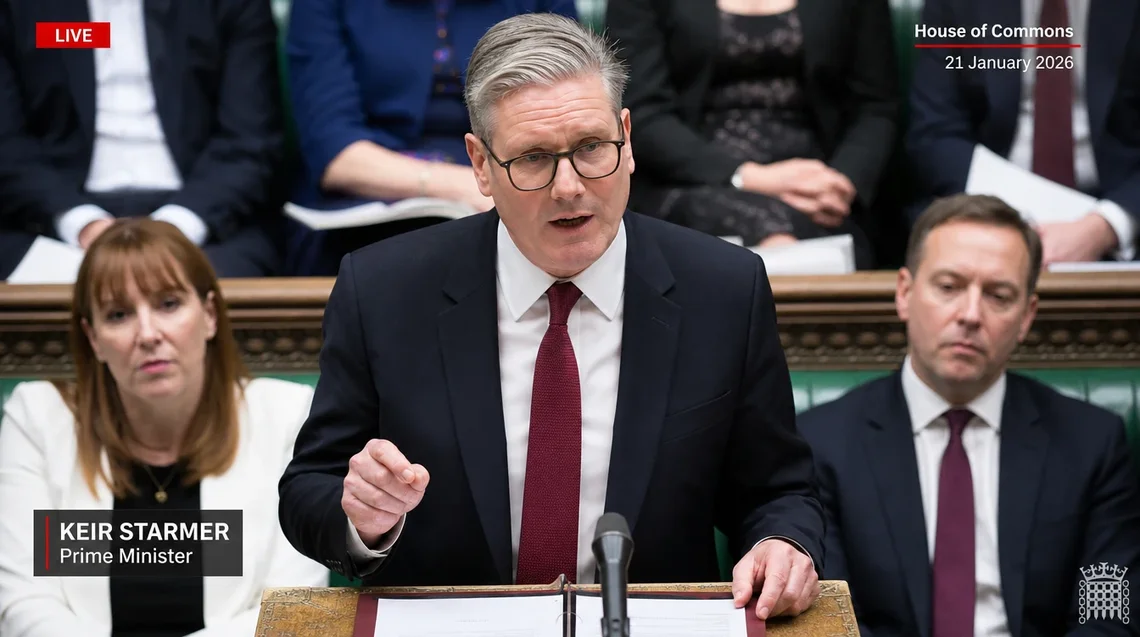
Sir Keir Starmer is facing mounting political pressure over the government's pledge to cut NHS waiting lists, as the latest figures show the number of patients awaiting treatment remains stubbornly above seven million, with winter pressures threatening to derail Labour's flagship health commitments before they have had a chance to take hold. The backlash, drawing in opposition parties, NHS leaders, and patient groups, represents one of the most significant domestic tests of Starmer's administration since it took office.
Party Positions: Labour has pledged to deliver an extra two million NHS appointments and reduce waiting times through new surgical hubs and expanded evening and weekend services, funded in part through a levy on private equity-owned healthcare companies. Conservatives argue that Labour's plans lack credibility and that the government is failing to build on reforms already in progress, calling for a dedicated waiting list reduction unit inside the Cabinet Office. Lib Dems are pushing for a statutory waiting time guarantee enshrined in law, arguing that voluntary targets have repeatedly failed patients and that only binding legal obligations will compel NHS trusts to act consistently across England.
The Scale of the Crisis
NHS England data confirm that the elective care waiting list — patients waiting for routine operations and outpatient appointments — remains at historically elevated levels, with millions of people enduring waits of more than eighteen weeks, a threshold the health service has been legally obliged to meet since 2012 but has consistently breached since the pandemic. The human cost is significant: patients waiting for hip and knee replacements, cataract removals, and cardiac procedures report deteriorating quality of life, lost earnings, and, in a number of documented cases, avoidable clinical deterioration (Source: NHS England).
Regional Disparities
The pressure is not evenly distributed. Analysis published by health think tanks shows that patients in parts of the Midlands, the North East, and South West England face disproportionately longer waits than those in London and the South East, a structural inequality that predates the pandemic but has widened in recent years. Officials said the government is aware of the regional disparity and has tasked NHS England regional directors with producing targeted recovery plans, though critics argue these plans lack the ring-fenced funding needed to be effective (Source: The Health Foundation).
Related Articles
Winter Pressures Compound the Problem
Emergency department attendances have risen sharply in recent weeks, and NHS trusts have warned that ambulance handover delays, bed occupancy rates above ninety-five percent, and workforce absences driven by respiratory illness are combining to squeeze elective capacity at precisely the moment the government needs it to expand. NHS Confederation chief executives have written to the Department of Health and Social Care warning that without additional emergency winter funding, trusts will be forced to cancel scheduled procedures to free up beds for acute patients — a move that would set back the waiting list reduction programme by months (Source: NHS Confederation).
Labour's Commitments Under Scrutiny
At the general election, Labour made the NHS its central domestic offering, promising voters a transformation in waiting times through what the party described as an "elective recovery blitz." Since taking office, Health Secretary Wes Streeting has repeated the commitment to deliver two million extra appointments but has faced sustained questioning from parliamentary select committees about how and when those appointments will be delivered and at what cost.
The Two Million Appointments Pledge
Independent health economists have noted that while the headline figure of two million additional appointments is politically salient, the NHS currently carries out tens of millions of outpatient appointments each year, meaning the pledge, even if fully delivered, would represent a modest proportional increase relative to the size of the backlog. Officials said the government's strategy centres on using spare capacity at independent sector providers and expanding the network of community diagnostic centres and surgical hubs established under the previous administration (Source: The King's Fund).
The pressure on Starmer over NHS waiting list targets has intensified as the gap between rhetorical ambition and measurable progress has grown more visible to voters and commentators alike. Polling conducted by YouGov shows the NHS remains the single issue on which the public most closely judges the Labour government, with a majority of respondents saying they do not believe waiting lists will be significantly shorter by the next election (Source: YouGov).
Opposition Pressure in Parliament
Conservative and Liberal Democrat frontbenchers have used Prime Minister's Questions and Health Oral Questions to press ministers repeatedly on the specifics of the waiting list plan, challenging the government to name a concrete date by which the eighteen-week standard will be routinely met. Rishi Sunak's successor as Conservative leader has argued that the government inherited a health service already on a recovery trajectory and has chosen to disrupt rather than accelerate it, a charge ministers have rejected.
The Liberal Democrats have gone further, tabling a private member's bill that would create a legal right for patients to receive treatment within eighteen weeks, with the option to be treated at another NHS trust or an approved independent provider at NHS cost if the standard is breached. Health Secretary Wes Streeting has described the proposal as "well-intentioned but unworkable" given current capacity constraints, though the party says the government's resistance simply reflects an unwillingness to be held to account (Source: House of Commons Library).
| Indicator | Figure | Source |
|---|---|---|
| Total patients on elective waiting list | Approx. 7.5 million | NHS England |
| Patients waiting over 18 weeks | Over 3 million | NHS England |
| Patients waiting over 52 weeks | Approx. 300,000 | NHS England |
| Public satisfaction with NHS (most recent annual survey) | 24% (record low) | British Social Attitudes Survey / The King's Fund |
| Voters prioritising NHS as top issue | 57% | YouGov |
| Government approval rating on NHS handling | Net -18 | Ipsos |
| Labour election pledge — extra appointments | 2 million | Labour Party Manifesto |
Political Fallout and Electoral Implications
Strategists in both major parties acknowledge that the NHS has historically served as a defining electoral battleground. Labour's ability to demonstrate progress on waiting lists is considered essential not merely as a matter of policy delivery but as a signal of governmental competence to a public that, polling data show, is increasingly sceptical of political promises on health (Source: Ipsos).
Polling Trends
Tracking data published by Ipsos suggest that while Labour retains a lead over the Conservatives on general NHS stewardship, that lead has narrowed measurably since the government took office, with a growing share of voters telling pollsters they see little practical difference between the parties' approaches. The Office for National Statistics has separately published data showing that self-reported patient experience scores — measuring whether people feel they received timely and effective care — declined in the most recent survey period, providing a statistical underpinning to the political discontent (Source: Office for National Statistics).
Reporting by the BBC and the Guardian has highlighted individual patient stories that have proved politically damaging for the government, illustrating the gap between the prime minister's pledges and the experience of constituents in marginal seats. Officials in Downing Street are said to be acutely aware of the reputational risk and have tasked a dedicated health delivery unit with producing weekly progress metrics, though these have not yet been published in full (Source: BBC; Guardian).
The Government's Defence
Ministers have pushed back forcefully against what they characterise as unfair criticism, pointing out that the waiting list crisis was inherited from the previous administration and that structural reform of the kind required cannot be delivered overnight. Wes Streeting has emphasised the government's investment in community diagnostic centres, the additional funding secured in the most recent spending settlement, and the early results from expanded weekend surgical lists at a number of NHS foundation trusts.
Downing Street has also sought to reframe the debate, arguing that the raw waiting list number is a less meaningful indicator than the experience of patients at different points in the pathway. Officials said the government prefers to measure success through reductions in the number of patients waiting more than fifty-two weeks, improvements in cancer diagnostic waits, and increases in the number of surgical procedures completed per available theatre hour — metrics on which the government says it can demonstrate incremental progress.
For further context on how the waiting list issue has developed as a political flashpoint, see earlier coverage of how Starmer faces NHS crisis as waiting lists hit new peak and the detailed analysis of how Starmer faces pressure as NHS waiting lists swell across English regions.
Looking Ahead: Structural Reform or Political Liability?
The fundamental tension at the heart of Labour's NHS strategy is one familiar to governments of all stripes: the gap between the pace of structural reform and the immediacy of voter expectations. Building new surgical hubs, retraining staff, and renegotiating contracts with independent sector providers are multi-year projects; the parliamentary cycle and the rhythm of media scrutiny demand results in months.
Independent Sector and Workforce Questions
Health economists warn that the government's reliance on independent sector capacity to fill the gap carries risks, including concerns about the diversion of clinical staff from NHS trusts to private providers, the overall cost per procedure in the independent sector relative to NHS-delivered care, and the quality assurance frameworks governing independent providers. NHS trade unions, meanwhile, have renewed calls for a substantive workforce plan with guaranteed pay progression as a condition of staff retention — a demand the Treasury has so far declined to meet in full (Source: The Health Foundation).
The trajectory of the waiting list debate will likely be determined less by any single policy announcement than by the accumulated experience of millions of patients over the coming months. Should winter prove as clinically and operationally demanding as NHS trusts are projecting, the government will face further calls to explain the distance between its election promises and the lived reality of the health service. Earlier reporting captured the political dimensions of this challenge in detail, with analysis of how Starmer faces pressure over NHS waiting lists from multiple political directions simultaneously, and how Starmer faces pressure over the NHS waiting list crisis in a way that could define his government's domestic legacy.
For now, the prime minister's allies insist the government is on track and that the two million appointment pledge will be met within the stated timeframe. Whether the public — and the seven and a half million people on the waiting list — will see sufficient evidence of progress to sustain that political case remains the central unanswered question of Starmer's first term.