Labour pushes NHS reform bill through Commons
Starmer government advances healthcare restructuring plan
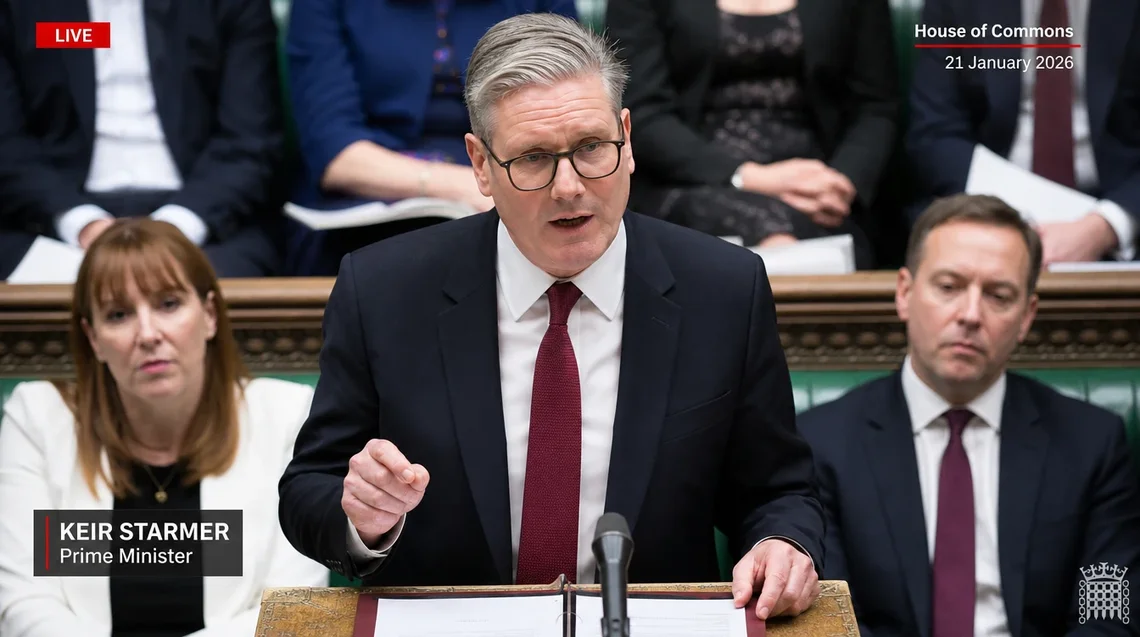
The government advanced landmark NHS reform legislation through the House of Commons on Wednesday, with Labour MPs voting to back a sweeping restructuring of England's health service that ministers say will cut waiting lists, reduce bureaucracy, and shift care delivery closer to patients. The bill passed its third reading by a margin of 47 votes, with opposition parties divided over both the pace and the substance of the changes.
Health Secretary Wes Streeting told the Commons the legislation represented the most significant reorganisation of NHS structures in over a decade, arguing that the current system had become too fragmented and too slow to respond to patient need. The passage marks a significant legislative milestone for the Starmer administration, though critics warned that structural reform without sustained capital investment risks compounding rather than correcting the pressures facing frontline services.
Party Positions: Labour supports the bill as a necessary structural overhaul to improve efficiency and reduce waiting times, framing it as part of a broader mission to reform public services without raising income tax. Conservatives have opposed the legislation, arguing it creates additional NHS bureaucracy, mirrors failed reorganisations from previous administrations, and diverts attention from immediate funding shortfalls. Lib Dems have adopted a conditional stance, supporting the principle of integrated care but tabling amendments calling for greater transparency in local decision-making and stronger patient advocacy mechanisms embedded in the bill's statutory framework.
What the Bill Contains
The NHS Reform Bill, as introduced by the Department of Health and Social Care, proposes a consolidation of NHS England's administrative functions more directly under ministerial oversight, a move officials said would eliminate duplication across integrated care boards and reduce management costs. The legislation also provides a statutory footing for neighbourhood health teams — small, community-based units intended to deliver primary and preventive care outside hospital settings.
Related Articles
Integrated Care and Local Structures
Under the bill's provisions, integrated care systems — which were themselves established only recently under previous legislation — would see their governance frameworks altered to give central government greater power to intervene when local bodies fail performance targets. Health think tanks have raised questions about whether this recentralisation is compatible with the original intent of devolving healthcare planning to regional level. The King's Fund and Nuffield Trust have both published analysis suggesting that top-down restructuring has historically yielded limited gains in patient outcomes without accompanying investment.
Workforce and Staffing Provisions
The bill includes a duty on NHS England to publish a rolling ten-year workforce plan with independent verification of its delivery milestones. This provision was added following cross-party pressure during the committee stage, with the Liberal Democrats securing a concession that external review bodies — rather than the Department of Health alone — would assess progress. NHS Confederation officials said the workforce planning duty was among the most substantive elements of the legislation, given that staffing shortfalls remain the principal constraint on service capacity across both primary and secondary care.
The Parliamentary Vote
The third reading passed by 311 votes to 264, a majority of 47. Several Labour MPs who had raised concerns during the committee stage — particularly around the recentralisation of NHS England — voted with the government following assurances from ministers that statutory guidance would preserve meaningful local autonomy. Two Labour backbenchers abstained. The bill now passes to the House of Lords, where it is expected to face significant scrutiny, particularly from peers with backgrounds in health policy and public administration.
| Party | Ayes | Noes | Abstentions | Eligible MPs |
|---|---|---|---|---|
| Labour | 308 | 0 | 2 | 412 |
| Conservative | 0 | 218 | 6 | 121 |
| Liberal Democrats | 0 | 46 | 6 | 72 |
| SNP | 3 | 0 | 4 | 9 |
| Other / Independents | 0 | 0 | 7 | 11 |
| Total | 311 | 264 | 25 | 625 |
The division figures represent one of the tighter government victories on major health legislation in recent parliamentary sessions, reflecting the breadth of concern across both opposition benches and within sections of the Labour parliamentary party itself.
Public Opinion and the Political Context
Polling conducted by YouGov and published in the weeks prior to the bill's final Commons stage found that 54 percent of respondents supported structural reform of the NHS in principle, while only 31 percent said they trusted the government to implement such reform effectively. A separate Ipsos survey found that NHS waiting times remained the single most cited concern among UK adults when asked about public services, ahead of cost of living and housing — a finding that has underpinned Labour's political argument for legislative action. (Source: YouGov; Source: Ipsos)
Voter Trust and Reform Scepticism
Despite broad public concern about NHS performance, the data points to a significant trust deficit that ministers will need to address during the Lords stage and beyond. Office for National Statistics figures on NHS referral-to-treatment waiting times show that while the overall waiting list has reduced modestly in recent months, more than 6 million patients remain on active pathways — a figure that has become politically totemic for both government and opposition. (Source: Office for National Statistics)
The BBC and Guardian have both reported extensively on divisions within NHS leadership about whether structural reorganisation is the appropriate primary response to the current crisis, with senior clinicians quoted anonymously in both outlets expressing concern that reform fatigue among NHS staff could undermine implementation of the bill's provisions even if they become law. (Source: BBC; Source: Guardian)
Opposition Response
Conservative health spokesperson Edward Argar led the opposition response, arguing that the bill's recentralisation measures risk creating "a command-and-control model that has failed every time it has been attempted in NHS history." He pointed to the Health and Social Care Act of the previous decade as evidence that top-down structural change absorbs management capacity that would otherwise be directed at patients. The Conservatives have indicated they will seek to amend the bill substantially in the Lords.
Liberal Democrat Amendments
The Liberal Democrats, whose 72 MPs represent a substantial third-party bloc, voted against the bill at third reading after their key amendment — requiring local patient panels to hold statutory veto powers over service configuration decisions — was rejected by the government. Health spokesperson Helen Morgan said the party remained committed to the principle of NHS reform but could not support legislation that, in her assessment, diminished local accountability in favour of Whitehall control. The Lib Dem position is likely to influence Lords crossbenchers who share concerns about democratic oversight of health spending decisions.
What Happens Next
The bill's passage to the Lords opens a new phase of legislative scrutiny that health policy specialists expect to last several months. The Lords Health and Social Care Committee is expected to call expert witnesses including NHS chief executives, patient advocacy groups, and independent economists before the bill reaches its committee stage in the upper chamber.
For further context on the legislative journey leading to Wednesday's vote, readers can follow reporting on how Labour pushes NHS reform bill amid funding row, including the Treasury disputes that shaped the bill's final financial provisions. The debate over resource allocation that has run alongside the structural arguments is covered in detail in coverage of Labour pushes NHS reform bill amid funding debate, which traces the evolution of the government's position through successive budget rounds. Earlier analysis of the external pressures shaping ministerial decisions is available in reporting on Labour pushes NHS reform bill amid funding pressure, which examined how fiscal constraints interacted with reform ambitions from the outset of the parliamentary process.
Lords Timeline and Key Risks
Government officials said they hoped to see royal assent before the end of the current parliamentary session, though that timetable is regarded by Westminster observers as optimistic given the volume of contested provisions. Any substantial Lords amendments that require Commons consideration could extend the legislative timeline significantly. Ministers have declined to indicate whether they would invoke the Parliament Acts to override Lords defeats, though constitutional convention would make that an extreme and politically costly step for legislation of this nature.
Broader Implications for the Starmer Government
The bill's Commons passage is a significant test passed for a government that entered office with ambitious public service reform commitments but has faced persistent questions about whether its fiscal constraints leave it with the tools to deliver them. Keir Starmer has consistently framed NHS reform as inseparable from his government's broader offer to voters — that structural efficiency gains can unlock service improvements without requiring tax rises that would breach manifesto commitments.
Whether that argument survives contact with the Lords, with the wider NHS workforce, and ultimately with waiting patients will define not only the fate of this particular piece of legislation but the credibility of Labour's claim to be a party of effective, deliverable public service reform. The government's record on health policy — including earlier NHS funding commitments tracked in coverage of Labour pushes NHS funding bill through Commons — will form the backdrop against which the reform bill's real-world impact is eventually judged.
With the bill now in the upper chamber, both ministers and their critics are preparing for a protracted process of amendment, negotiation, and political calculation. The outcome will carry implications well beyond the health brief, signalling how willing or able this administration is to legislate for structural change in public services when faced with sustained parliamentary and professional resistance.