Labour pushes NHS reform amid funding shortfall
Starmer government seeks parliamentary backing for health overhaul

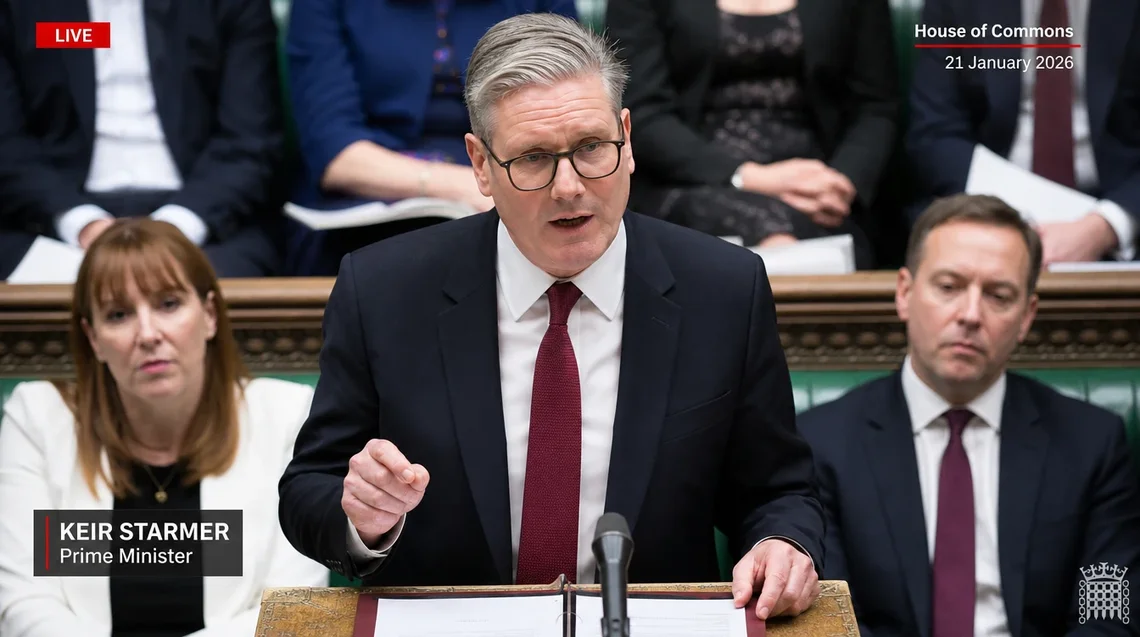
The Starmer government is pressing ahead with a sweeping overhaul of the National Health Service, seeking parliamentary backing for a package of structural reforms even as ministers acknowledge a significant gap between existing NHS budgets and the investment required to meet rising demand. With waiting lists still affecting millions of patients across England, Labour is framing the legislation as an urgent political and public health priority, officials said.
The push comes as Labour pushes the NHS reform bill amid a funding row that has exposed tensions within the parliamentary party and drawn sharp criticism from opposition benches. Senior figures in Downing Street insist the reform package is fiscally responsible, but independent analysts and health economists have questioned whether the government's current spending commitments are sufficient to deliver the operational transformation being promised.
The Scale of the Challenge
England's NHS is operating under conditions that health policy experts describe as structurally unsustainable. Demand for elective care, mental health services, and emergency treatment has continued to outpace capacity, according to data from the Office for National Statistics. Workforce shortages, an ageing population, and post-pandemic backlogs have compounded longstanding pressures on a service whose real-terms funding increases have, in recent years, lagged behind the growth in clinical need.
Waiting List Figures
The scale of the backlog remains politically damaging for any government. According to NHS England data cited by the BBC, millions of patients are currently waiting for consultant-led treatment, with a substantial proportion waiting beyond the 18-week target that has historically defined NHS performance standards. Labour ministers have repeatedly pointed to inherited waiting list numbers as evidence that reform, not simply additional expenditure, is required to fix a system that they argue was mismanaged under the previous Conservative administration.
Related Articles
Funding Gap Estimates
Independent health think tanks, including the Health Foundation and the King's Fund, have estimated that closing the gap between current NHS output and projected demand will require sustained real-terms increases in public health spending over multiple spending review periods. The government has not publicly committed to figures matching those projections. Treasury sources, speaking on background, have indicated that fiscal headroom remains limited, with any additional NHS allocation needing to be reconciled against wider departmental spending constraints (Source: Office for National Statistics).
| Metric | Current Position | Government Target | Independent Estimate |
|---|---|---|---|
| Elective waiting list (England) | Approx. 7.5 million pathways | Significant reduction within parliament | Requires sustained investment increase |
| 18-week treatment target compliance | Below statutory standard | Return to compliance | Requires workforce expansion |
| Public approval of NHS handling (YouGov) | 42% satisfied | Improve satisfaction ratings | Tied to visible service improvement |
| Labour NHS reform support (Ipsos) | 51% support structural reform | Build cross-party consensus | Opposition bloc remains significant |
| Annual NHS England budget | Approx. £165 billion | Incremental uplift planned | Additional £10–15bn cited by analysts |
(Source: YouGov, Ipsos, Office for National Statistics, NHS England)
Labour's Legislative Approach
The government's reform bill centres on three principal pillars: integrating health and social care commissioning under new regional structures, expanding the role of primary and community care to reduce pressure on acute hospital services, and establishing new accountability frameworks for NHS trusts and integrated care boards. Ministers have described the legislation as the most significant structural reform to the health service in more than a decade.
Integrated Care and Regional Structures
At the heart of the reform package is a reconfiguration of how healthcare commissioning operates at the regional level. The government proposes to strengthen integrated care systems — introduced under the previous administration — by giving them greater statutory authority and clearer accountability lines to ministers. Critics, including former NHS executives quoted by the Guardian, have warned that the structural reorganisation risks distracting clinical and administrative staff at a time when service delivery demands maximum focus.
Primary Care Expansion
Labour's plan includes a substantial commitment to expanding the role of GPs, community pharmacists, and allied health professionals in managing long-term conditions and providing early intervention. The rationale, officials said, is to reduce expensive and avoidable hospital admissions by shifting care further upstream in the clinical pathway. The British Medical Association has broadly welcomed the direction of travel on primary care investment, though its leadership has pressed the government on the specific workforce numbers underpinning the plans.
Party Positions: Labour argues the reform bill is essential to modernise NHS structures, reduce waiting times, and embed long-term fiscal sustainability into health spending, framing it as both a moral and economic imperative. Conservatives have argued that Labour is pursuing costly structural reorganisation at the expense of front-line service improvement, drawing comparisons to previous NHS restructurings that critics said consumed management capacity without improving patient outcomes. Lib Dems have expressed conditional support for reform principles but are demanding greater clarity on the funding commitments underpinning the legislation, with their health spokesman calling for a binding multi-year settlement before the bill passes its final Commons stages.
Parliamentary Arithmetic and Political Risk
Labour commands a substantial majority in the House of Commons following its general election performance, meaning the government does not face the immediate risk of legislative defeat on the reform bill's core clauses. However, the politics are not straightforward. A number of Labour backbenchers, particularly those representing constituencies with heavily pressured NHS trusts, have raised concerns through the parliamentary process about whether the reform architecture is adequately funded to deliver results within a timeframe visible to voters before the next election, officials said.
Backbench Concerns
Several members of the parliamentary Labour Party representing northern English and Midlands constituencies have tabled amendments seeking statutory guarantees on NHS workforce numbers and regional funding floors. The government's whipping operation has so far managed potential rebellions, but the scale of backbench correspondence on NHS issues reaching ministerial offices is understood to be significant, according to sources with knowledge of parliamentary business. The Guardian has reported that at least a dozen Labour MPs have formally raised concerns with the Health Secretary through parliamentary channels.
For further context on the legislative background to this debate, the trajectory of Labour pushing the NHS reform bill amid funding pressure has been documented across multiple stages of the parliamentary process. Additionally, the relationship between structural change and financial commitment has been a recurring theme, as outlined in coverage of how Starmer has pushed the NHS reform bill amid funding pressure throughout the current parliamentary session.
Opposition Response and Cross-Party Dynamics
The Conservative opposition has sought to frame Labour's reform package as ideologically driven reorganisation that will consume NHS management bandwidth and delay the practical improvements patients are waiting for. Shadow health ministers have pointed to previous NHS restructuring exercises — including the Health and Social Care Act of the early 2010s — as cautionary examples of reform processes that generated significant administrative costs and disruption without delivering commensurate improvements in patient outcomes, officials said.
The Liberal Democrats have adopted a more nuanced position, declining to oppose the principle of structural reform while attaching conditions to their support relating to funding transparency and regional equity. Their health spokesperson has called publicly for the Office for Budget Responsibility to publish an independent assessment of the bill's long-term fiscal implications before the legislation completes its passage through Parliament (Source: BBC).
Public Opinion and Political Context
Polling conducted by both YouGov and Ipsos indicates that the NHS consistently ranks among the top two or three issues driving voting intention and political satisfaction ratings in Great Britain. The government is acutely aware that public judgement on NHS performance will be a significant determinant of electoral outcomes. Research published by Ipsos shows that while a majority of respondents support the principle of NHS reform, confidence in the government's ability to deliver visible improvements within the current parliament remains below 50 percent (Source: Ipsos).
Voter Trust and Delivery Expectations
YouGov tracker data indicates that satisfaction with the government's handling of the NHS, while marginally higher than readings recorded toward the end of the previous parliament, remains at levels that political strategists in both main parties regard as vulnerable territory. The government's internal analysis, according to officials familiar with Downing Street thinking, identifies NHS waiting times as the single most important metric through which swing voters will assess Labour's record ahead of the next general election (Source: YouGov).
The funding debate surrounding the legislation has also been covered in detail through earlier reporting. The core tension between structural ambition and resource constraint was examined in reporting on how Labour pledged a major NHS funding boost amid its reform push, and analysts continue to test government commitments against independent health spending projections. The Labour NHS reform bill amid the funding debate remains one of the most closely watched legislative processes of the current parliament.
Outlook and Next Steps
The reform bill is expected to face its most intensive parliamentary scrutiny during committee stage, where opposition MPs and independent crossbenchers are anticipated to press ministers on workforce projections, regional funding allocations, and implementation timelines. Health policy analysts tracking the legislation have noted that the gap between the government's stated ambitions and the resources currently committed to delivering them represents a genuine political and operational risk.
Ministers have indicated they will publish an implementation framework alongside the bill's report stage, offering more granular detail on how integrated care structures will be resourced and governed. Whether that framework will satisfy the concerns of backbench Labour MPs, opposition health spokespeople, and independent health economists is likely to determine both the legislative passage of the bill and, ultimately, the government's political standing on the issue that, according to all available polling, matters most to British voters.