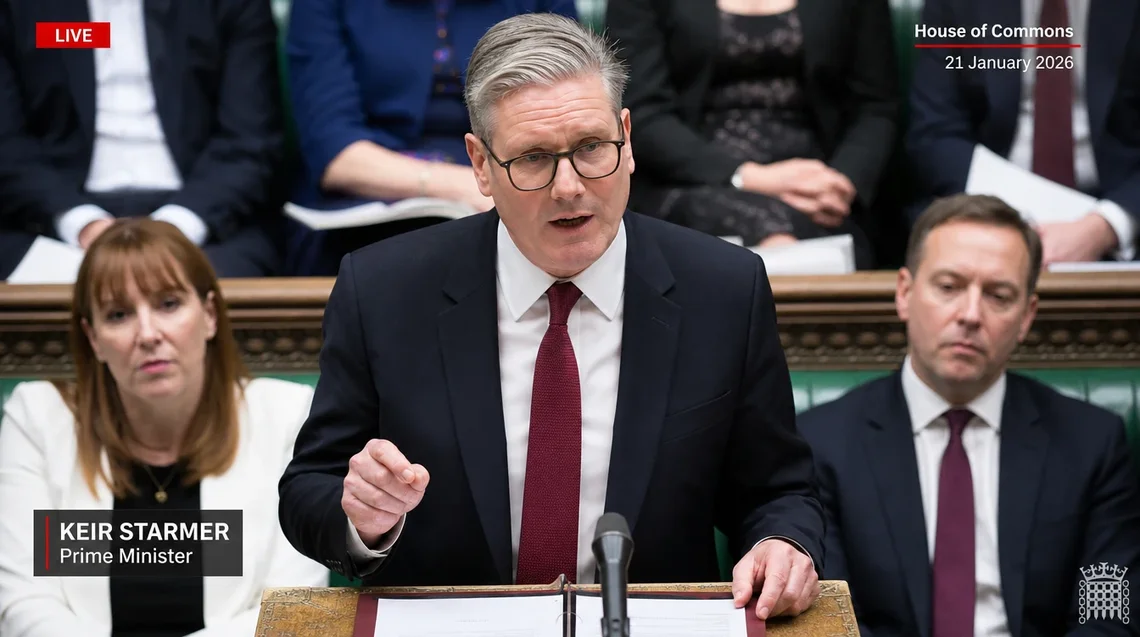
Labour pushes NHS reform bill amid funding pressure
Starmer government seeks parliamentary backing for healthcare overhaul

The Labour government has tabled sweeping NHS reform legislation in the House of Commons, staking its domestic agenda on a healthcare overhaul that ministers say is essential to reduce waiting times and modernise a health service under sustained financial strain. The bill, which seeks to restructure commissioning bodies, expand community care, and tie hospital funding to performance outcomes, has already drawn sharp opposition from Conservative benches and triggered internal debate within the parliamentary Labour Party itself.
Health Secretary Wes Streeting told the Commons the existing NHS model was "not fit for the demands of the twenty-first century," arguing that without structural reform, additional funding alone would fail to produce meaningful improvements for patients. The government is seeking a second reading vote within weeks, officials said, with ministers anxious to demonstrate legislative momentum before the next Budget cycle.
Party Positions: Labour — supports the NHS Reform Bill as a structural overhaul tied to outcome-based funding and an expanded role for community health services; Conservatives — oppose the bill's commissioning changes, arguing they introduce unnecessary bureaucracy and risk fragmenting care; Lib Dems — conditionally supportive of reform goals but pressing for stronger mental health provisions and a clearer timetable for waiting list reductions.
What the Bill Proposes
The legislation would abolish several of the integrated care board structures introduced under the previous government, replacing them with regional health authorities reporting directly to NHS England. Ministers say the move would cut administrative duplication and redirect resources to frontline services. According to the Department of Health and Social Care, the reforms are projected to generate efficiency savings of several billion pounds over the course of the current parliament, though independent analysts have cautioned those figures carry significant uncertainty.
Related Articles
Commissioning and Community Care
A central plank of the bill is a shift in commissioning responsibility toward primary and community care providers. Under the proposals, GP surgeries, community mental health teams, and district nursing services would receive ring-fenced funding streams currently allocated at hospital trust level. Proponents argue this incentivises earlier intervention and reduces expensive emergency admissions. Critics, including senior figures at NHS Providers, have warned that the transition period could destabilise hospital finances if managed without adequate bridging support.
Performance-Linked Funding
The bill also introduces a new framework tying a portion of hospital trust funding to measurable performance indicators, including elective surgery waiting times, accident and emergency discharge rates, and patient satisfaction scores. Officials said the model draws on elements of comparable systems operating in parts of Wales and Scotland, as well as international examples from Scandinavia. However, the British Medical Association has expressed concern that performance-linked mechanisms risk penalising trusts serving the most deprived communities, where patient complexity is inherently higher (Source: British Medical Association).
The Funding Pressure Context
The reform push comes against a backdrop of acute financial pressure across NHS trusts in England. Data published by NHS England show that a significant proportion of trusts ended the most recent financial year in deficit, with aggregate overspending running into the billions. The Office for National Statistics has separately reported that healthcare spending as a share of gross domestic product remains elevated compared to the pre-pandemic baseline, even as the government faces competing demands on the public finances (Source: Office for National Statistics).
Waiting List Figures
NHS England's own statistics indicate that the elective waiting list remains at historically high levels, with millions of patients awaiting consultant-led treatment. The government has set a target of eliminating waits of longer than eighteen months within a defined period, a commitment Streeting has described as non-negotiable. Independent health analysts at the King's Fund and the Nuffield Trust have both noted that meeting the target will require not only structural reform but a sustained real-terms increase in workforce capacity (Source: King's Fund; Nuffield Trust).
| Indicator | Figure | Source |
|---|---|---|
| Proportion of voters rating NHS reform as top priority | 54% | YouGov (recent polling) |
| Public approval of government handling of NHS | 31% | Ipsos (current tracker) |
| NHS trusts in financial deficit (England) | Majority of acute trusts | NHS England |
| Patients on elective waiting list | Over 6 million | NHS England |
| Expected Commons majority for second reading | Approx. 60–80 seats (projected) | House of Commons Library |
| Public support for performance-linked NHS funding | 47% in favour | YouGov |
Parliamentary Arithmetic and Internal Labour Tensions
Despite Labour's substantial Commons majority, party managers are monitoring a cohort of backbenchers with reservations about specific elements of the bill. A number of MPs representing constituencies with large hospital trust employers have raised concerns about the commissioning restructure, fearing short-term job losses during the transition. According to sources cited by the Guardian, the government is prepared to offer amendments at committee stage to address the most acute workforce anxieties (Source: The Guardian).
Potential Rebel Votes
Whips are understood to be engaged in intensive discussions with around two dozen Labour members who have indicated they may abstain or vote against specific clauses, particularly those governing the performance-linked funding formula. Officials said the government remains confident of clearing the second reading comfortably but acknowledged that committee stage could prove more contentious. The opposition parties, meanwhile, are unlikely to combine in sufficient numbers to defeat the bill outright, given the Liberal Democrats' stated conditional support for the reform's broader objectives.
Opposition Response
Conservative shadow health secretary Edward Argar argued in the Commons chamber that the bill represented "reorganisation for reorganisation's sake," echoing a critique that has historically resonated with NHS staff and the wider public whenever structural change has been proposed. The Conservatives have tabled a reasoned amendment calling on the government to publish a full impact assessment before proceeding to a second reading vote, a move that parliamentary observers at the BBC described as procedurally unlikely to succeed but politically calculated to reinforce the accountability argument (Source: BBC).
The Liberal Democrats, under their health spokesperson, have sought to position the party as a constructive but demanding interlocutor, pressing the government for binding commitments on mental health parity and a concrete waiting list reduction timetable as conditions for their support. Senior Lib Dem figures have pointed to related coverage of Labour Pledges Major NHS Funding Boost Amid Reform Push as evidence that rhetoric has so far outpaced delivery.
Wider Policy and Political Stakes
The bill is widely regarded at Westminster as one of the defining legislative tests for the Starmer administration's first full parliamentary term. Having entered government with NHS reform as a centrepiece manifesto commitment, Labour's ability to deliver a workable and durable healthcare overhaul will shape perceptions of its governing competence heading into the mid-term period. Polling conducted by Ipsos suggests public satisfaction with the government's management of the NHS remains well below the levels that typically sustain political momentum on a flagship policy (Source: Ipsos).
Implications for Future Spending Rounds
The reform bill also carries significant implications for forthcoming spending negotiations. Treasury officials are understood to have made clear that any additional NHS funding beyond current projections would require demonstrable reform progress as a precondition, a position that Streeting has publicly endorsed but which some within the health service have characterised as placing an unrealistic burden on an already stretched system. Further background on the fiscal dimensions is available in earlier reporting on Labour pushes NHS reform bill amid funding row and on the parliamentary process detailed in coverage of Labour pushes NHS funding bill through Commons.
Analysts at the Institute for Fiscal Studies have noted that the government faces a genuinely difficult sequencing challenge: reform takes time to produce savings, yet the financial pressures on trusts are immediate. Without interim funding support, there is a risk that the structural changes intended to generate long-term efficiency are undermined by short-term financial distress at trust level (Source: Institute for Fiscal Studies).
What Happens Next
The bill is expected to proceed to a second reading vote in the coming weeks, with committee stage likely to extend through the autumn sitting period. Ministers have signalled their intention to use the committee process to introduce targeted amendments addressing workforce transition concerns and the mental health parity provisions demanded by the Liberal Democrats. A full Lords passage remains some months away, and peers are expected to scrutinise the performance-linked funding clauses with particular intensity.
For detailed background on the evolution of the government's position, see earlier analysis of Starmer pushes NHS reform bill amid funding pressure and the related examination in coverage of Labour pushes NHS reform bill amid funding debate.
The coming parliamentary weeks will determine whether the government can hold its majority together, manage its relationship with the NHS workforce, and demonstrate to a sceptical public that structural reform and improved patient outcomes can genuinely be delivered in tandem — a challenge that has defeated multiple administrations before this one.