Starmer Pledges NHS Reform Push Amid Staffing Crisis
Labour government outlines plan to address hospital workforce shortages

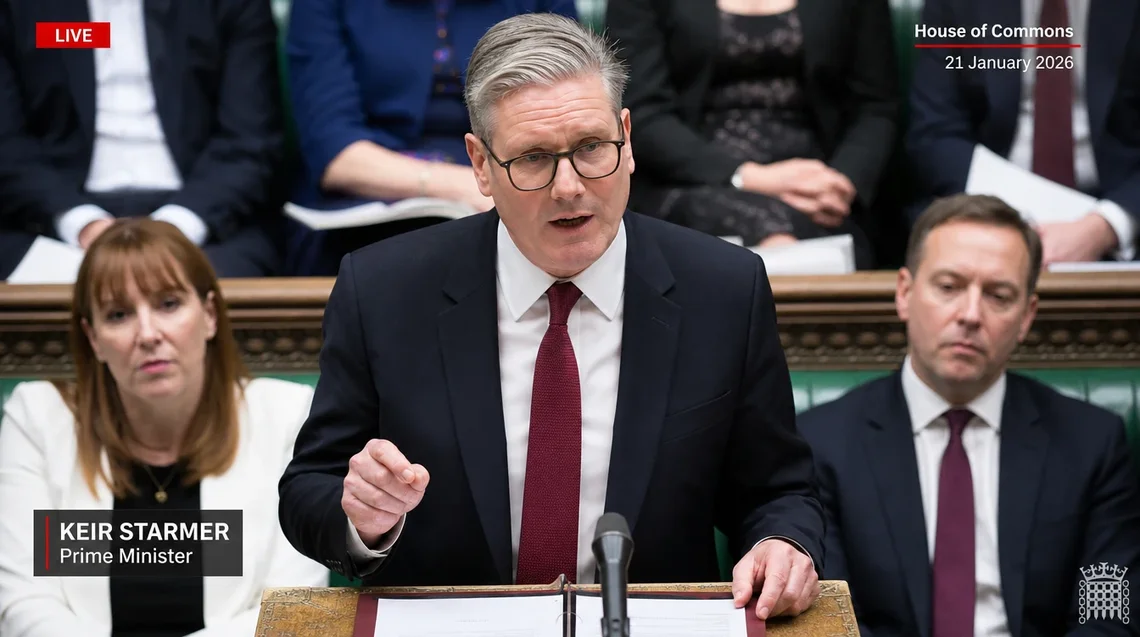
Prime Minister Keir Starmer has unveiled a sweeping package of NHS workforce reforms aimed at tackling a staffing crisis that has left hospitals across England operating with tens of thousands of unfilled vacancies, pledging to place recruitment and retention at the centre of the government's domestic agenda. The announcement, made in a Downing Street statement, comes as NHS England figures show the health service is currently short of more than 100,000 staff, with particular shortfalls in nursing, general practice, and mental health services. Labour ministers insist the plan represents the most significant overhaul of NHS workforce planning in a generation.
The Scale of the Crisis
The workforce shortfall facing the NHS has been building for years, but officials say the situation has reached a critical threshold that demands immediate legislative and financial intervention. According to NHS England data, vacancy rates in acute hospital trusts currently stand at approximately 8.4 percent across all clinical professions, with the figure rising above 12 percent in some specialist surgical and intensive care units. The consequences for patient care are measurable: NHS performance statistics show that waiting lists remain stubbornly high, with millions of patients currently awaiting elective treatment.
Nursing and Allied Health Professionals
Nursing shortages represent the most acute dimension of the problem, officials said. NHS England data show there are currently more than 40,000 registered nursing vacancies across hospital trusts in England, a figure that unions and professional bodies describe as unsustainable. The Royal College of Nursing has repeatedly warned that understaffing directly affects patient safety outcomes, contributing to preventable adverse incidents on wards. The government's reform package includes commitments to increase domestic nursing training places at universities and to offer improved bursary support for student nurses — a reversal of a policy that critics say contributed to declining applicant numbers over the past decade.
General Practice Under Pressure
The crisis is not confined to hospitals. GP surgeries across England are experiencing record levels of demand against a backdrop of declining full-time equivalent GP numbers. According to NHS Digital figures cited by the British Medical Association, the number of fully qualified, full-time equivalent GPs has fallen in recent years even as the patient population has grown. Health Secretary Wes Streeting has acknowledged that primary care is "on its knees" in some parts of the country, particularly in deprived urban areas and rural communities where recruitment is most difficult. The government's plan includes targeted financial incentives for newly qualified GPs willing to practice in underserved areas, officials confirmed.
Related Articles
What the Government Is Proposing
The reform package announced by the Prime Minister encompasses several distinct policy strands, officials said, ranging from immediate workforce expansion measures to longer-term structural changes in how the NHS plans and funds its staffing requirements. Central to the plan is a legally binding NHS Long-Term Workforce Plan, building on a framework published under the previous administration but with substantially expanded funding commitments and a renewed focus on domestic training rather than international recruitment.
International Recruitment and Ethical Guidelines
Ministers have been careful to address concerns about the NHS's historical reliance on recruiting health workers from lower-income countries, particularly from sub-Saharan Africa and South Asia. The government has reaffirmed its commitment to the World Health Organisation's Health Workforce Support and Safeguards List, which identifies countries whose healthcare workers should not be actively recruited by wealthier nations. Officials said the administration recognises that international recruitment must be a supplement to — not a substitute for — domestic training pipelines, and that a sustainable workforce strategy cannot depend indefinitely on drawing skilled professionals from health systems that need them at home.
For further context on the government's broader approach to health service reform, see our coverage of how Starmer Pledges NHS Overhaul Amid Staffing Crisis, which outlines the structural dimensions of the administration's long-term vision for the health service.
Political Reaction at Westminster
Party Positions: Labour — backing a legally binding NHS workforce plan with expanded domestic training places, bursary restoration for student nurses, and targeted GP recruitment incentives, framing the package as a reversal of what ministers describe as Conservative neglect of workforce planning. Conservatives — the official opposition has acknowledged the scale of the staffing challenge but argued the government is overstating the novelty of its proposals, pointing to the NHS Long-Term Workforce Plan published under the previous administration and questioning whether current spending commitments are sufficient to deliver the stated ambitions. Lib Dems — the Liberal Democrats have broadly welcomed the direction of the reforms but are pressing the government to go further on mental health staffing specifically, and have called for an emergency funding settlement for GP surgeries, which Lib Dem health spokesman Helen Morgan has described as facing an existential crisis in many rural and coastal constituencies.
Shadow Health Secretary Edward Argar responded to the announcement by arguing that the previous government had already "laid the groundwork" for workforce expansion and questioned whether Labour's plan contained sufficient new money to deliver meaningful change at the pace patients require. He pointed to the NHS Long-Term Workforce Plan published previously as evidence that the Conservatives had taken the issue seriously, though health economists have noted that plan's targets were contingent on funding commitments that were never fully guaranteed in subsequent spending reviews.
Liberal Democrat health spokesperson Helen Morgan welcomed what she described as "overdue recognition" of the GP crisis but called on the government to publish a specific timetable for increasing the number of fully qualified GPs in England, a figure that she said her party would hold ministers to account on. The Lib Dems have made NHS and social care their primary policy battleground in recent months, particularly targeting rural and coastal seats where access to primary care is a recurring voter concern.
Our earlier reporting on the funding dimensions of this agenda remains relevant: Starmer pledges NHS funding boost amid staffing crisis examined the Treasury commitments underpinning the workforce strategy and the constraints facing the Chancellor in meeting them.
Public Opinion and Polling
The political salience of NHS reform is reflected in consistent polling data showing the health service remains one of the top concerns for British voters. According to YouGov monthly tracker data, the NHS consistently ranks as the first or second most important issue facing the country, alongside the cost of living. Ipsos polling data show that public satisfaction with the NHS has fallen to historically low levels in recent periods, with dissatisfaction rates among the highest recorded since the institution was founded — a finding that has concentrated minds in Downing Street about the political as well as humanitarian urgency of reform.
| Metric | Current Figure | Source |
|---|---|---|
| NHS England clinical vacancies (England) | ~100,000+ | NHS England |
| Registered nursing vacancies (acute trusts) | ~40,000+ | NHS England |
| NHS satisfaction rate (dissatisfied) | Record high dissatisfaction | Ipsos / British Social Attitudes |
| Voters citing NHS as top issue | Consistently top 2 | YouGov monthly tracker |
| Patients on elective waiting lists (England) | Millions currently awaiting treatment | NHS England |
| Full-time equivalent GPs (change, recent years) | Declining despite rising patient numbers | NHS Digital / BMA |
(Source: NHS England, YouGov, Ipsos, NHS Digital)
Economic and Fiscal Dimensions
The Cost of Inaction
Government officials and independent economists have increasingly framed NHS workforce shortages not merely as a healthcare problem but as a macroeconomic drag. Office for National Statistics data show that economic inactivity due to long-term sickness has risen substantially in the period since the pandemic, with a significant proportion of those out of work citing conditions — including mental health disorders, musculoskeletal problems, and cardiovascular disease — that are treatable but for which waiting times have lengthened due in part to staffing constraints. The Treasury's own analysis, referenced in Budget documentation, acknowledges that a healthier workforce is a productive workforce, and that sustained underinvestment in health capacity carries long-term fiscal costs that exceed the savings generated by constrained health spending.
Training Capacity and University Places
A core bottleneck in expanding the domestic nursing and allied health workforce is the limited number of training places available at NHS-affiliated universities and NHS trust training programmes. Officials said the government is in active negotiations with Health Education England — now integrated into NHS England — and with university vice-chancellors about expanding clinical placement capacity, which is the binding constraint on how quickly student numbers can be increased. Without sufficient placements in hospital and community settings, increasing the number of university nursing students simply produces graduates without the clinical hours required to register. The government has indicated it will announce further details of a placement expansion fund in the coming weeks.
The winter pressure context for these reforms is examined in depth in our report on how Starmer Pledges Major NHS Reform After Winter Crisis, which covers the specific operational failures that accelerated the political pressure for a workforce-centred response.
Broader Reform Context
The workforce announcement is one component of a wider NHS reform agenda that the government has signalled will include changes to patient access models, the expansion of neighbourhood health centres, and a renewed push on prevention rather than treatment. Health Secretary Wes Streeting has described his ambition as shifting the NHS from a "sickness service" to a "health service" — a formulation that has been used by health policy reformers across the political spectrum for decades but which officials insist will be backed by concrete structural and funding changes rather than rhetorical commitment alone.
The BBC and the Guardian have both reported on internal government debates about the pace and sequencing of reform, with some senior officials said to favour a phased approach that prioritises workforce stabilisation before embarking on structural reorganisation of the kind that previous governments have attempted with mixed results. The NHS has undergone multiple major reorganisations in recent decades, and there is a recognised risk — acknowledged by independent health policy analysts at the King's Fund and the Nuffield Trust — that top-down restructuring can consume management capacity and distract from the frontline delivery improvements patients most immediately need.
For a comprehensive overview of the funding commitments accompanying the workforce strategy, our analysis of Starmer Pledges NHS Funding Boost Amid Reform Push sets out the financial architecture in detail, including the contested question of whether existing spending commitments are sufficient to meet the ambitions ministers have publicly stated.
The government has staked considerable political capital on demonstrating visible progress on NHS performance before the next general election, officials close to the process acknowledge. Whether the workforce reforms announced this week can be translated into measurable reductions in vacancy rates, waiting times, and patient satisfaction deficits within that political timeframe remains, according to independent analysts, genuinely uncertain — dependent not only on policy design but on the ability of a stretched public sector to implement change at the scale and speed the Prime Minister has promised. (Source: Office for National Statistics, YouGov, Ipsos, NHS England, BBC, Guardian)