Labour Unveils Major NHS Overhaul Amid Funding Push
Starmer government seeks to address record waiting lists

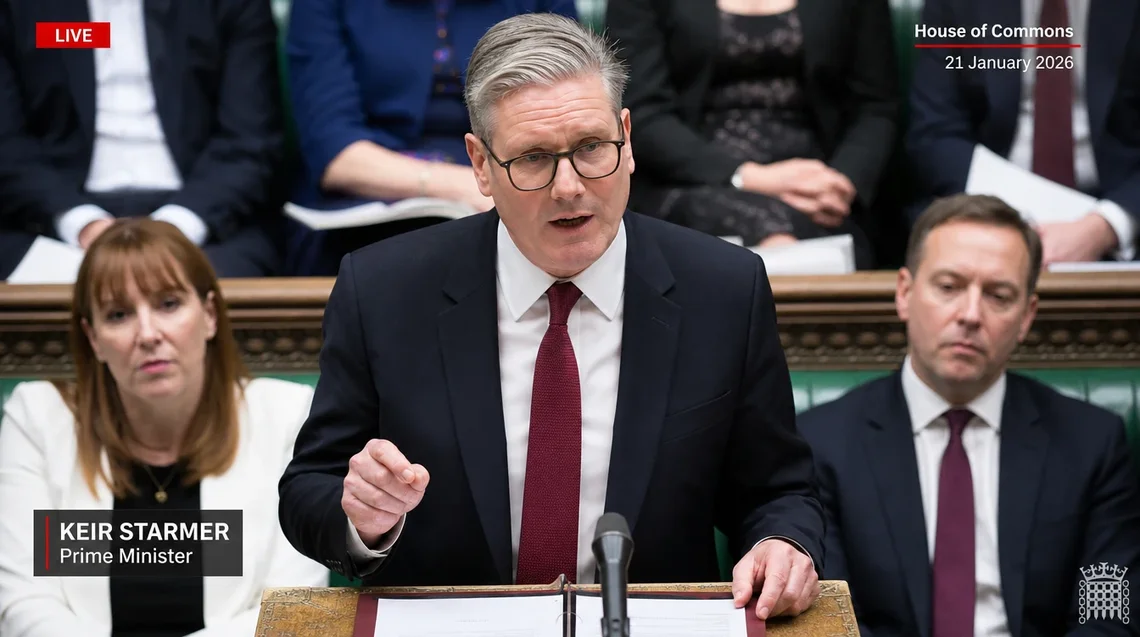
The Starmer government has announced a sweeping overhaul of the National Health Service, committing billions in additional funding and structural reform as it confronts waiting lists that have left more than seven million patients in England awaiting treatment. Health Secretary Wes Streeting outlined the package in a Commons statement this week, framing the programme as the most significant reshaping of NHS delivery since the foundation of the service. The announcement has drawn sharp responses from opposition parties and prompted fresh debate about whether new money alone can resolve the systemic pressures bearing down on Britain's most politically sensitive public institution.
The Scale of the Crisis
Official figures compiled by NHS England show the elective care waiting list has remained at historically elevated levels, with millions of patients waiting longer than the 18-week standard the service is legally required to meet. Figures published by the Office for National Statistics confirm that NHS-related economic inactivity — people unable to work because of long-term illness — has climbed sharply in recent years, adding a fiscal dimension to what was previously framed primarily as a healthcare challenge. (Source: Office for National Statistics)
Waiting Times in Context
According to NHS England data cited in the government's published impact assessment, the proportion of patients waiting more than 52 weeks for elective treatment remains far above pre-pandemic levels, despite successive government pledges to eliminate such delays. Emergency departments have similarly recorded sustained pressure, with ambulance response times and A&E four-hour targets missed consistently across most trusts in England. Reporting by the BBC and the Guardian has documented individual trust performance, illustrating the degree to which regional variation compounds the national picture. (Source: BBC, Guardian)
The government's argument is that the current trajectory is unsustainable without both additional capital investment and structural reform to how care is commissioned and delivered. Ministers have pointed to independent modelling suggesting that without intervention, the waiting list could breach ten million within the current parliament.
Related Articles
What Labour Is Proposing
The overhaul centres on three principal pillars: a significant uplift in day-to-day NHS funding, a shift toward community and primary care to reduce hospital demand, and a workforce expansion programme designed to train and retain clinical staff. Streeting told the Commons that the government would accelerate the building of new surgical hubs and diagnostic centres, with a target of doubling the number of such facilities within the parliament. Readers following the evolution of this policy can find further background in the coverage of how the Starmer Government Unveils Major NHS Funding Overhaul, which outlined the early framework of the current spending commitment.
Funding Allocation and Delivery Mechanisms
Treasury officials confirmed that the NHS settlement represents the largest cash increase to health budgets outside of emergency pandemic spending in over a decade. The funding will be distributed through integrated care boards, the regional commissioning bodies introduced under previous legislation, with new performance conditions attached to how money is spent. Officials said trusts failing to meet reform milestones would face intervention from NHS England's recovery support programme. The funding package builds on commitments first signalled in the government's earlier prospectus, examined in detail when Labour Pledges Major NHS Funding Boost Amid Reform Push was reported.
The government has also indicated it will consult on amending the NHS Constitution to set more stretching waiting time guarantees, a move that carries legal weight because it would create enforceable rights for patients.
Primary Care and Prevention
A central plank of the reform agenda is a reorientation toward general practice and community-based care. Officials said the government intends to increase the number of GP appointments delivered each week, partly by expanding the roles of pharmacists, physiotherapists and mental health practitioners working within primary care networks. Preventative programmes targeting obesity, cardiovascular disease and diabetes — conditions responsible for a disproportionate share of emergency hospital admissions — will receive ring-fenced funding under the plan.
Party Positions: Labour argues that a combination of structural reform and sustained investment is the only credible path to ending the waiting list crisis, framing the overhaul as a generational reset of NHS priorities. Conservatives contend that the government is recycling commitments made under the previous administration, accusing ministers of rebranding existing programmes while adding bureaucratic complexity through new commissioning conditions. Lib Dems broadly welcome the funding increase but have called for faster action on GP access and mental health services, arguing that the ten-year timeframe attached to some elements of the plan is too slow given the immediate suffering of patients on waiting lists.
Political Reaction and Parliamentary Dynamics
The Commons statement was met with sustained scrutiny from the opposition benches. Conservative shadow health secretary Edward Argar argued that the government's reform plans lack specificity on delivery timelines, and challenged ministers to publish quarterly data on waiting list progress broken down by integrated care board. The Liberal Democrats pressed Streeting on mental health provision, noting that parity between physical and mental health — a commitment enshrined in law — remains largely unrealised in practice.
Government Majority and Legislative Path
Labour's substantial Commons majority means the primary legislative elements of the overhaul are expected to pass without significant difficulty. However, a number of Labour backbenchers have indicated they will push for stronger protections against any element of the reform that could facilitate greater private sector involvement in NHS delivery — a fault line that has historically caused tension within the party. The tensions around the legislative process were foreshadowed in earlier analysis of how Labour pushes NHS reform bill amid funding row, which traced the intra-party dynamics shaping the bill's drafting.
In the Lords, crossbench peers with NHS backgrounds are expected to scrutinise the workforce provisions closely, particularly around pay frameworks and the terms under which international recruitment will be expanded.
Public and Polling Opinion
Public satisfaction with the NHS has fallen to its lowest recorded level in polling conducted by Ipsos, with dissatisfaction driven primarily by waiting times rather than concerns about the quality of care once received. YouGov tracker data shows that the NHS consistently ranks as voters' top priority, ahead of the cost of living and immigration, and that Labour's handling of health is among the metrics where the government retains a significant lead over the Conservatives despite overall approval ratings that have softened since the general election. (Source: Ipsos, YouGov)
Trust Deficit and Delivery Expectations
However, the same polling suggests that public scepticism about whether politicians can deliver NHS reform is high. According to YouGov data, a majority of respondents express doubt that waiting lists will be significantly shorter by the end of the current parliament, regardless of the level of investment committed. That scepticism presents a political challenge for the government: the scale of the ambition it has outlined creates a clear accountability framework that the opposition will use to measure performance at the next general election. (Source: YouGov)
Ministers have sought to manage expectations by framing the overhaul as a multi-year project rather than a short-term fix, while simultaneously arguing that patients should begin to see measurable improvements in access to elective care within the near term. The tension between those two messages is one that officials acknowledge they will need to navigate carefully.
NHS Workforce: The Central Variable
Analysts and health economists broadly agree that the limiting factor in any NHS recovery plan is the availability of trained clinical staff rather than the level of financial investment alone. The government's workforce plan includes commitments to expand medical school places, accelerate nursing degree apprenticeships, and improve retention through reforms to the NHS pension scheme and working conditions. Officials said the plan would be reviewed annually against delivery benchmarks, with the Health Secretary required to report to Parliament on progress.
International Recruitment and Ethical Concerns
The plan maintains a continued reliance on international recruitment in the near term while domestic training pipelines are expanded, a position that has attracted criticism from global health advocates who argue that drawing clinical staff from lower-income countries undermines those nations' health systems. The government has committed to adhering to the WHO health workforce support and safeguards list, which designates countries from which active international recruitment by state health systems should be restricted.
Historical Parallels and Policy Context
The current overhaul draws comparisons to the major NHS investment and reform programme pursued under the Blair government in the early part of this century, which saw waiting lists fall substantially following a combination of increased funding, targets, and the introduction of patient choice mechanisms. The Darzi review commissioned by the government earlier in the parliament provided an analytical foundation for the current programme, diagnosing the NHS's core problems as a lack of capital investment, overreliance on acute hospital care, and a workforce stretched to its structural limits. For a fuller account of how the government has framed its ambitions from the outset, the reporting on how Starmer pledges major NHS overhaul amid funding row remains instructive context.
| Indicator | Current Level | Government Target | Source |
|---|---|---|---|
| Elective care waiting list (England) | 7.5 million+ patients | Significant reduction within parliament | NHS England |
| Patients waiting over 52 weeks | Substantially above pre-pandemic level | Elimination of waits over 18 months (near term) | NHS England |
| Public NHS satisfaction (Ipsos) | Lowest recorded level | Measurable improvement by mid-parliament | Ipsos |
| NHS as voter top priority (YouGov) | Ranked first consistently | — | YouGov |
| New surgical hubs target | Existing network | Doubled within parliament | DHSC |
| GP appointments target | Demand exceeding capacity | Increased weekly appointment numbers | DHSC / NHS England |
The government's NHS overhaul represents one of the most consequential domestic policy commitments of the Starmer parliament, and its success or failure will define the administration's legacy more than almost any other policy area. Whether the combination of new funding, structural reform and workforce expansion proves sufficient to reverse a decade and a half of accumulated pressure on the health service remains the defining question — one that will be answered not in ministerial statements, but in the experiences of millions of patients waiting for care. The politics of the NHS have rarely been more charged, and the distance between ambition and delivery has rarely been more closely watched.