Labour pledges major NHS funding boost in spending review
Starmer government targets waiting list crisis with £15bn investment plan

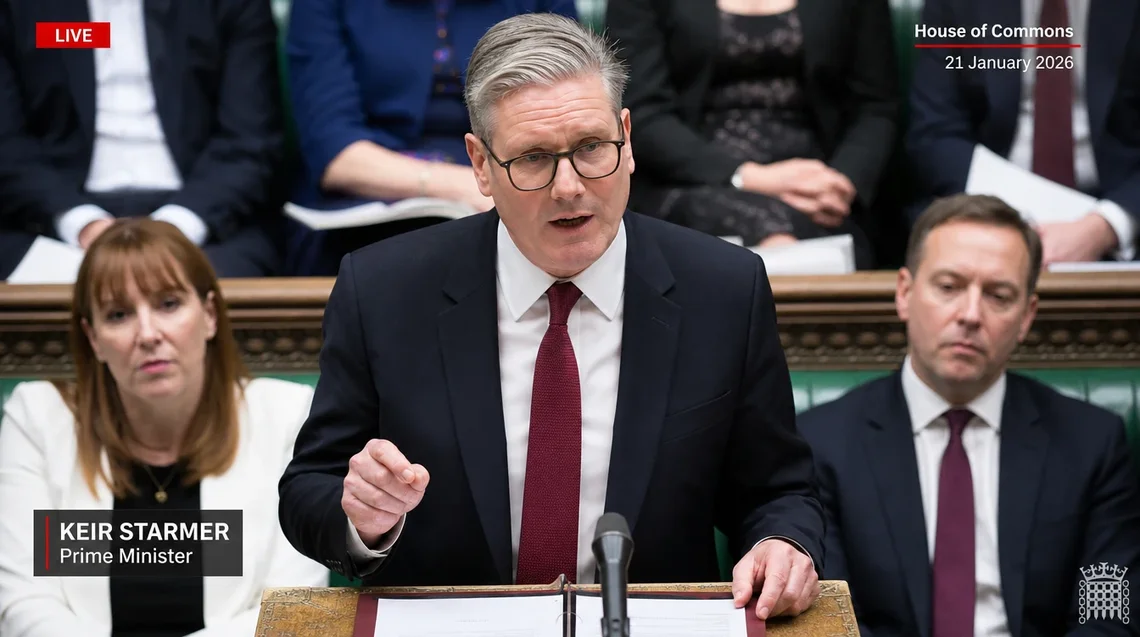
The Starmer government has announced a £15 billion investment package for the National Health Service as part of the upcoming spending review, targeting the longest waiting lists in NHS history and positioning health reform as the centrepiece of Labour's domestic agenda. The announcement represents the most significant single injection of public funding into the health service in over a decade, officials said, with ministers framing the commitment as a generational effort to rebuild trust in the country's most cherished public institution.
Chancellor Rachel Reeves confirmed the multi-year settlement during a statement to the Commons, outlining how the funding would be allocated across primary care, elective recovery, mental health services, and capital infrastructure. The move comes as data from NHS England show that more than 7.5 million people are currently on waiting lists for elective treatment, a figure that health economists and opposition politicians alike have described as unsustainable. (Source: Office for National Statistics)
Party Positions: Labour has committed £15 billion in new NHS funding over the course of the spending review period, arguing the investment is essential to clear waiting lists and modernise ageing hospital infrastructure. Conservatives have criticised the announcement as fiscally reckless, contending that without structural reform the additional money will be absorbed without meaningful gains in patient outcomes. Lib Dems have broadly welcomed the scale of investment but called for a specific ringfenced fund for mental health services and GP capacity, warning that hospital-centric spending alone will not address the crisis in community care.
The Scale and Scope of the Investment
The £15 billion package will be distributed over the multi-year review period, with the largest single allocation directed toward elective recovery — the backlog of routine operations and outpatient appointments delayed significantly in recent years. Officials said approximately £6 billion of the total is earmarked for this purpose, with an additional £3 billion directed toward upgrading NHS estates, including the replacement of ageing RAAC concrete structures identified as a structural risk in dozens of hospital buildings across England.
Related Articles
Capital Versus Revenue Spending
A significant proportion of the package — roughly £4 billion by Treasury estimates — is categorised as capital expenditure, covering new diagnostic equipment, digital infrastructure, and building works. The remainder constitutes day-to-day resource spending, including workforce expansion and retention initiatives. Health economists at the King's Fund have previously warned that capital underinvestment in the NHS has been a persistent structural problem, with the service running one of the lowest capital-to-revenue ratios of any major healthcare system in the developed world. (Source: BBC)
The distinction matters politically as well as practically. Capital spending scores differently against the government's own fiscal rules, and Treasury officials have been careful to present the package in a manner consistent with Reeves's commitment to meet her self-imposed debt reduction targets. Critics, including the Institute for Fiscal Studies, have questioned whether the investment envelope is compatible with those targets without further tax rises or departmental cuts elsewhere in Whitehall.
Workforce and Retention Commitments
Alongside the headline funding figure, Downing Street confirmed that a revised NHS long-term workforce plan will accompany the spending settlement, including increased training places for nurses, GPs, and consultants. Officials said the government intends to recruit an additional 8,500 mental health workers as part of a separate pledge tied to the overall health package. The Royal College of Nursing has previously indicated that workforce retention rather than recruitment is the more acute crisis, with large numbers of trained staff leaving the profession due to pay and working conditions. (Source: Guardian)
Political Context and Parliamentary Reaction
The announcement arrived at a politically charged moment for the Starmer administration. Labour has faced sustained pressure from within its own parliamentary party over the pace of NHS reform, with some backbenchers arguing that additional funding without structural change risks repeating the mistakes of previous governments. The spending review commitment is designed in part to silence those internal critics while simultaneously placing the Conservatives on the defensive over their stewardship of the health service during their fourteen years in government.
For further context on the trajectory of Labour's health spending commitments, see earlier reporting on Labour Pledges Major NHS Funding Boost Amid Reform Push, which outlined the political groundwork laid ahead of this announcement.
Opposition Response
Shadow Health Secretary Edward Argar responded by arguing that the Conservatives had left behind a plan for NHS reform that Labour had chosen to abandon, and that raw funding increases without productivity reform would fail patients. He pointed to data showing that NHS productivity currently remains below pre-pandemic levels despite years of additional spending. (Source: Office for National Statistics)
The Liberal Democrats took a different line, with health spokesman Daisy Cooper welcoming the scale of investment but pressing ministers on the specific allocation for mental health. She argued in a Commons exchange that the government's own figures implied mental health services would receive a proportionally smaller share than physical health, a disparity she described as inconsistent with Labour's stated commitment to parity of esteem.
Polling conducted by YouGov in the weeks preceding the announcement showed that NHS performance remains the single most important issue for voters, with 68 percent of respondents rating it as either their top concern or among their top three. Separate data from Ipsos indicated that public satisfaction with the health service has fallen to its lowest recorded level, with fewer than one in three adults describing themselves as satisfied with the NHS overall. (Source: YouGov; Ipsos)
| Indicator | Current Figure | Previous Peak / Benchmark | Source |
|---|---|---|---|
| Total elective waiting list (England) | 7.5 million patients | 4.4 million pre-pandemic | NHS England / ONS |
| Public satisfaction with NHS | 29% satisfied | 70% satisfied (2010) | Ipsos / British Social Attitudes |
| NHS as top voter concern | 68% rate it top-3 issue | 54% at last general election | YouGov |
| NHS productivity vs pre-pandemic | Approx. 10-12% below baseline | 100% (2019 baseline) | Office for National Statistics |
| Proposed new NHS investment (spending review) | £15 billion | £3.8bn (2021 settlement) | HM Treasury |
Reform Agenda: What the Money Is Meant to Achieve
Ministers have been at pains to present this not as a blank cheque but as a structured investment tied to measurable outcomes. Health Secretary Wes Streeting, who has positioned himself as the most reform-minded occupant of that office in a generation, has consistently argued that money without reform is insufficient. His department has outlined a series of productivity milestones that NHS trusts will be expected to meet in exchange for the additional funding, including reducing the proportion of outpatient appointments that result in no clinical value and shifting a greater share of diagnostic activity into community settings.
This framing connects directly to Labour's broader narrative around NHS transformation. Readers tracking the development of this policy area will find useful background in reporting on Labour Pledges Major NHS Overhaul Amid Funding Crisis and the earlier budgetary commitments detailed in coverage of Labour pledges major NHS funding boost in autumn budget.
Digital Infrastructure and Diagnostics
A recurring theme in Streeting's public statements has been the potential for technology to improve NHS throughput without proportional increases in staff. The spending review package includes £1.5 billion specifically allocated for digital transformation, covering electronic patient records, AI-assisted diagnostics, and the expansion of NHS App functionality to enable patients to manage referrals and test results without requiring GP or administrative intermediary contact.
NHS England officials said the digital investment is expected to reduce unnecessary outpatient follow-up appointments by up to 30 percent within the review period, though independent analysts have cautioned that such projections have historically proven optimistic when applied at scale across the health service.
Fiscal Implications and Treasury Arithmetic
The £15 billion commitment sits against a backdrop of constrained public finances. The Office for Budget Responsibility has previously flagged that health spending represents the largest single pressure on the long-run fiscal trajectory, driven by demographic ageing and the increasing prevalence of complex long-term conditions. Treasury officials said the settlement has been constructed to comply with the government's fiscal rules, though they declined to specify which other departmental budgets had been reduced to accommodate the health increase.
Reeves has maintained throughout that day-to-day spending must be financed by taxation rather than borrowing, a rule that implies either tax rises or cuts elsewhere. Departmental budgets outside health, defence, and international development are expected to face real-terms reductions under the spending review, according to reports in the Guardian and BBC ahead of the formal publication. (Source: Guardian; BBC)
The funding announcement also needs to be read alongside the government's wider ambitions for health reform, including the shift toward neighbourhood health centres and a reconfiguration of the primary care model. Earlier coverage tracking the evolution of these pledges from the election campaign through to government implementation is available in reporting on Labour pledges £15bn NHS funding boost in manifesto and the post-election policy development documented in Labour pledges NHS funding boost amid waiting list crisis.
Reactions from the Health Sector
NHS Confederation chief executive Matthew Taylor described the announcement as a significant step but cautioned that the health service faced a "productivity paradox" in which additional resource did not automatically translate into faster throughput given current workforce pressures and estates limitations. The British Medical Association said any welcome for the funding was conditional on meaningful progress in consultant and GP pay negotiations, warning that continued industrial tensions would undermine the government's capacity to clear waiting lists regardless of the capital available.
Charities and Patient Advocacy Groups
Cancer Research UK and the Stroke Association both issued statements broadly welcoming the investment, with particular emphasis on the diagnostic expansion component. Both organisations have long argued that the scale of delayed diagnosis driven by waiting list pressures is generating a secondary wave of avoidable mortality that will take years to fully manifest in mortality statistics. The Nuffield Trust said the government's ambitions were credible in outline but that delivery risk remained high given the NHS's track record on large-scale transformation programmes.
What Comes Next
The formal spending review document is expected to be published in the coming weeks, at which point the precise allocations by programme, region, and trust will become visible to parliamentary scrutiny. The Health and Social Care Select Committee has already indicated it intends to hold the government to the specific productivity milestones cited by ministers, and has written to NHS England requesting baseline data against which future performance can be assessed.
For a government that came to office with NHS reform as an explicit mandate, the spending review announcement represents the clearest financial expression of that ambition to date. Whether the investment translates into shorter waiting times, improved patient satisfaction, and measurable productivity gains will define a substantial part of Starmer's domestic legacy — and, in all likelihood, the outcome of the next general election.