Starmer Pledges NHS Funding Boost Amid Reform Push
Labour government outlines plan to ease healthcare pressures

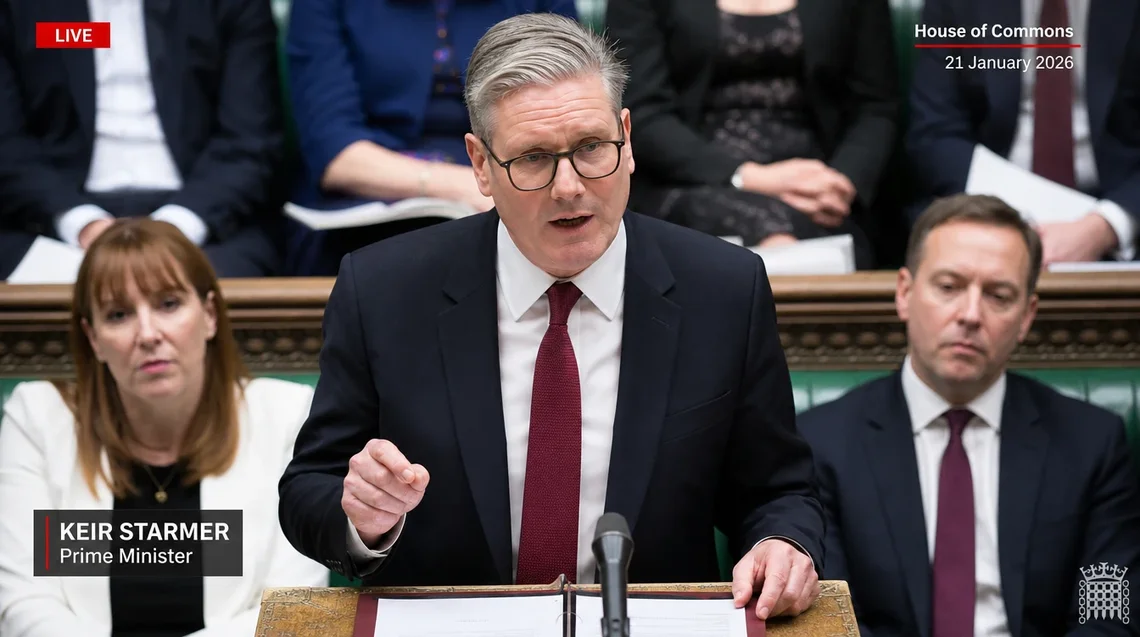
Prime Minister Sir Keir Starmer has announced a significant funding package for the National Health Service, pledging billions in additional investment as his government attempts to reduce waiting lists, address a deepening staffing crisis, and accelerate structural reforms that Labour says are essential to the long-term survival of publicly funded healthcare. The announcement, made from Downing Street, represents one of the most consequential domestic policy moves of Starmer's premiership and sets the stage for a fierce parliamentary battle over how the NHS should be governed, funded, and reformed in the years ahead.
The Funding Announcement: What Labour Is Proposing
The government's plan centres on a multi-year capital and revenue commitment to NHS England, with officials saying the new investment will be directed primarily at reducing the record backlog of elective procedures, expanding diagnostic capacity, and increasing the number of frontline clinical staff. Treasury officials confirmed the funding will be drawn from a combination of reallocated departmental budgets and borrowing, with the Chancellor expected to provide further detail in an upcoming fiscal statement.
According to government figures, more than seven million people are currently waiting for NHS treatment in England, a number that has remained stubbornly elevated despite previous government pledges to bring it down. Officials said the new money would be tied to measurable performance targets, including a commitment to reduce the number of patients waiting more than 18 weeks from referral to treatment — a legally binding standard that has not been consistently met in recent years.
Capital Investment and Infrastructure
A portion of the new funding is ring-fenced for capital investment, including hospital maintenance backlogs, new surgical hubs, and the expansion of community diagnostic centres. Officials said the infrastructure component reflects a recognition that chronic underinvestment in NHS buildings and equipment has compounded the backlog crisis, with some hospital trusts operating in facilities that are decades past their expected lifespan. The government has pointed to modelling suggesting that investment in diagnostic infrastructure can deliver significant long-term savings by catching conditions earlier and reducing acute admissions.
Related Articles
For further context on how this funding commitment relates to ongoing structural changes, see the full analysis in Starmer Pledges NHS Funding Boost Amid Reform Debate, which examines the legislative framework surrounding the latest proposals.
Workforce and Staffing Commitments
Alongside the capital investment, officials outlined a workforce element to the package, including increased training places for nurses, doctors, and allied health professionals. The government acknowledged that staff shortages remain the single biggest operational constraint on NHS capacity. According to data from NHS England, tens of thousands of posts remain vacant across the health service, with nursing and general practice among the most acutely affected areas.
The staffing dimension of the announcement has been covered in depth in the related report, Starmer pledges NHS funding boost amid staffing crisis, which details the scale of workforce shortfalls and the government's medium-term recruitment strategy.
Party Positions: Labour argues that targeted public investment combined with structural reform is the only credible path to restoring NHS performance, with ministers insisting the funding is fully costed and tied to delivery milestones. Conservatives have questioned the government's spending arithmetic, with shadow health spokespeople arguing that Labour has yet to explain how the additional commitments will be funded without further tax rises or cuts elsewhere, and accusing ministers of repeating promises made and broken under previous administrations. Lib Dems have broadly welcomed additional NHS funding but are pushing for a greater share of resources to be directed at primary care and mental health services, arguing that investment in hospitals alone will not resolve systemic pressures at the community level.
The Reform Agenda: Structural Changes Alongside New Money
The funding announcement is inseparable from Labour's broader reform agenda for the NHS. Ministers have made clear that new money will not simply be injected into existing structures, but will be conditional on trusts and integrated care systems demonstrating progress against a set of operational and governance benchmarks. This approach reflects a deliberate political calculation: Starmer's government is determined to avoid accusations that it is simply writing blank cheques to a system that critics across the political spectrum argue has structural inefficiencies that spending alone cannot fix.
Integrated Care and Regional Accountability
One of the most contested elements of the reform package is the government's proposal to strengthen the role of integrated care boards — the regional bodies created under legislation passed by the previous Conservative administration — while simultaneously increasing Whitehall oversight of performance. Officials said ministers believe the current system has produced inconsistent results across regions, with significant variation in waiting times, outcomes, and financial management between different parts of England.
Critics within the NHS have warned that imposing additional layers of central accountability risks undermining the autonomy that integrated care was designed to deliver. Senior figures in the health service told BBC health correspondents that the tension between local flexibility and national standards remains unresolved in the government's proposals.
The legislative dimension of this reform push is examined in Starmer pushes NHS reform bill amid funding pressure, which tracks the parliamentary progress of the relevant legislation and the cross-party dynamics shaping it.
Parliamentary Arithmetic and Political Opposition
While Labour's majority in the House of Commons means the funding package and associated legislation are likely to pass, the government faces a more complicated picture in the Lords and within its own parliamentary party. A number of Labour backbenchers have expressed concern that the reform elements of the package do not go far enough on social care integration, mental health investment, and the role of the independent sector in delivering NHS-funded treatment.
| Policy Area | Government Target | Current Performance | Public Approval (YouGov) |
|---|---|---|---|
| Elective waiting list | Reduce by 2 million | 7m+ waiting | 68% support increase in NHS funding |
| 18-week treatment standard | Restore compliance | Consistently missed | 74% want standard reinstated |
| NHS workforce vacancies | Cut vacancy rate by 30% | ~110,000 vacancies (NHS England) | 71% prioritise NHS staffing |
| GP appointment access | Same-day access expansion | Average 2-week wait reported | 65% dissatisfied with GP access (Ipsos) |
(Source: YouGov, Ipsos, NHS England, Office for National Statistics)
Conservative and Opposition Response
The shadow health secretary and Conservative frontbench have sought to frame the announcement as a recycling of commitments already contained in Labour's manifesto, arguing that voters were promised a transformation of NHS performance that has yet to materialise. Shadow ministers have cited Office for National Statistics data on productivity within the NHS to argue that additional funding without structural reform represents poor value for the taxpayer.
The Conservatives have also pointed to the government's handling of NHS pay negotiations as evidence of contradictions at the heart of the health policy agenda, noting that pay settlements reached since the election have added significantly to the NHS wage bill without a corresponding increase in output. According to the Guardian, at least two major health unions have signalled they expect further pay discussions before the end of the current financial year, adding uncertainty to the overall cost envelope of the package.
Public Opinion and Electoral Significance
Polling data consistently identifies the NHS as the single most important issue for British voters, and Starmer's government is acutely aware that its political fortunes are bound up with perceptions of NHS performance. According to YouGov data, more than two-thirds of the public say the state of the health service will be a decisive factor in how they vote at the next general election, a finding that gives both Labour and the opposition strong incentives to position themselves aggressively on health policy.
Ipsos research published recently found that public satisfaction with the NHS has fallen to its lowest recorded level, with the majority of respondents describing wait times and access to GPs as their primary concerns. The same research found that while most voters support increased NHS funding in principle, a significant minority are sceptical that new money will translate into improved services without credible accountability mechanisms.
The Starmer Government's Political Stakes
For the Prime Minister personally, the NHS funding announcement carries considerable political weight. Starmer built much of his general election campaign around a promise to rebuild public services, and the NHS was the centrepiece of that offer to voters. Officials close to the Prime Minister are said to believe that visible progress on waiting lists before the next electoral cycle is essential to Labour's political survival, according to BBC political correspondents who have spoken to figures in and around Downing Street.
The broader debate over funding levels, reform mechanisms, and the pace of change is captured in the coverage of Labour pushes NHS reform bill amid funding row, which examines the internal government tensions and the competing pressures from NHS leaders, trade unions, and backbench MPs that are shaping the final policy.
What Happens Next
The government has indicated that detailed spending allocations will be confirmed following the Chancellor's fiscal statement, at which point NHS England and individual integrated care systems will receive formal guidance on how new resources will be distributed. Ministers have said they expect trusts to begin submitting updated operational plans within weeks, with performance reviews scheduled on a quarterly basis.
The legislative components of the reform package are expected to return to the Commons floor for further scrutiny, with committee stages likely to produce amendments on social care integration and the independent sector's role — two areas where opposition from within and outside the Labour party remains most concentrated.
For a comprehensive overview of the funding commitments as they have developed across successive announcements, the full policy timeline is available in Labour Pledges Major NHS Funding Boost Amid Reform Push.
Whether the combination of new money and structural reform proves sufficient to reverse the NHS's declining performance metrics — and to convince a sceptical public that Labour can deliver on its central governing promise — remains the defining domestic test of the Starmer administration. With waiting lists still at record levels and public satisfaction at historic lows, officials acknowledge that the window for demonstrating tangible results is narrowing, and that the political consequences of further disappointment would be severe. (Source: Office for National Statistics, NHS England, YouGov, Ipsos, BBC, the Guardian)