Starmer pledges major NHS funding overhaul
Labour government outlines five-year reform plan

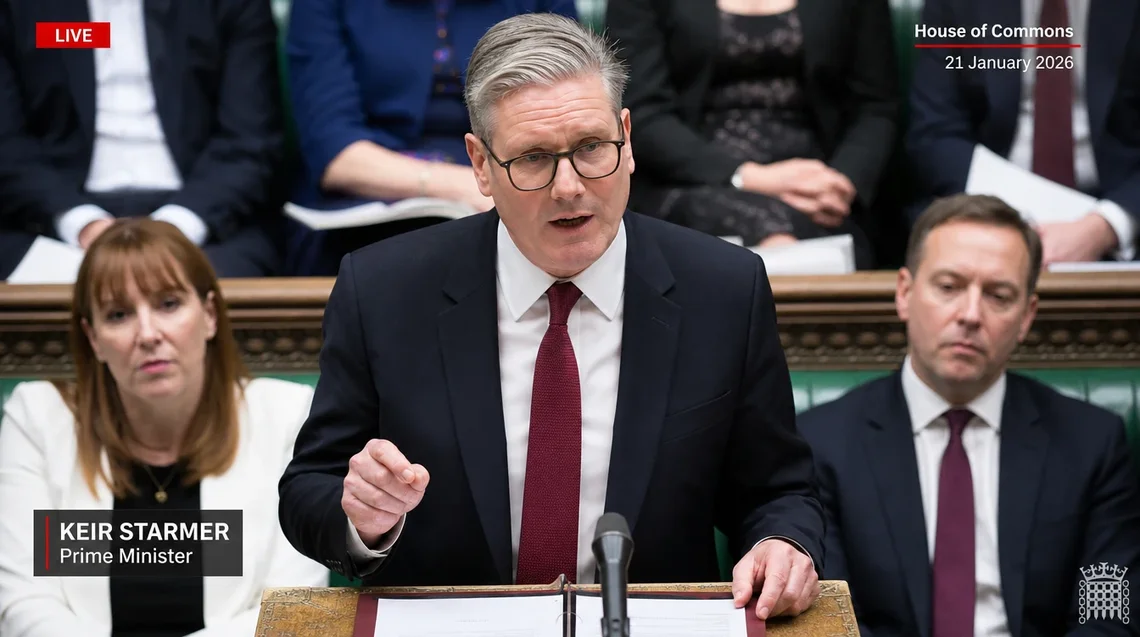
Sir Keir Starmer has announced a sweeping five-year plan to reform NHS funding, committing billions in new investment aimed at cutting waiting lists, modernising infrastructure, and rebuilding a health service that officials describe as operating under unprecedented strain. The announcement, made from Downing Street, represents the most ambitious overhaul of health spending that any Labour government has proposed in over two decades.
The Prime Minister framed the package as a generational reset for the NHS, arguing that decades of underinvestment had left hospitals unable to meet demand and patients facing unacceptable delays. The plan will be subject to parliamentary scrutiny in the coming weeks, with opposition parties already mounting significant challenges to both the scale and the mechanics of the proposed reforms.
Party Positions: Labour says the five-year NHS funding plan is essential to reverse a decade of Conservative underspending and will be financed through revised taxation on higher earners and corporate profits, without raising income tax for working people. Conservatives argue the proposals are fiscally irresponsible, contend that Labour has failed to produce credible costings, and warn that structural reform cannot be delivered on the timeline ministers have outlined. Lib Dems broadly welcome increased NHS investment but have called for greater transparency around how funds will be allocated regionally, and have pushed for a specific ringfenced mental health budget to be guaranteed within the overall settlement.
The Core Commitments of the Five-Year Plan
At the centre of the government's announcement is a phased increase in NHS capital and revenue budgets, with ministers indicating the settlement will run through to the end of the parliamentary term. Officials have described the package as front-loaded, meaning the largest tranches of new money are expected to arrive in the first two years in order to address the most acute pressures on emergency departments and elective surgery backlogs.
Related Articles
Health Secretary Wes Streeting has been central to drafting the reform blueprint, according to sources close to the Department of Health and Social Care. Officials said the plan is built around four pillars: reducing waiting times, expanding the workforce, upgrading outdated hospital buildings, and integrating social care more closely with NHS services to reduce so-called bed-blocking.
The reforms, as outlined, would also see a significant expansion of community diagnostic centres and a push to shift more routine procedures out of large acute hospitals and into local settings. This approach mirrors recommendations made in independent reviews of NHS efficiency and capacity that circulated in Westminster policy circles in recent years.
For earlier reporting on the broader NHS spending context, see Starmer pledges major NHS overhaul amid funding crisis, which detailed the initial pressure points that have shaped the current policy response.
Waiting List Targets
One of the most politically charged elements of the plan is a firm commitment to bring NHS waiting lists down to specified thresholds within a defined number of years. Officials said targets will be set on a pathway basis, meaning patients will be measured not just on whether they are seen within a given timeframe, but on whether their full care journey — from referral through to treatment — meets acceptable standards.
According to the Office for National Statistics, the number of people waiting for elective treatment in England has remained at historically elevated levels, placing sustained pressure on both patient outcomes and NHS staff morale. The government's reform plan directly references this data as the baseline against which its commitments will be measured (Source: Office for National Statistics).
Workforce and Retention Strategy
A dedicated workforce strand of the plan addresses what unions and health professionals have long identified as a structural vulnerability in NHS capacity. Officials said the government intends to increase training places for nurses, doctors, and allied health professionals, while also introducing retention incentives for experienced staff considering leaving the service.
Concerns about NHS staffing levels have been a recurring theme in Westminster, and Starmer Pledges Major NHS Overhaul Amid Staff Crisis provides essential background on how workforce shortfalls became one of the defining pressures behind the current reform agenda.
The Funding Mechanism: Taxation and Borrowing
Perhaps the most contested aspect of the announcement is how ministers intend to finance it. Treasury officials have indicated that the bulk of new NHS spending will be funded through a combination of revised fiscal rules on capital investment and targeted taxation changes, rather than through general income tax increases.
The government has pointed to assessments by independent economists suggesting that sustained NHS investment can yield fiscal returns through reduced long-term healthcare costs and improved workforce productivity. However, the Office for Budget Responsibility has not yet formally signed off on the full package, and that absence has given opposition parties a line of attack.
Conservative and Opposition Scrutiny
The Conservatives have challenged the government to publish full, independent costings of the five-year plan before it proceeds to a parliamentary vote. Shadow Health Secretary Edward Argar has argued in the Commons that the announcement amounts to political theatre unless backed by credible numbers that can withstand independent audit. Conservative frontbenchers have also pointed to what they describe as internal contradictions between Starmer's commitment not to raise income tax and the scale of investment he is promising.
Lib Dem health spokesperson Helen Morgan has adopted a more nuanced position, welcoming increased NHS funding in principle while pressing for legally binding guarantees that mental health services will receive a proportionate share. She raised the question in the chamber as to whether the funding settlement would entrench existing disparities between mental and physical health provision.
Public Opinion and the Political Calculations
The political calculation behind the timing of this announcement is not difficult to read. Public polling consistently shows the NHS ranks among the top concerns for British voters, and Labour entered government having made health service reform one of its most prominent pledges during the general election campaign.
According to YouGov, the proportion of the public identifying the NHS as one of the most important issues facing the country has remained elevated, giving the government both political incentive and some degree of public mandate for bold action (Source: YouGov). Separately, Ipsos data has shown that while public confidence in the NHS remains broadly positive in terms of institutional attachment, satisfaction with waiting times and access to GPs has fallen markedly over recent years (Source: Ipsos).
| Indicator | Current Position | Government Target | Source |
|---|---|---|---|
| Elective waiting list (England) | Historically elevated levels | Significant reduction within five years | Office for National Statistics |
| Public prioritisation of NHS as key issue | Consistently among top three concerns | Sustained reform to address public confidence | YouGov |
| Patient satisfaction with waiting times | Markedly declined in recent years | Measurable improvement within parliamentary term | Ipsos |
| NHS workforce vacancies (England) | Significant shortfall across clinical roles | Expanded training and retention programme | Department of Health and Social Care |
| Capital infrastructure investment | Longstanding backlog of repairs and upgrades | Front-loaded capital allocation in years one and two | HM Treasury |
Westminster Reaction and Parliamentary Arithmetic
The announcement has generated significant activity across Westminster, with health committee chairs in both chambers signalling that they intend to hold detailed scrutiny sessions in the coming weeks. The government's working majority means that the broad legislative framework for the reform is expected to pass, but the details — including the precise allocation formulae for regional NHS bodies — are likely to face sustained amendment pressure from across the house.
Backbench Labour MPs representing constituencies with particularly acute NHS pressures have broadly welcomed the plan, though some have privately urged ministers to move faster on primary care reform, which they argue their constituents raise more frequently than hospital waiting lists. The Guardian has reported that internal Labour discussions on the pace of GP recruitment targets have been more contentious than the government's public presentation has suggested (Source: The Guardian).
The BBC has reported that senior NHS trust chief executives have cautiously welcomed the additional funding while urging the government not to attach targets and conditions that could prove administratively burdensome at the operational level (Source: BBC).
For a fuller picture of the political row that preceded this formal announcement, readers can refer to Starmer pledges major NHS overhaul amid funding row, which tracks the earlier parliamentary flashpoints around health spending commitments.
Social Care: The Unresolved Question
Observers and health policy analysts have consistently argued that no NHS reform plan can succeed without a parallel settlement for social care, which remains the most structurally underfunded part of the health and care system. The government's five-year plan makes reference to social care integration, but ministers have stopped short of committing to a fully funded and legally enforceable social care guarantee in the current parliamentary cycle.
Integration Pilots and Local Authority Capacity
Officials said the government intends to launch a series of integration pilots in selected regions, designed to test models where NHS and local authority social care budgets are more closely pooled and directed toward shared outcomes. Critics of this approach, including those who have studied similar initiatives from previous governments, have warned that pilots without adequate funding tend to produce promising local results that cannot be replicated at scale.
The question of local authority capacity is particularly acute given the financial pressures that councils across England have faced in recent years. Several local authorities have issued formal financial distress notices, and the capacity of those councils to act as equal partners in integrated care arrangements has been seriously questioned by think tanks and by councils themselves.
What Comes Next
The government has indicated that a formal White Paper on NHS reform will follow the announcement, providing the legislative and regulatory framework within which the five-year investment plan will operate. That document is expected to be published before the next parliamentary recess, though officials stopped short of confirming a precise date.
In addition to the White Paper, the government has committed to quarterly reporting on progress against the plan's key indicators, with the Health Secretary appearing before the Commons health select committee to account for performance. This accountability mechanism was included partly in response to concerns from within Labour's own parliamentary party that previous NHS reform programmes have suffered from inadequate transparency around delivery.
The Starmer Government Unveils Major NHS Funding Overhaul coverage provides further detail on how Downing Street has been communicating the reform package to key NHS stakeholders in advance of its formal parliamentary passage.
Whether this plan represents the decisive break with recent NHS policy that Starmer has claimed, or whether it will be constrained by fiscal reality and implementation challenges as similar programmes have been in the past, will be tested in the months ahead. The political stakes are high: the NHS is among the sharpest tests of whether any government can convert campaign promises into durable change, and history suggests that the distance between ambitious announcement and effective delivery is rarely short.