Starmer pledges NHS overhaul amid growing funding row
Labour government signals major reforms as waiting lists persist
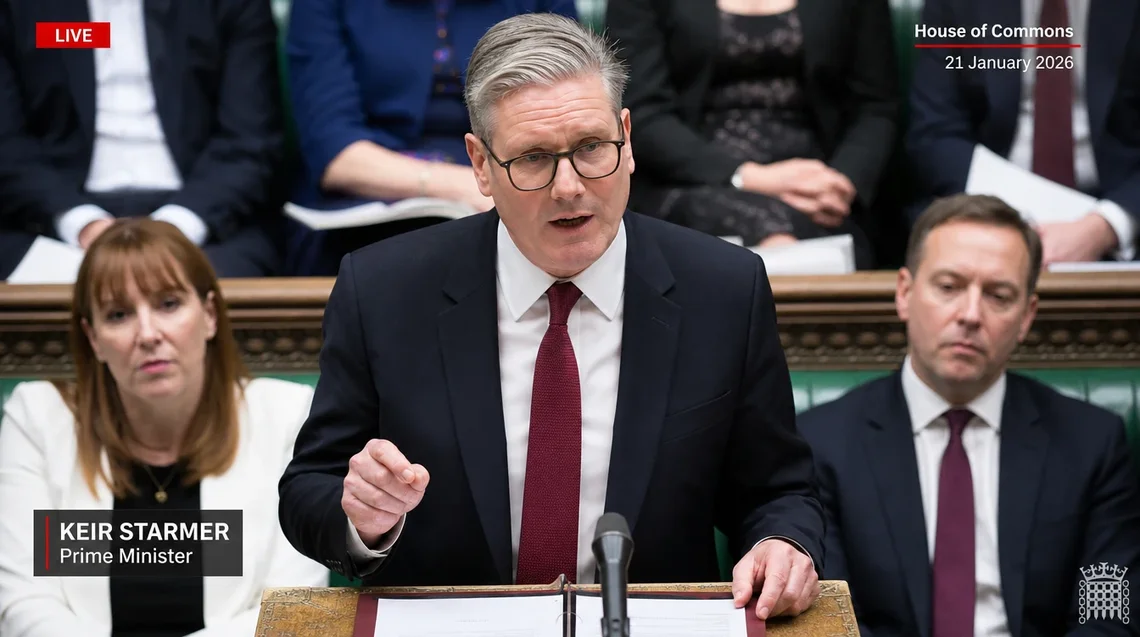
Sir Keir Starmer has set out the most ambitious restructuring of the National Health Service in a generation, vowing to reduce record waiting lists and shift the health system toward a neighbourhood-based model of care — even as a deepening row over NHS funding threatens to overshadow the government's reform agenda. With more than seven million patients currently on waiting lists, according to NHS England figures, the Prime Minister faces pressure from within his own party, from trade unions, and from an opposition determined to brand Labour's approach as underfunded and incoherent.
The pledge, delivered by Starmer at a Downing Street press conference this week, centres on a ten-year plan for the NHS that officials say will prioritise prevention, digital transformation and the decentralisation of primary care. But critics across Westminster argue the ambition is outpacing the money available to deliver it, and polling data suggest the public remains deeply sceptical that any government can meaningfully fix a health service under acute strain.
The Reform Agenda: What Starmer Is Proposing
At the heart of the government's NHS overhaul is a move away from what Health Secretary Wes Streeting has called a "national sickness service" toward a system built around prevention and community-level intervention. Officials said the reforms would involve a significant expansion of neighbourhood health hubs, greater use of technology and artificial intelligence in diagnostics, and a restructuring of NHS management to cut what ministers describe as bureaucratic waste.
Neighbourhood Health Model
The centrepiece of the structural reform is a proposal to create integrated neighbourhood teams combining GPs, district nurses, mental health workers and social care professionals into single community units. Officials said the model is partially inspired by systems operating in parts of Scandinavia and the Netherlands, and that pilot schemes are already under way in several English regions. The government has pointed to evidence from NHS England showing that integrated care in pilot areas has reduced A&E attendance, though independent health economists have cautioned that scaling such models nationally will require sustained investment over multiple budget cycles.
Related Articles
Digital Transformation and AI
Alongside structural changes, the government has confirmed plans to accelerate the rollout of the NHS App as a central patient management tool, with officials saying that millions of appointments could be shifted to digital channels within the current parliament. Streeting has also signalled that AI-assisted diagnostic tools will be introduced in radiology and pathology departments, subject to regulatory approval from the Medicines and Healthcare products Regulatory Agency. According to reporting by the BBC, NHS trusts have already been trialling AI cancer detection tools in a small number of hospitals, with results described by clinicians as promising but not yet conclusive.
Party Positions: Labour has committed to a ten-year NHS reform plan centred on neighbourhood health, digital transformation and reduced waiting times, backed by a real-terms increase in the NHS budget — though critics say the increase is insufficient given inflation and demand. Conservatives have argued that Labour inherited a funded waiting list reduction plan and has since diverted NHS resources, with Shadow Health Secretary Victoria Atkins accusing the government of "rebranding Tory progress as Labour reform." Lib Dems have broadly welcomed the focus on primary care and prevention but have called for an immediate injection of emergency capital funding for crumbling NHS estate, with leader Sir Ed Davey warning that the ten-year timescale will offer "cold comfort to patients waiting in pain today."
The Funding Row
The reform blueprint has landed in the middle of a fierce dispute over how much money the NHS is actually receiving and whether the government's spending commitments are adequate. Chancellor Rachel Reeves confirmed in the autumn Budget a substantial increase to NHS day-to-day spending, but health unions and NHS providers have argued that once inflation, pay settlements and legacy maintenance costs are accounted for, the real-terms increase is far smaller than ministers claim.
Union Pressure and Pay Disputes
NHS trade unions, including the Royal College of Nursing and Unison's health division, have continued to press for pay settlements that they argue reflect the cost-of-living pressures facing frontline workers. Officials said the government remains committed to the pay review body process, but union leaders have warned publicly that morale among nursing and paramedic staff remains critically low. According to data published by NHS England and analysed by the Health Foundation, staff vacancy rates across NHS trusts remain significantly above pre-pandemic levels, with the nursing shortfall alone running into the tens of thousands of posts.
Capital Spending and the RAAC Crisis
A further strand of the funding row concerns capital investment in NHS infrastructure. A significant number of NHS hospitals contain reinforced autoclaved aerated concrete — known as RAAC — in their structures, a material now considered structurally unsafe. The Guardian has reported that the full remediation bill for RAAC-affected NHS buildings could run into billions of pounds, a figure the Treasury has not publicly committed to in full. Health leaders have warned that without urgent capital injections, patient safety risks at affected sites will intensify. The government has acknowledged the scale of the problem but has not, to date, published a comprehensive remediation timetable with confirmed funding.
| Indicator | Current Figure | Source |
|---|---|---|
| Total patients on NHS waiting list (England) | 7.6 million (approx.) | NHS England / Office for National Statistics |
| Patients waiting over 18 weeks | Approx. 57% of total list | NHS England |
| Public satisfaction with NHS (net) | Lowest recorded level (24% satisfied) | British Social Attitudes / Ipsos |
| NHS staff vacancy rate (nursing) | Approx. 8–10% of posts unfilled | NHS England / Health Foundation |
| Voters who trust Labour most on NHS | 38% (vs 18% Conservative) | YouGov polling, recent months |
| Day-to-day NHS budget increase (real terms est.) | Approx. 3.3% per year | HM Treasury / Institute for Fiscal Studies |
Political Battleground at Westminster
The NHS has long been the defining political battleground in British elections, and Labour's handling of the health service is being watched with intense scrutiny both by its own backbenchers and by opposition strategists. For further context on the structural pressures shaping this debate, see our coverage of how Starmer pledges NHS overhaul as waiting lists grow, which sets out the statistical baseline the government inherited on taking office.
Backbench Anxiety Within Labour
Inside the parliamentary Labour Party, a growing number of MPs — particularly those representing constituencies in the Midlands and the North of England where NHS waiting times are longest — have privately expressed concern that the ten-year framing of the reform plan will leave their constituents without visible improvement before the next general election. According to those familiar with recent PLP meetings, Streeting has been pressed repeatedly on interim milestones and measurable targets. Officials said the government intends to publish a full implementation framework, but a date for that document has not been confirmed.
The question of internal party cohesion has been sharpened by the broader political context. As detailed in our related reporting on Starmer's NHS overhaul faces growing backbench revolt, the Prime Minister is navigating a parliamentary arithmetic that, while comfortable in headline terms, masks genuine ideological tensions over the role of private sector involvement in NHS delivery — a flashpoint that Streeting's previous comments about "pro-public, not anti-private" have done little to fully extinguish.
Opposition Response
The Conservatives have sought to frame Labour's reform plan as a repackaging of initiatives already under way, arguing that the previous government had put in place a funded plan to tackle the waiting list backlog that Labour inherited and subsequently disrupted. Shadow Health Secretary Victoria Atkins has cited the expansion of the independent sector treatment centres under the Conservatives as evidence that waiting list reduction was already gathering pace before the general election, a claim that health economists have described as partial at best, given that the backlog was already at historically high levels when Labour took office.
The Liberal Democrats, meanwhile, have carved out a distinct position by focusing on the immediate crisis in general practice and community mental health services, areas where the government's neighbourhood model would have its most direct effect. Sir Ed Davey has called for an emergency package for GP surgeries, many of which are operating in buildings that NHS officials have described as not fit for purpose.
Public Opinion and Electoral Context
Despite Labour's structural lead over the Conservatives on NHS trust in polling, satisfaction with the health service itself remains at historically depressed levels. According to Ipsos tracking data and the annual British Social Attitudes survey, public confidence in the NHS has declined sharply over recent years, with satisfaction figures now at their lowest point since the survey began in the 1980s. YouGov polling conducted in recent months shows that while voters continue to trust Labour more than the Conservatives on health, a significant proportion say they do not believe either major party has a convincing plan to fix the NHS in a reasonable timeframe.
That public scepticism represents a structural political risk for Starmer. The government's argument — that a decade of underinvestment cannot be reversed in a single parliament — is one that health policy experts broadly accept, but it is a harder message to sell to patients waiting months for procedures that should be routine. For a deeper breakdown of the statistical trajectory, our earlier analysis of Starmer pledges major NHS overhaul amid funding row provides granular data on how waiting time distributions have shifted across specialties.
What Happens Next
The government's immediate legislative timetable includes the passage of the Tobacco and Vapes Bill, which ministers have framed as part of the prevention agenda underpinning the NHS reform plan. Separately, officials confirmed that the Darzi review — commissioned by Streeting shortly after Labour took office to audit NHS performance — will form the evidential foundation for the ten-year plan's final published version. The full plan is expected to be published later in this parliamentary session, though officials have declined to confirm a precise date.
For those tracking the evolution of this policy debate, our extended coverage of Starmer pledges NHS overhaul amid funding crisis documents the fiscal constraints within which the government is attempting to operate, while analysis of Starmer pledges NHS overhaul as waiting lists surge examines the demand-side pressures that any structural reform will need to address.
What is not in question is the political stakes. The NHS is the institution that most consistently defines voters' judgement of governments, and Labour's internal polling, according to sources familiar with the data, shows the party is acutely aware that ambition alone will not be sufficient. Concrete, measurable reductions in waiting times — delivered within this parliament — are understood by Number 10 to be the single most important domestic test of whether Starmer's government can be judged a success. The reform blueprint is now written. The harder task of delivery has barely begun. (Source: NHS England; Office for National Statistics; YouGov; Ipsos; BBC; The Guardian; Health Foundation; Institute for Fiscal Studies)