Starmer pledges NHS overhaul amid mounting pressure
Labour government unveils five-year health service reform plan
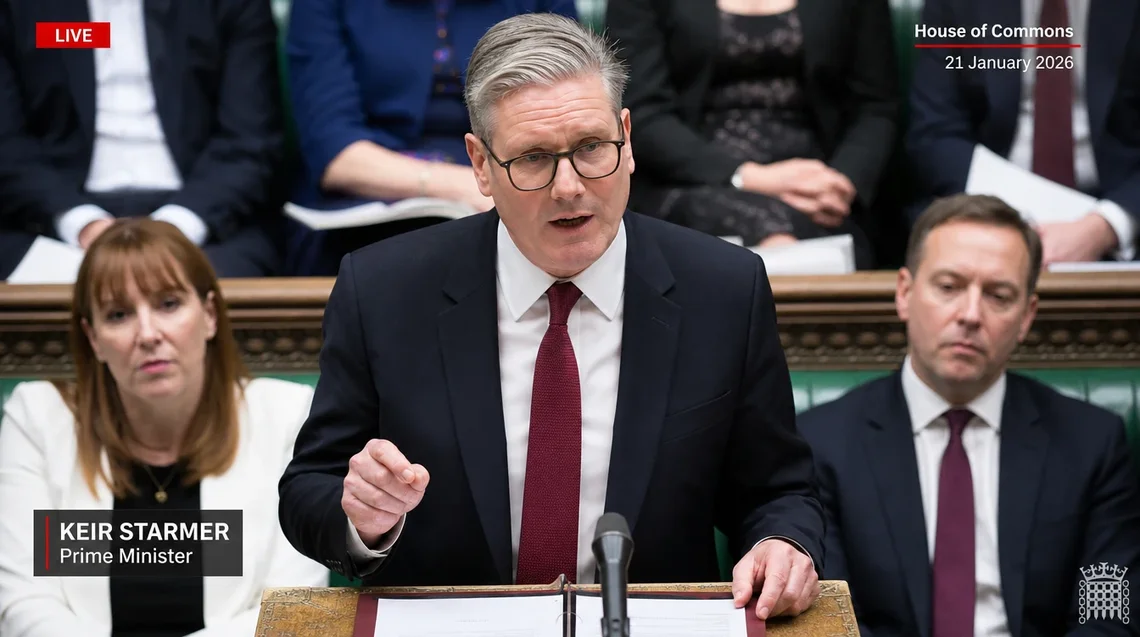
Sir Keir Starmer has unveiled a sweeping five-year plan to reform the National Health Service, committing his government to eliminating record waiting lists, expanding community care, and restructuring NHS England's central bureaucracy — moves that officials say represent the most ambitious overhaul of the health service in a generation. The announcement comes under intense political pressure, with polling consistently showing the NHS remains the single most important issue for British voters.
Party Positions: Labour has pledged £2.5 billion in additional NHS investment, backed by cuts to NHS England's administrative headcount and a shift toward neighbourhood health centres; Conservatives argue the plan lacks structural credibility and that Labour is recycling pledges already broken on waiting times; Lib Dems broadly welcome the community health focus but have demanded a legally binding timeline for eliminating waits of over 18 weeks, warning that without statutory teeth the plan will repeat the failures of previous reform programmes.
The Reform Plan in Detail
Downing Street confirmed the plan centres on three interlocking commitments: reducing NHS England's central workforce by an estimated 20 percent to redirect funds toward frontline care; establishing around 50 new neighbourhood health centres across England, prioritising areas with the highest disease burden; and digitising patient records across all NHS trusts within the plan's five-year window. Ministers described the package as a direct response to what they called a "broken model" of centralised hospital-first care that had driven waiting lists to historically unprecedented levels.
Neighbourhood Health Centres
The neighbourhood health centre programme is intended to shift routine and preventive care away from acute hospital settings and into community environments, officials said. According to the Department of Health and Social Care, the model draws on pilots already operating in areas including Coventry and Wolverhampton, where integrated primary and social care hubs have reduced accident and emergency attendances for non-emergency conditions. The government has not yet published a full list of the 50 proposed locations, a gap critics say undermines the plan's credibility ahead of its formal legislative stage.
Related Articles
NHS England Restructuring
The decision to cut NHS England's central administrative layer has attracted both support and significant internal resistance. Senior NHS managers have privately warned, according to reporting by the Guardian, that rushed restructuring could destabilise commissioning pipelines and delay the very frontline improvements the government is promising. Ministers have countered that the current architecture, which expanded considerably over the previous decade, absorbs resources that would deliver greater clinical value on the ground. The Health Secretary has indicated a formal consultation with NHS trusts will begin shortly, with structural changes expected to be phased over 18 months.
Waiting List Crisis: The Numbers
The political urgency behind the announcement is driven by waiting list data that has dominated public debate throughout this parliament. Office for National Statistics figures show that overall life expectancy improvements in England have stalled, with health inequalities between the most and least deprived communities widening — a trend health economists link directly to delayed treatment access. The government's own target of eliminating waits of over 18 weeks for elective treatment by the end of this parliament represents a significant benchmark against which its reform plan will be judged.
| Indicator | Current Figure | Source |
|---|---|---|
| Patients waiting over 18 weeks for elective treatment | Approx. 6.3 million (England) | NHS England / ONS |
| Public satisfaction with NHS overall | 24% (historic low) | Ipsos / British Social Attitudes |
| Voters rating NHS as top political priority | 52% | YouGov |
| GP appointment within two weeks: satisfaction rate | 41% | YouGov |
| Labour lead on NHS handling vs Conservatives | +11 points | Ipsos |
| Proportion backing more NHS public funding | 68% | YouGov |
(Source: Office for National Statistics, YouGov, Ipsos)
Political Reaction at Westminster
The announcement triggered immediate and sharp exchanges across the political divide. The plan has been broadly welcomed by Labour's own backbenches, though a number of MPs representing seats in the north of England and the Midlands have privately pressed ministers for firmer guarantees that neighbourhood health centres will be distributed equitably rather than concentrated in marginal constituencies — a concern that reflects the party's difficult relationship with so-called Red Wall communities whose support it is working to consolidate.
Conservative Response
Shadow Health Secretary, speaking for the official opposition, argued the plan amounted to an admission that Labour had failed to deliver on NHS promises made during the general election campaign. The Conservatives pointed to what they described as broken commitments on waiting time reduction, arguing that structural reorganisation of NHS England would cause institutional disruption similar to the contentious Health and Social Care Act reforms of the previous decade — a comparison ministers flatly rejected. The BBC reported that internal Conservative briefings have focused on the plan's absence of specific productivity targets beyond the headline waiting list figure.
Liberal Democrat Position
The Liberal Democrats, who made NHS provision a central feature of their recent electoral advance in suburban and rural England, responded with qualified support. The party's health spokesperson welcomed the community care dimension but reiterated the demand for statutory timelines, arguing that without legislative force the five-year plan would remain advisory rather than binding. Polling conducted by YouGov in recent months shows the Liberal Democrats outperforming Labour on NHS trust metrics in southern England constituencies, giving the party specific political incentive to press for harder commitments from the government.
Funding Mechanisms and Treasury Tensions
Officials have been careful to describe the reform package as largely cost-neutral over its five-year span, funded primarily through savings from the NHS England restructuring and efficiencies in procurement and medicines pricing. However, independent health economists, cited by the Guardian's health desk, have questioned whether administrative savings of the scale ministers are projecting are achievable without significant disruption to service delivery timelines. The Office for Budget Responsibility is expected to publish its own assessment of NHS funding pressures in its next fiscal assessment, and Treasury insiders have signalled that any additional capital commitment beyond the stated £2.5 billion envelope would face serious scrutiny against competing departmental demands.
Capital Investment and Digital Infrastructure
A substantial portion of the plan's investment is directed toward digital infrastructure — specifically the completion of a unified patient record system that has been in partial development for years. According to NHS England's own published roadmap, interoperability between hospital, GP, and social care systems remains incomplete across a significant majority of trusts. Ministers argue that completing digital integration is not merely an administrative convenience but a clinical safety imperative, pointing to research published in peer-reviewed medical journals suggesting that fragmented records contribute to avoidable adverse events in hospital settings. The timeline for full digital integration has been set at four years, with mandatory compliance milestones written into service agreements with individual trusts.
Historical Context and Previous Reform Attempts
The NHS has been subject to repeated and often disruptive reform cycles since the early part of this century. The 2012 restructuring under the coalition government, widely regarded as one of the most controversial legislative interventions in the health service's modern history, created an architecture of clinical commissioning groups that was itself subsequently dismantled and replaced with integrated care boards — a process that consumed considerable management bandwidth and cost. Officials in the current Department of Health have sought to distance the Starmer plan from that model, emphasising that the proposed changes are intended to be evolutionary rather than requiring primary legislation to take effect at every stage.
For further background on the government's evolving approach to health service reform, see earlier reporting on how Starmer pledges NHS reform amid mounting winter pressure shaped the initial policy framework, and analysis of how Starmer pledges NHS overhaul as waiting lists grow reflected the escalating scale of the political challenge facing ministers. The funding dimensions of the debate are examined in detail in reporting on how Starmer pledges major NHS overhaul amid funding row exposed the tensions between reform ambition and Treasury constraint. Implementation challenges are tracked in ongoing coverage of how Starmer's NHS Overhaul Faces New Pressure on Waiting Times as the government's targets come under sustained scrutiny, and the trajectory of waiting list politics is further documented in analysis of how Starmer Pledges NHS Overhaul as Waiting Lists Surge intensified pressure on the government to move beyond rhetoric to measurable delivery.
What Comes Next
The government's five-year plan now enters what officials describe as a formal engagement phase, during which NHS trusts, patient advocacy groups, and professional bodies including the British Medical Association and the Royal College of Nursing will be invited to submit responses. Ministers have committed to publishing a response to that consultation process before introducing enabling legislation in the next parliamentary session. Polling by Ipsos indicates that public expectations for the reform plan are high but cautious — a majority of respondents in the most recent survey described themselves as "hopeful but sceptical" that the government would deliver meaningful improvements within a single parliament. That combination of political urgency, institutional complexity, and public wariness defines the terrain on which Sir Keir Starmer's most consequential domestic policy commitment will ultimately be judged.
(Source: Office for National Statistics, YouGov, Ipsos, BBC, Guardian)