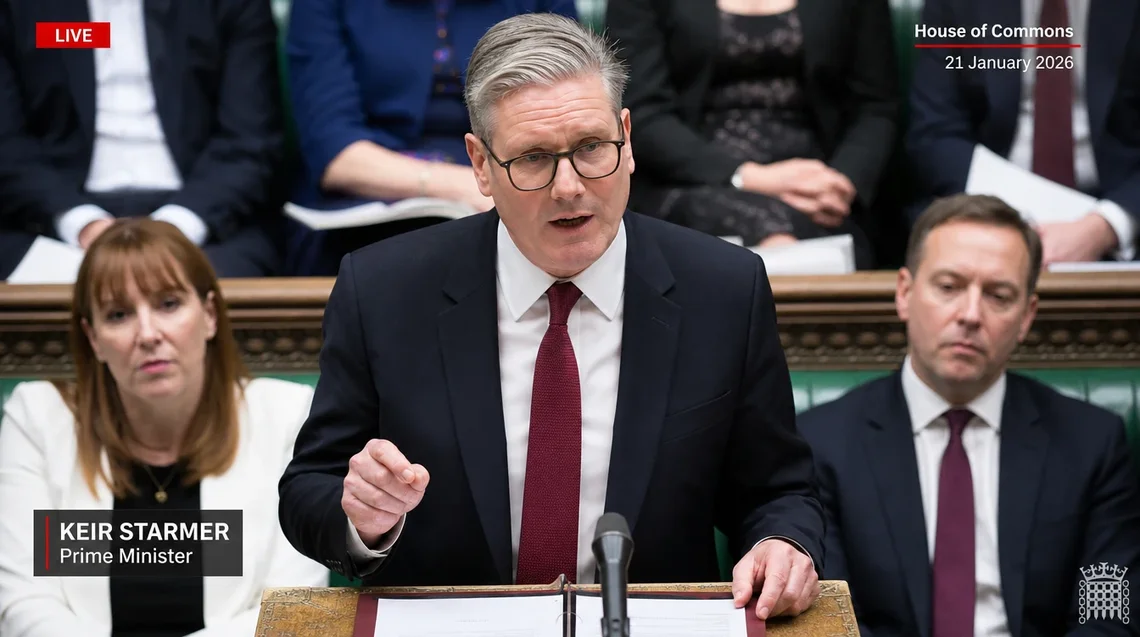
Starmer's NHS overhaul faces fresh pressure over funding
Labour government defends restructuring plan amid staff concerns

Sir Keir Starmer's flagship NHS restructuring programme is facing intensifying scrutiny over its funding model, with health service staff raising concerns about the pace and financial sustainability of proposed changes. The Labour government insists the overhaul is essential to cutting record waiting lists, but mounting pressure from unions, opposition parties, and frontline workers has thrown the plan's delivery timeline into question.
The restructuring, which involves abolishing NHS England as a standalone body and bringing it under direct ministerial control, represents the most significant reorganisation of the health service in more than a decade. Health Secretary Wes Streeting has championed the reforms as a necessary break from what he describes as a culture of bureaucratic inertia, yet the financial implications for NHS trusts and their workforce remain, according to staff groups, deeply unclear.
Party Positions: Labour backs the full NHS restructuring programme, arguing direct ministerial control will cut waste and reduce waiting times faster than the existing arm's-length model. Conservatives have accused the government of creating uncertainty for NHS staff without a credible funding plan, calling the abolition of NHS England a distraction from service delivery. Lib Dems support structural reform in principle but have demanded the government publish a full financial impact assessment before proceeding with further changes.
The Scale of the Restructuring Challenge
The government's plan to dissolve NHS England and reintegrate its functions into the Department of Health and Social Care is, by any measure, an enormous administrative undertaking. Officials said the transition would affect thousands of administrative roles across England, and NHS Providers, which represents hospital trusts, has warned that uncertainty over funding envelopes is already affecting planning at local level.
Related Articles
Workforce Implications
Trade unions representing NHS managers and administrators have pressed ministers for clarity on redundancy terms and redeployment pathways. According to union representatives cited by the BBC, some staff are being asked to apply for their own jobs under restructured team arrangements, a process described by one senior health service figure as deeply demoralising. The government has said it expects the majority of affected staff to transition into new roles, though officials have declined to provide specific guarantees in writing.
For further background on how employee relations have shaped the reform debate, see earlier reporting on Starmer's NHS overhaul faces fresh opposition from unions, which set out union positions in detail following the initial announcement.
Administrative Costs and Transition Risk
Independent analysts have raised questions about the upfront costs of the transition itself. Previous NHS reorganisations, most notably the Health and Social Care Act changes of the early 2010s, incurred transition costs running into billions of pounds — costs that critics argue were never fully recouped through efficiencies. The Office for National Statistics has noted that NHS spending as a proportion of GDP remains historically elevated, placing additional pressure on the government to demonstrate clear value from structural change (Source: Office for National Statistics).
Funding Pressures and Budgetary Disputes
At the centre of the political argument is a straightforward question: is the government committing enough money to make the restructuring work? The Chancellor's most recent spending settlement gave the NHS a real-terms increase, but health economists and think tanks including the Nuffield Trust have argued the uplift falls short of what is needed to simultaneously fund reform, reduce backlogs, and absorb inflation-driven cost increases across trusts.
The Waiting List Problem
NHS England's own figures, published before the restructuring announcement, showed that the waiting list for elective treatment in England remained at historically high levels, with millions of patients waiting for planned procedures. Streeting has repeatedly framed the overhaul as the mechanism by which the government will address this crisis, arguing that a reformed, leaner central structure will free up resources for frontline care. Critics, however, argue that organisational change does not in itself generate clinical capacity.
Reporting on related pressures around elective care targets is available in the ZenNewsUK analysis of Starmer's NHS Overhaul Faces New Pressure on Waiting Times, which examined how the backlog has continued to shape government strategy.
| Indicator | Figure | Source |
|---|---|---|
| Public approval of NHS structural reform | 34% support, 41% oppose | YouGov polling |
| Voters satisfied with government's NHS handling | 28% | Ipsos Issues Index |
| NHS England administrative roles affected by restructuring (estimated) | Approx. 9,000+ | NHS Providers analysis |
| Commons vote approving NHS reform framework | 324 in favour, 261 against | Hansard / House of Commons record |
| Real-terms NHS budget increase (current settlement) | Approx. 3.1% above inflation | HM Treasury figures |
| Patients on elective waiting list (England) | Over 7.5 million | NHS England data |
Opposition Attacks and Parliamentary Scrutiny
In the Commons, Conservative health spokespersons have pressed Streeting repeatedly on whether the government has conducted a full impact assessment of the restructuring's financial consequences. The Health Secretary has told Parliament that internal assessments have been carried out, but the government has so far resisted opposition demands to publish those documents in full. The Lib Dems, whose support is important in a number of marginal constituencies, have tabled amendments calling for independent financial oversight of the transition process.
Select Committee Pressure
The Health and Social Care Select Committee has announced it will hold dedicated hearings into the NHS England abolition plan, with witnesses expected to include NHS trust chief executives, finance directors, and former senior NHS England officials. Committee members from across party lines have said they want detailed evidence on how transition costs will be managed without diverting funds from patient care. According to reporting by the Guardian, senior NHS figures approached to give evidence have expressed concern about speaking publicly while their own employment status remains uncertain (Source: The Guardian).
Staff Morale and the Human Cost of Reform
Beyond the budgetary argument, the reform debate has surfaced difficult questions about staff morale within the NHS's administrative and management layers. Surveys conducted by health sector unions indicate that significant numbers of NHS managers report feeling undervalued and uncertain about their futures. This matters for the government's reform programme because, as the BBC has noted, successful implementation of major NHS change has historically depended on the active engagement of precisely the management cadre whose roles are now under review (Source: BBC).
Retention Risks
Officials within the Department of Health and Social Care have privately acknowledged, according to sources cited in health policy circles, that there is a risk experienced managers may choose to leave the service rather than navigate a protracted and uncertain transition. This potential loss of institutional knowledge is a recurring concern in reform literature, and health policy experts have urged the government to publish retention strategies alongside its structural plans. The government has said workforce planning is being conducted in parallel with the organisational redesign, though details have not been made public.
For a broader overview of how funding constraints have fed into staff concerns throughout the reform process, earlier coverage of Starmer's NHS overhaul faces fresh funding pressure remains relevant to understanding the trajectory of this debate.
What Comes Next: Implementation Timeline and Political Stakes
The government has indicated it intends to press ahead with primary legislation needed to formally dissolve NHS England before the end of the current parliamentary session. Officials said the legislative timetable remains on track, though health policy observers note that the bill will face significant scrutiny in the House of Lords, where crossbench and opposition peers have signalled their intention to push for greater financial transparency and workforce protection clauses.
Political Calculations
For Starmer personally, the NHS overhaul is one of the defining tests of his government's first term. Labour's polling advantage on health — historically one of the party's strongest suits — has narrowed, according to Ipsos data, as the public registers concern about both the pace of reform and the continued pressure on services (Source: Ipsos). YouGov tracker data shows that public confidence in the government's NHS management has declined from its post-election peak, though Labour continues to lead the Conservatives on the issue overall (Source: YouGov).
The political stakes are therefore considerable. A reform process seen to have disrupted services, cost jobs without adequate compensation, or diverted funds from frontline care would hand the opposition a potent line of attack heading into the mid-term period. Conversely, if Streeting can point to measurable reductions in waiting times and credible savings from the structural change, the government will have a powerful argument that the disruption was justified.
Additional analysis of how the political pressure has evolved since the initial reform announcement is available in reporting on Starmer's NHS Overhaul Faces New Funding Pressure, which traced how Treasury constraints shaped the design of the plan from its earliest stages.
Conclusion: A Reform Programme at a Critical Juncture
The Starmer government's NHS overhaul is now at a pivotal moment. The structural ambition — bringing England's health service back under direct democratic accountability while stripping out layers of administration — commands significant political logic and some public support. But the funding questions, the workforce anxieties, and the parliamentary scrutiny bearing down on the plan mean that the months ahead will be decisive. Ministers will need to move swiftly to answer the concerns of staff, opposition parliamentarians, and the public if the restructuring is to retain the political credibility necessary for successful implementation. As one former NHS England director put it, according to reporting by the Guardian, reorganisation without investment is simply disruption by another name (Source: The Guardian). The government has yet to demonstrate conclusively that it can deliver both.