Starmer's NHS overhaul faces new funding scrutiny
Labour defends 22bn investment as waiting lists remain high
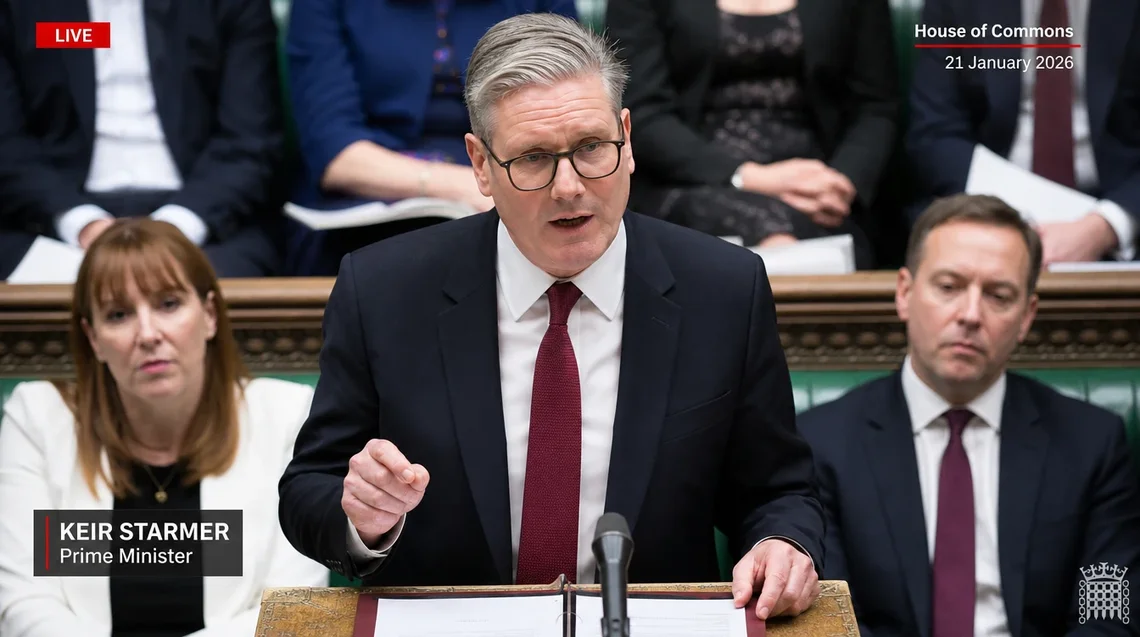
Sir Keir Starmer's government is facing intensifying scrutiny over whether its flagship £22 billion NHS investment commitment can meaningfully reduce waiting lists that remain stubbornly high, with opposition parties and health economists questioning both the pace and the mechanics of delivery. The Prime Minister has staked considerable political capital on reforming the health service, but critics argue the funding strategy lacks the structural rigour required to address systemic pressures that have built over more than a decade.
Party Positions: Labour maintains the £22 billion real-terms NHS settlement is the largest in the health service's recent history and insists waiting list reduction targets remain on track; Conservatives argue the investment is being consumed by pay settlements and inflation rather than frontline capacity, calling for an independent audit of spending outcomes; Lib Dems support greater NHS investment in principle but are pushing for specific ring-fencing of funds for mental health and rural GP services, warning that headline figures obscure deep inequalities in provision.
The Scale of the Challenge
When Labour entered government, NHS England's elective waiting list stood at approximately 7.6 million, a record high driven by a combination of pandemic backlogs, workforce shortages, and years of constrained capital spending. Officials said the government's ten-year NHS plan, developed under Health Secretary Wes Streeting, is designed to bring that figure below 5 million within the current parliament, a target health economists describe as ambitious but not impossible if funding flows as promised.
Waiting List Figures in Context
According to NHS England data, the waiting list has shown only marginal movement since Labour took office, declining by a fraction that health analysts say falls short of the trajectory needed to meet government targets. The Office for National Statistics has separately noted that delayed discharge from hospital — driven largely by social care pressures — continues to erode the gains made through elective recovery programmes. Without parallel investment in social care, officials concede that NHS throughput will remain constrained regardless of headline spending totals.
Related Articles
Where the £22 Billion Is Going
The government has repeatedly cited the £22 billion real-terms increase to the NHS revenue budget as evidence of its commitment, describing it as the largest such settlement in a generation. However, a significant portion of that sum has already been allocated to cover the cost of above-inflation pay settlements negotiated with nursing unions and junior doctors following the wave of strikes that defined the final years of the previous administration. Treasury officials said the remaining discretionary funds available for service transformation are considerably smaller than the headline figure suggests.
Pay Settlements and Their Impact on Capacity
Independent analysis, cited by both the BBC and the Guardian, indicates that between 40 and 50 percent of the NHS's additional revenue funding this parliament will be absorbed by workforce cost increases. That leaves health boards with limited headroom to invest in the diagnostic hubs, surgical capacity, and community care infrastructure that ministers have identified as central to their reform agenda. NHS Providers, the organisation representing hospital trusts, has warned that capital investment — the kind required to build new facilities and replace ageing equipment — remains severely constrained and is not adequately addressed within the current settlement.
Streeting's Reform Programme
Health Secretary Wes Streeting has positioned himself as a reformer willing to challenge NHS orthodoxy, publicly arguing that money alone cannot fix the health service and that structural change is essential. His proposals include shifting care from hospital settings to community and primary care, expanding the role of pharmacists and other allied health professionals, and introducing greater use of private sector capacity to clear the backlog. Officials said these measures are intended to improve productivity rather than simply increase spending, a framing that has drawn both support and scepticism from within the Labour parliamentary party.
Political Opposition Sharpens
The Conservatives, now in opposition under Kemi Badenoch, have sought to reframe the NHS funding debate around outcomes rather than inputs, arguing that the government's investment narrative obscures a failure to deliver measurable improvements for patients. Shadow Health Secretary Edward Argar has called repeatedly for an independent audit of how NHS funds are being deployed, a demand the government has so far resisted. Conservative MPs have also pointed to waiting time performance data suggesting that the proportion of patients seen within the 18-week standard remains well below pre-pandemic levels.
Liberal Democrat Pressure on Mental Health
The Liberal Democrats, whose parliamentary presence has grown significantly following recent by-election gains, have focused their NHS interventions on mental health provision and GP access in rural and semi-rural constituencies. Health spokesman Daisy Cooper has argued that the government's funding framework fails to account for regional disparities, with communities outside major urban centres facing disproportionate pressures on primary care. A YouGov survey conducted recently found that public satisfaction with GP access remains at historically low levels, with rural respondents registering the highest levels of dissatisfaction (Source: YouGov).
Public Opinion and Political Risk
The NHS remains the single issue most likely to determine electoral outcomes in Britain, and the government is acutely aware that public patience on health service performance is finite. An Ipsos poll published recently indicated that a majority of respondents believe the NHS is moving in the wrong direction despite the change of government, though the same survey showed continued goodwill toward Labour's stated intentions (Source: Ipsos). Political strategists within Downing Street are said to believe the government has until midway through the parliament to demonstrate tangible waiting list reductions before the issue becomes a significant electoral liability.
Polling Data and Parliamentary Context
| Metric | Figure | Source | Period |
|---|---|---|---|
| NHS elective waiting list (England) | ~7.6 million | NHS England | Current |
| Public satisfaction with NHS direction | 38% positive | Ipsos | Recent |
| GP access satisfaction (rural areas) | 29% satisfied | YouGov | Recent |
| Share of NHS funding absorbed by pay | 40–50% | NHS Providers / BBC analysis | Current parliament |
| 18-week treatment standard compliance | Below 60% | NHS England | Current |
| Government NHS revenue uplift | £22 billion | HM Treasury | Current settlement |
The Productivity Question
Central to the government's defence of its NHS approach is the argument that productivity, not merely funding, is the defining challenge. NHS productivity — the ratio of outputs to inputs — fell sharply during and after the pandemic and has not returned to pre-pandemic levels, according to Office for National Statistics data. Officials said that closing this productivity gap is equivalent in effect to investing several billion pounds in additional capacity, and that Streeting's reform programme is explicitly designed to drive that recovery (Source: Office for National Statistics).
For further reporting on the financial pressures underpinning this debate, see earlier ZenNewsUK coverage on how Starmer's NHS overhaul faces fresh funding pressure from within the health system itself. Analysis of the political dimensions of the spending argument is also explored in depth in our report on how Starmer's NHS Funding Plan Faces Scrutiny from both parliamentary committees and external auditors. Readers tracking the evolving cost pressures around this policy will also find relevant context in ZenNewsUK's coverage of how Starmer's NHS overhaul faces fresh scrutiny over costs amid wider public sector spending constraints.
What Comes Next
The government's ten-year NHS plan is expected to be published in full later this parliamentary session, with officials said to be in advanced discussions with NHS England about the specific milestones and accountability mechanisms that will accompany the document. Streeting has indicated that the plan will include enforceable productivity targets for hospital trusts and a new framework for measuring patient outcomes rather than simply activity levels — a shift that would represent a significant departure from the way NHS performance has been managed for decades.
Whether the £22 billion investment ultimately translates into the tangible waiting list reductions that voters expect will depend not only on the scale of funding but on the government's ability to implement structural reforms against the resistance of entrenched institutional interests, constrained capital budgets, and a workforce still recovering from years of industrial dispute. The political window for demonstrating progress is narrowing, and both ministers and their critics understand that the NHS argument is far from settled.