Starmer's NHS Reform Bill Faces New Labour Rebellion
Backbench MPs challenge funding proposals ahead of vote
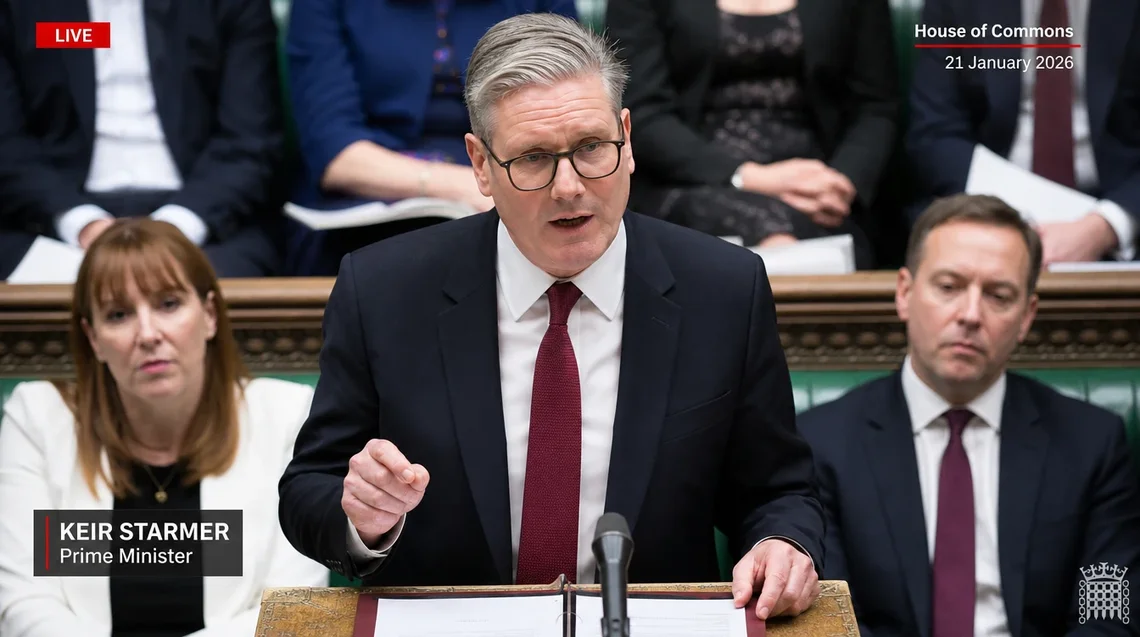
More than two dozen Labour backbench MPs have signalled their intention to vote against or abstain on key clauses of the government's NHS Reform Bill, threatening to inflict one of the most significant parliamentary defeats on Sir Keir Starmer's administration since it took office. The rebellion centres on proposed changes to NHS funding allocation mechanisms and the accelerated timetable for introducing independent commissioning bodies — provisions critics within the party argue will deepen regional health inequalities rather than resolve them.
Party Positions: Labour — government maintains the bill is essential to modernise NHS structures and reduce waiting lists, with ministers arguing the funding formula changes are evidence-based and long overdue; Conservatives — opposition frontbench has condemned the bill as "top-down reorganisation by another name," drawing comparisons to the controversial Health and Social Care Act of the previous decade, and has indicated it will vote against the legislation at report stage; Lib Dems — the Liberal Democrats have adopted a conditional position, supporting NHS reform in principle but tabling amendments demanding greater transparency in commissioning decisions and an independent audit of funding distribution before the new structures take effect.
The Scale of the Rebellion
Senior Labour officials confirmed that whips have been in intensive talks with discontented MPs throughout the week, with at least 27 backbenchers having formally requested meetings with Health Secretary Wes Streeting to raise concerns about specific clauses. The figure represents approximately one-tenth of Labour's parliamentary group, a threshold political analysts note is sufficient to complicate the government's working majority on contentious divisions.
Who Is Opposing and Why
The dissenting MPs are drawn predominantly from constituencies in the North of England, the Midlands, and parts of Wales where NHS integrated care boards have historically received lower per-capita funding than their southern counterparts. Several of the MPs involved have publicly associated themselves with the Keep Our NHS Public campaign and the Health Equity Alliance, organisations that have published detailed critiques of the bill's financial annexes. According to those familiar with the internal discussions, the core objection is not to NHS reform as such but to what opponents describe as an opaque weighting formula that could disadvantage areas of high deprivation in the new commissioning architecture.
Related Articles
For further context on how this rebellion developed, see earlier coverage of Starmer's NHS Reform Bill Faces Commons Rebellion and the background reporting on how Labour pushes NHS reform bill amid funding row.
The Bill's Central Provisions
The NHS Reform Bill, introduced to the House of Commons earlier this session, proposes the most substantial structural overhaul of health service administration in over a decade. Its principal measures include the establishment of regional Health Delivery Authorities to replace existing integrated care boards in England, new statutory duties on NHS trusts to publish five-year financial sustainability plans, and a revised national tariff system intended to incentivise preventive care over acute hospital treatment.
Funding Formula Controversy
The most technically contested element is the proposed revision to the resource allocation weighted capitation formula, which determines how NHS England distributes funds to regional bodies. Government officials argue the new formula incorporates updated Office for National Statistics population projections and more granular deprivation indices, producing a fairer distribution overall. Critics, citing independent analysis commissioned by the Health Foundation, contend that while the formula performs better on certain demographic indicators, its treatment of rurality and workforce supply disadvantages a cohort of mid-sized urban areas outside London and the South East. (Source: Office for National Statistics; Source: The Health Foundation)
Commissioning Timelines
A secondary but significant objection concerns implementation speed. The bill as drafted requires regional Health Delivery Authorities to be operational within eighteen months of royal assent. Several NHS trust chief executives, speaking to the BBC, described the timeline as "operationally unrealistic" given current workforce pressures and the administrative complexity of dissolving existing integrated care board structures. Ministers have so far declined to amend the commencement clauses, arguing that delay would itself impose costs on the health service. (Source: BBC)
Government's Response
Health Secretary Wes Streeting addressed the Parliamentary Labour Party at a private meeting this week, according to officials briefed on the gathering, defending the bill as the most consequential investment in NHS governance since the foundation of the health service. He is understood to have acknowledged that the funding formula required further explanation and offered a commitment to publish supplementary impact assessments before the report stage vote, a concession that sources close to the rebellion described as welcome but insufficient.
Ministerial Concessions Under Discussion
Discussions between the government and rebel MPs have reportedly centred on three possible accommodations: an independent review of the weighted capitation formula to be completed before secondary legislation implementing the new tariff takes effect; a sunset clause on the commissioning timeline allowing ministers to extend the transition period by statutory instrument; and enhanced parliamentary scrutiny requirements for decisions made by the new regional authorities. Whether these concessions will be sufficient to bring enough of the dissenters back into line before the vote remains uncertain, officials said.
Wider analysis of the pressures bearing on the government's position can be found in reporting on how Starmer pushes NHS reform bill amid funding pressure and the legislative history documented in coverage of Labour pushes NHS reform bill amid funding debate.
Public Opinion and Polling
Polling conducted ahead of the vote illustrates the political complexity facing Downing Street. NHS reform commands broad public support in the abstract, but specific proposals within the bill attract more ambivalent responses when presented in detail.
| Poll Question | Support (%) | Oppose (%) | Don't Know (%) | Source |
|---|---|---|---|---|
| Government should reform NHS structures to cut waiting lists | 61 | 19 | 20 | YouGov |
| New regional commissioning bodies will improve local care | 34 | 38 | 28 | Ipsos |
| Funding formula changes will reduce health inequalities | 29 | 41 | 30 | YouGov |
| Trust Starmer government to manage NHS reform effectively | 38 | 47 | 15 | Ipsos |
| NHS should receive additional ring-fenced funding before structural change | 67 | 14 | 19 | YouGov |
(Source: YouGov; Source: Ipsos)
The data show a public that broadly wants reform but harbours scepticism about whether this administration's specific proposals will deliver on equity and local accountability. The Guardian reported separately that NHS staff surveys show a majority of clinicians believe structural reorganisation without accompanying workforce investment risks worsening patient outcomes in the near term. (Source: The Guardian)
Opposition Tactics
The Conservative opposition has tabled a series of reasoned amendments designed to draw out divisions on the Labour benches rather than propose substantive alternatives, a strategy parliamentary observers describe as politically calculated. Shadow Health Secretary Edward Argar has argued the bill repeats the structural mistakes of previous reorganisations, concentrating administrative power in bodies with limited democratic accountability. The Liberal Democrats, meanwhile, have focused their amendments on transparency and audit provisions, positioning themselves as constructive reformers while maintaining distance from the Conservative framing.
Cross-Party Amendment Activity
According to the House of Commons public bill committee record, more than eighty amendments have been tabled to date, the largest volume for any health legislation since the passage of the Health and Social Care Act earlier in the decade. A significant minority of those amendments carry cross-party signatures, indicating areas where government MPs have been willing to work alongside opposition colleagues outside the formal rebellion structure. Officials said the government's programme motion is designed to limit the number of amendments that can be called for debate, a procedural choice that has itself generated complaint from backbenchers on both sides of the House.
Broader Stakes for the Starmer Government
The NHS bill rebellion arrives at a moment when the government is already navigating significant internal pressure on welfare reform and fiscal policy. A defeat or a narrow victory secured through last-minute concessions would raise questions about the durability of Starmer's authority over the parliamentary party, analysts said, even if the underlying reform agenda remains intact.
More immediately, the row has complicated the government's communications effort around the NHS, which Downing Street had intended to showcase as a centrepiece achievement of the parliament's first phase. Senior figures within Labour's operation acknowledge privately, according to sources familiar with those discussions, that the bill's technical complexity has made it difficult to prosecute a clear public argument in its favour — a problem the funding formula controversy has compounded.
For a broader view of how the legislative and political pressures have intersected, see earlier reporting on Starmer's NHS overhaul faces backbench rebellion.
The report stage vote is expected to take place within days. Whether the government can hold its majority intact without concessions that alter the bill's core architecture will serve as an important early indicator of how Starmer's administration manages the tension between an ambitious legislative programme and the political arithmetic of a large but heterogeneous parliamentary majority.