Starmer's NHS plan faces new budget scrutiny
Labour defends £22bn funding pledge amid recession fears

The government's flagship £22 billion NHS funding pledge is facing intensifying parliamentary and public scrutiny as new economic data raise questions about whether the Treasury can sustain the commitment without deeper cuts elsewhere or further tax rises. Senior Labour figures have moved to defend the package, insisting the investment is non-negotiable, but opposition parties and independent analysts warn that recession fears and slowing tax receipts could force a painful reassessment before the next spending review.
Party Positions: Labour maintains the £22bn NHS funding increase is fully costed and protected in the current spending envelope, describing it as the centrepiece of the government's public service reform agenda. Conservatives argue the pledge was made without credible fiscal underpinning and represents a repeat of what they call Labour's historical pattern of unfunded health spending commitments. Lib Dems welcome additional NHS investment but are calling for a fully independent Office for Budget Responsibility audit of the funding plan before any money is committed to long-term contracts or capital projects.
The Scale of the Commitment
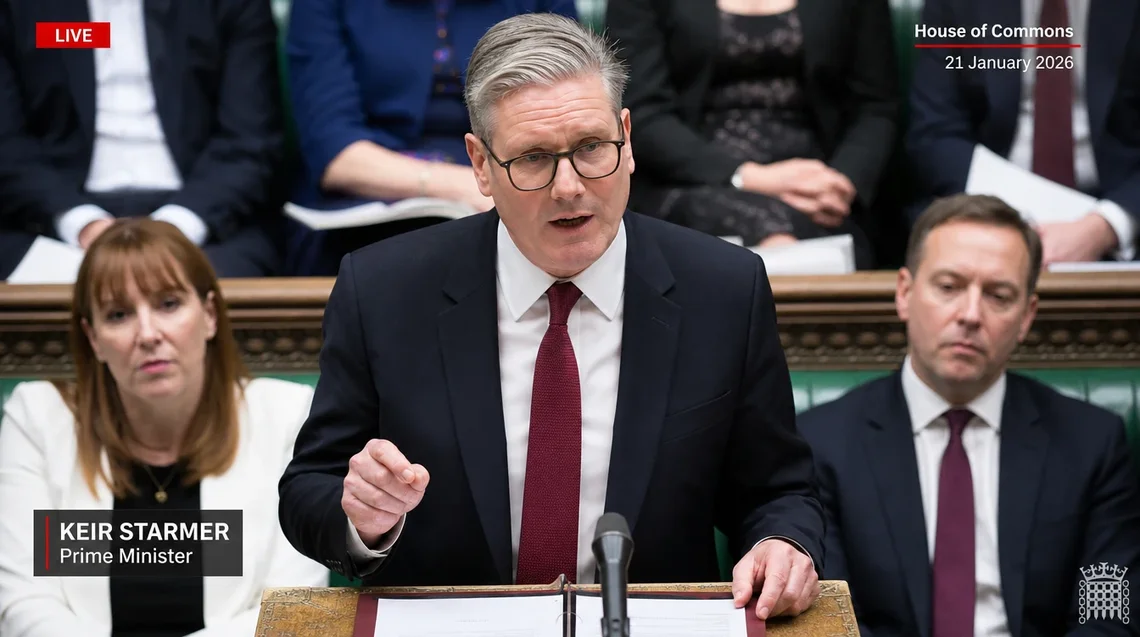
The £22 billion figure, announced by the Chancellor in the autumn statement, represents the largest single-year increase in NHS resource spending in more than a decade, officials said. The funding is intended to cut waiting lists, recruit additional clinical staff, and begin a longer-term shift toward community and preventative care that Prime Minister Sir Keir Starmer has described as the structural transformation the health service requires.
What the Money Is Supposed to Cover
According to Treasury documents, the allocation is divided across workforce expansion, capital investment in ageing hospital infrastructure, and the digitisation of patient records. A significant portion is earmarked for elective care recovery, with the government targeting a reduction in the 18-week referral-to-treatment backlog that has defined public dissatisfaction with the NHS for several years. Health economists have cautioned, however, that workforce costs — driven by recent pay settlements — are consuming a larger share of the envelope than originally modelled, potentially squeezing capital budgets.
Related Articles
For deeper background on how this pledge has evolved since the general election, see our earlier analysis of Starmer's NHS Plan Faces Funding Reality Check, which examined the original costings and the assumptions underlying them.
Economic Headwinds and the Budget Arithmetic
The broader fiscal context has shifted materially since the pledge was made. Office for National Statistics data published recently showed GDP growth contracting in two of the last three quarters, reigniting talk of a technical recession. Tax receipts, particularly from income tax self-assessment and stamp duty land tax, are running below the forecasts the Office for Budget Responsibility used to underpin the Chancellor's autumn plans (Source: Office for National Statistics).
OBR Headroom Under Pressure
The OBR's fiscal headroom — the margin between forecast borrowing and the government's own debt rules — was already assessed at a relatively thin level when the budget was delivered. Analysts at the Institute for Fiscal Studies have since noted that even a modest downgrade to the growth forecast at the next OBR review could formally eliminate that headroom, placing every major spending commitment, including the NHS package, under formal reassessment. The Guardian has reported that Treasury officials are monitoring monthly borrowing figures with unusual closeness as the next fiscal event approaches (Source: Guardian).
Inflation and NHS Cost Pressures
Persistent above-target inflation in healthcare-specific goods and services — particularly medical equipment, energy costs for large hospital estates, and agency staffing — means the real-terms value of the £22 billion is eroding faster than headline figures suggest. NHS Providers, the body representing NHS trusts, has warned publicly that trusts are being asked to deliver efficiency savings simultaneously with the funding increase, creating what chief executives have described as contradictory operational signals.
| Indicator | Figure | Source |
|---|---|---|
| Government NHS funding pledge | £22 billion additional resource spending | HM Treasury |
| Public approval of NHS funding plan | 54% support, 28% oppose | YouGov polling |
| Voters who trust Labour on NHS | 41% | Ipsos |
| Voters who trust Conservatives on NHS | 19% | Ipsos |
| NHS waiting list (18-week backlog, millions) | 7.5 million | NHS England |
| GDP growth (most recent quarter) | -0.1% | Office for National Statistics |
| Commons votes backing health spending motion | 341 ayes, 198 noes | Hansard |
Parliamentary Pushback and Opposition Tactics
The Conservatives have tabled a series of written questions and opposition day motions designed to force ministers to spell out exactly which departmental budgets would be reduced if NHS spending overruns materialise. Shadow Health Secretary Victoria Atkins has argued in the Commons chamber that the government is repeating what she characterised as a structural mistake — announcing health funding totals before resolving the workforce and productivity assumptions that determine whether spending translates into actual patient outcomes.
Select Committee Hearings
The Health and Social Care Select Committee has called senior Treasury and Department of Health officials to give evidence on the funding methodology, according to committee documents. MPs on both sides of the chamber have pressed officials to explain the contingency planning in place if growth assumptions miss. Officials said the government remains committed to the full funding envelope and pointed to the multi-year nature of the plan as evidence of its structural robustness, though they declined to detail specific contingency mechanisms on the record.
Our coverage of Starmer's NHS overhaul faces funding scrutiny tracks the parliamentary dimension of this story, including the select committee exchanges and the government's formal responses to opposition questions.
Public Opinion and Political Salience
Despite the fiscal controversy, the NHS remains the political issue on which Labour retains its strongest comparative advantage over the Conservatives. YouGov polling data show that 54 percent of voters currently support the government's stated NHS funding approach, compared with 28 percent who oppose it (Source: YouGov). However, Ipsos research conducted recently found that the proportion of voters who believe the funding will actually reach frontline services — rather than being absorbed by administration and pay settlements — has declined over recent months, suggesting the government faces a growing credibility gap on delivery rather than intent (Source: Ipsos).
Regional Variation in Trust
Ipsos data also show significant regional variation in confidence in the plan. Voters in northern England and the Midlands — areas that were central to Labour's general election gains — express markedly lower confidence than London and the South East that the investment will translate into measurable improvements in local NHS services. Political strategists within Labour are understood to be acutely aware of this gap, given its relevance to the electoral coalition the party needs to maintain, according to BBC political reporting (Source: BBC).
Labour's Defence and the Reform Agenda
Health Secretary Wes Streeting has been the most prominent ministerial voice defending the funding commitment, arguing in a series of broadcast appearances that the investment is inseparable from the structural reform programme aimed at reducing the NHS's dependence on expensive acute hospital care. The government's ten-year health plan, currently in development, is intended to provide the strategic framework within which the £22 billion is deployed, officials said.
The Productivity Question
Central to the government's case is the argument that additional funding will generate productivity improvements that partially self-finance the investment over time by reducing demand for expensive emergency and secondary care. Independent health economists have assessed this argument cautiously, noting that the NHS's productivity recovery since the pandemic has been slower than equivalent healthcare systems in comparable economies, and that the government's modelling relies on assumptions about behavioural change and technology adoption that have historically proved optimistic in public sector projections.
Readers following the trajectory of this story should consult our detailed breakdown of Starmer's NHS plan faces funding shortfall criticism, which sets out the specific criticism from health economists about the productivity modelling, and our earlier piece on Starmer's NHS Funding Plan Faces Scrutiny, which reported the initial reaction from the medical profession and NHS leadership when the package was first announced.
What Comes Next
The next significant pressure point will be the forthcoming OBR forecast, which will either validate or force revision of the fiscal assumptions underpinning the entire spending settlement. If growth forecasts are downgraded materially, Treasury sources have indicated — without committing formally — that a full spending review could be brought forward, at which point every departmental allocation, including NHS resource spending, would be formally subject to reappraisal.
For a government that has staked considerable political capital on the NHS as the defining issue of its first term, the combination of economic uncertainty, parliamentary pressure, and a public whose confidence in delivery is softening presents a more complex political challenge than the original announcement suggested. Whether the £22 billion survives intact as economic conditions evolve will be one of the central tests of the Starmer administration's fiscal credibility and its capacity to manage competing pressures without retreating from its most prominent public commitment.