Starmer's NHS reform plan faces backbench revolt
Labour MPs challenge funding proposals amid waiting list crisis
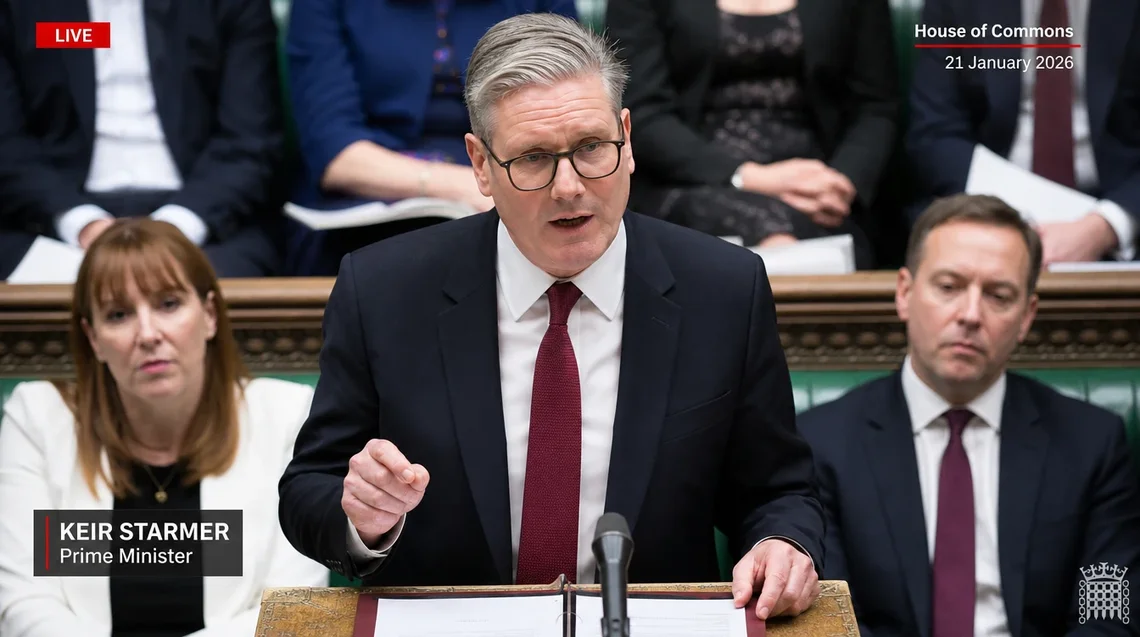
Sir Keir Starmer's flagship NHS reform programme is facing a significant internal rebellion, with more than two dozen Labour backbenchers signalling opposition to the government's funding proposals at a moment when NHS waiting lists remain at historically elevated levels. The revolt threatens to fracture the parliamentary arithmetic underpinning one of the Prime Minister's central domestic policy commitments and raises serious questions about the viability of the government's timetable for reducing patient waiting times.
The discontent has been building for several weeks on the Labour backbenches, with MPs from urban constituencies, former trade union officials, and members of the Socialist Campaign Group among those expressing concern that the government's financial settlement for the health service falls short of what the scale of the waiting list crisis demands. According to figures published by NHS England, the number of patients awaiting elective treatment remains well above seven million, a figure that has become a persistent political liability for ministers.
Party Positions: Labour — the government maintains its NHS reform plan represents the most ambitious restructuring of health service delivery in a generation and insists the funding envelope is sustainable within existing fiscal rules; Conservatives — the official opposition argues the government has inherited and mismanaged the NHS recovery plan, accusing ministers of underfunding while simultaneously raising taxes on healthcare employers; Lib Dems — the Liberal Democrats are demanding a fully-costed, ring-fenced emergency fund for primary care and mental health services, and have called for an independent review of NHS capital spending to be completed within six months.
The Scale of Backbench Dissent
Parliamentary sources indicate that at least twenty-five Labour MPs have either signed letters to Health Secretary Wes Streeting, raised concerns directly in private meetings with the whipping operation, or spoken on the record about their reservations regarding the reform package. That number, if translated into abstentions or votes against the government in a meaningful division, would represent a significant challenge to the government's majority on health-related legislation.
Related Articles
Who Is Driving the Rebellion?
The dissent is not confined to any single faction of the parliamentary Labour Party. Veteran left-wing MPs with long records of voting against their own governments on public spending questions have been joined by newer members who represent constituencies with acute pressures on GP surgeries, accident and emergency departments, and community mental health teams. Several of these newer MPs were elected on explicit pledges to fight for greater NHS investment and are now finding themselves in the uncomfortable position of defending a settlement they privately regard as inadequate, officials familiar with the internal party dynamics said.
The concerns being raised are broadly threefold: that the capital investment component of the reform plan does not match commitments made in the party's pre-election prospectus; that workforce planning provisions remain vague and uncosted; and that the government's reliance on productivity improvements to bridge the funding gap is, in the view of critics, optimistic to the point of being unrealistic. For further background on the origins of this dispute, see our earlier reporting on Starmer's NHS Plan Faces Funding Scrutiny.
The Funding Dispute at the Heart of the Row
At issue is a multi-year financial framework for the NHS that the Treasury and the Department of Health and Social Care have been negotiating in parallel with the reform White Paper. The government has declined to publish the full spending assumptions underpinning the reform document, a decision that has itself become a source of frustration among MPs and health policy analysts who argue that meaningful parliamentary scrutiny is impossible without access to the baseline figures.
Treasury Constraints and the Fiscal Rules
Ministers have made clear, both publicly and in private briefings to backbenchers, that the reform plan must operate within the Chancellor's fiscal rules, which impose strict limits on day-to-day departmental spending growth. Health economists and NHS trust leaders have argued that those constraints, combined with the legacy pressures of inflation on pay deals and energy costs, mean the effective real-terms increase available to the NHS is considerably smaller than the headline cash figure implies. Analysis cited by the Health Foundation suggests that closing the productivity gap the government has identified would itself require upfront investment that is not currently visible in the published spending assumptions (Source: Health Foundation).
The Office for National Statistics has separately published data showing that NHS output per hour worked remains below pre-pandemic levels when adjusted for the complexity of the procedures being carried out, a finding that complicates the government's argument that efficiency gains alone can deliver meaningful waiting list reductions in the near term (Source: Office for National Statistics).
The Waiting List Numbers
The political urgency is sharpened by the persistently high waiting list figures, which ministers had promised to reduce substantially. While there has been some progress at the margins, NHS England's own performance data show that the number of patients waiting more than 52 weeks for treatment, though lower than the post-pandemic peak, remains far above the level that existed prior to the pandemic. The government's stated target of eliminating waits of more than 18 weeks for elective treatment within a defined period is now regarded by some health service leaders as requiring a pace of improvement that the current funding envelope cannot support.
| Indicator | Figure | Source |
|---|---|---|
| Total patients awaiting elective treatment | Approx. 7.5 million | NHS England |
| Patients waiting more than 52 weeks | Over 250,000 | NHS England |
| Public satisfaction with NHS (overall) | 24% (lowest recorded) | British Social Attitudes / Ipsos |
| Share of voters citing NHS as top issue | 47% | YouGov |
| Labour voters supporting increased NHS tax funding | 71% | YouGov |
| NHS productivity vs pre-pandemic baseline | Approx. 92% (output per hour) | Office for National Statistics |
Government's Defence of the Reform Plan
Ministers have pushed back robustly against the characterisation that the reform plan is underfunded. Health Secretary Wes Streeting has argued in public statements and in appearances before the Health and Social Care Select Committee that the government is making the largest sustained investment in NHS capacity in its recent history, and that the structural reforms accompanying the financial settlement — including changes to how primary care is commissioned and how NHS trusts are held to account for performance — are essential to ensuring that additional money delivers measurable improvements in patient outcomes rather than being absorbed into the existing system without systemic change.
Streeting's Position and the Reform White Paper
The Health Secretary has also sought to frame the reform programme as inseparable from the funding question, arguing that more money without reform would reproduce the failures of the past. This position has won support from some NHS chief executives and from think tanks including the King's Fund and the Nuffield Trust, which have broadly endorsed the direction of the structural changes while also noting that the funding assumptions deserve closer scrutiny (Source: King's Fund). However, the framing has not satisfied backbench critics, several of whom have indicated to the Guardian and the BBC that they regard the reform agenda as being used to provide political cover for what is, in practice, a constrained spending settlement (Source: Guardian; Source: BBC).
The government has also pointed to additional funding streams, including commitments tied to the NHS Long Term Workforce Plan and capital allocations for new diagnostic facilities, as evidence that the total investment picture is more generous than a single-year snapshot implies. Opponents of this argument note that much of the capital spending is contingent on future spending reviews and has not been confirmed in the form of departmental expenditure limits.
Opposition Responses and Cross-Party Pressure
The Conservative Party has sought to exploit the government's internal difficulties, with shadow health secretary Kemi Badenoch's team arguing that the rebellion reflects a fundamental contradiction at the heart of Labour's NHS policy — that the party promised the electorate a level of NHS improvement that it is constitutionally unwilling to fund through taxation at the scale required. The Conservatives have faced their own credibility problem on this argument, given the state in which the NHS was left at the end of the last administration, a point that Labour MPs and ministers have not been slow to make.
The Liberal Democrats, meanwhile, have used their position as the third-largest party in the Commons to press for specific commitments on primary care and mental health that they argue are being marginalised within the broader reform framework. The party's health spokesperson has tabled a series of written questions seeking clarity on the capital and revenue breakdown of the NHS funding package, and has called for an independent audit of NHS infrastructure to be placed on a statutory footing. Detailed analysis of the parliamentary mechanics of this dispute is available in our report on Starmer's NHS Plan Faces Commons Revolt Over Funding Gap.
Whipping Operation and Party Management
The government whipping operation is understood to have held a series of briefing sessions with concerned backbenchers in an effort to contain the rebellion before any health-related legislation reaches the floor of the Commons for a meaningful vote. Chief Whip Sir Alan Campbell's team has emphasised to disaffected MPs that voting against or abstaining on NHS-related motions would hand the Conservatives a significant propaganda victory at a moment when polling on health remains one of the government's most exposed vulnerabilities.
The Whips' Calculations
Internal whipping assessments, according to sources cited by multiple Westminster correspondents, suggest that the government is confident it can manage the rebellion short of an actual legislative defeat, but acknowledges that the reputational damage from a large number of public abstentions, or from a series of critical speeches by Labour MPs during committee scrutiny of related legislation, could be severe. A YouGov poll published recently found that public trust in the government on NHS management, while still marginally ahead of the Conservatives, has declined noticeably from the post-election honeymoon period (Source: YouGov).
The political stakes extend well beyond the immediate parliamentary arithmetic. For a prime minister who placed NHS improvement at the centre of his general election offer, a visible and sustained backbench rebellion on health funding carries symbolism that is difficult to manage through conventional whipping techniques. The government's preferred approach has been to accelerate the publication of the reform White Paper's implementation detail, in the hope that concrete announcements on new surgical hubs, expanded diagnostic capacity, and workforce commitments will give wavering MPs material to take back to their constituents.
Outlook: Can the Government Hold the Line?
The coming weeks are likely to prove decisive for the government's ability to contain the internal pressure. Several backbenchers have indicated that their willingness to support the reform package is conditional on the government's next spending statement providing greater specificity on the multi-year NHS capital settlement, and on ministers committing to an independent review of whether the productivity assumptions underpinning the waiting list reduction targets are achievable within the stated timeframe. Our ongoing coverage of this story has tracked how tensions have developed — see both Starmer's NHS overhaul faces growing backbench revolt and the earlier examination of the financial pressures in Starmer's NHS plan faces funding shortfall criticism for the full context of how this dispute has evolved.
Health economists and parliamentary analysts broadly agree that the government has a narrow but navigable path to maintaining party discipline if it moves quickly to address the transparency concerns around the funding assumptions. What is less clear is whether the structural reform elements of the programme can survive the political process intact, or whether the combination of Treasury constraints, backbench pressure, and the sheer scale of the NHS's operational challenges will force ministers into a renegotiation of their reform timetable that would, in itself, represent a significant political setback for the Prime Minister in one of the most consequential domestic policy battles of his first term.